Get your free personalized podcast brief
We scan new podcasts and send you the top 5 insights daily.
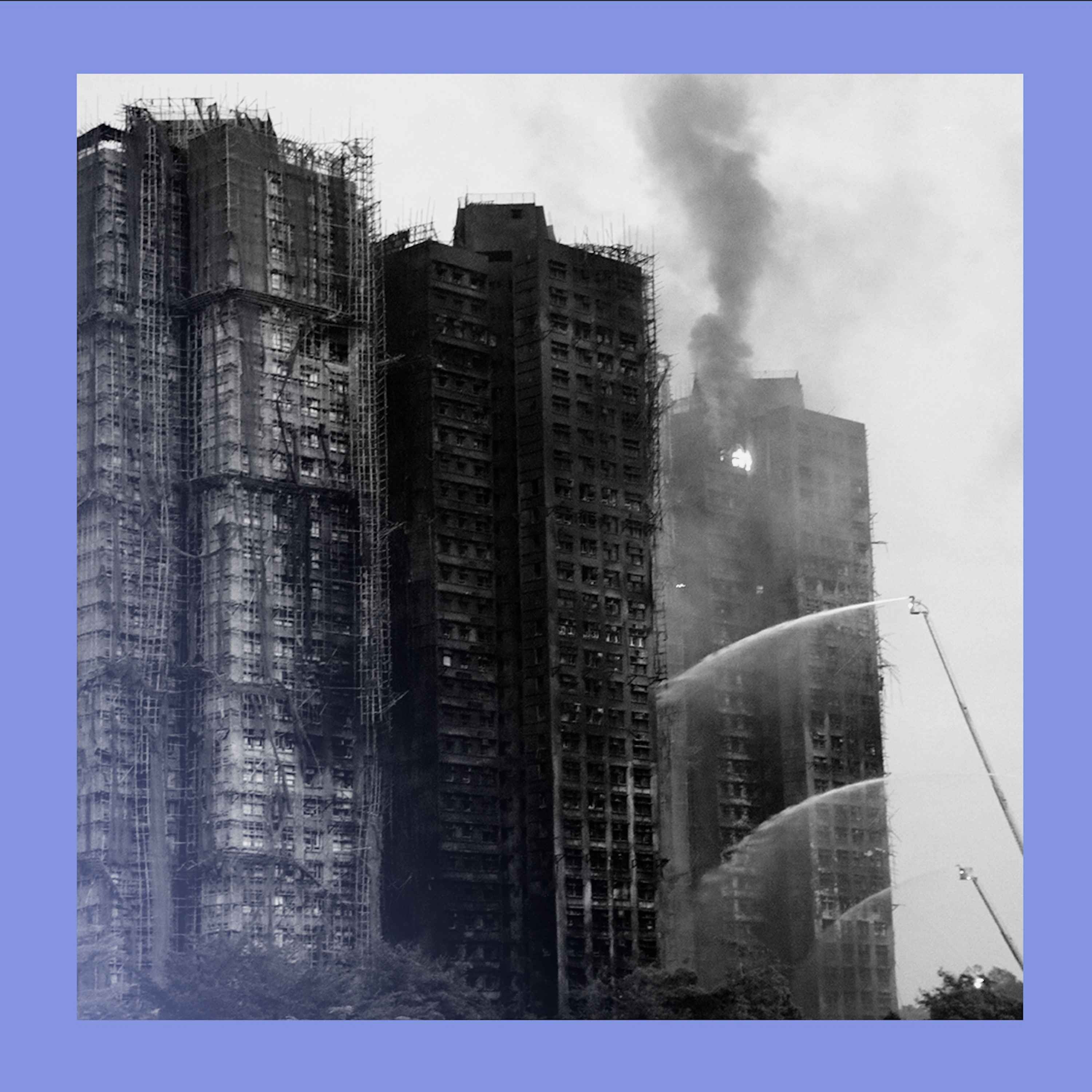
In Hong Kong's dense urban landscape, ancient bamboo scaffolding is more practical than modern steel. Its light weight, adaptability, and ability to be assembled without a ground-up structure makes it faster, cheaper, and less disruptive for construction in tight, complex spaces.

Related Insights
The official focus on bamboo scaffolding after a deadly fire may be a political pretext to phase out a traditional industry with a strong, union-like guild. This would allow mainland-controlled firms to take over, despite evidence that much of the bamboo scaffolding survived the blaze intact.
AHC treated its first prototype house as a "sandbox," designing and building it one floor at a time. After assembling the first floor, they used the learnings to redesign the second, and again for the third. This sequential iteration within a single project dramatically accelerated process improvements, cutting assembly time by 70% from the first to third floor.

Tech innovators are applying the 600-year-old principles of origami to solve modern engineering challenges. This includes designing unfolding satellites and car chassis folded from single steel sheets, demonstrating that ancient arts can be a source of high-tech inspiration.

Widespread adoption of construction robotics won't just replace labor; it will necessitate a fundamental redesign of building materials and codes. Similar to "design for manufacturing" in factories, we'll need to change how pipes connect, the chemical makeup of concrete, and how steel is welded to optimize for robotic assembly.

The construction industry generates a third of the world's waste, largely from single-use materials like concrete. However, innovations like cross-laminated timber, which has compressive strength approaching concrete, are enabling a return to bio-based materials that can be returned to the earth without consequence.

Engineer Mark Brunel's breakthrough for the Thames tunnel wasn't copying the shipworm's tunnel shape, but its *process*. He replicated the mollusk's ability to excavate and simultaneously reinforce its path. This focus on a dynamic process, rather than a static form, is a hallmark of successful biomimicry.
Unlike other cities defined by finished landmarks, Hong Kong's cultural identity is deeply intertwined with the visible process of its own upkeep. Iconic bamboo scaffolding makes the act of construction and maintenance itself a defining, celebrated part of the city's public image and vernacular.
The government-mandated shift from bamboo to steel scaffolding is not just a material swap but the erasure of a craft passed down through generations. By canceling training for new artisans, the policy creates an irreversible loss of specialized knowledge, making the system less resilient and adaptable.
Ancient Greeks oriented entire cities toward the sun not for environmentalism, but because firewood was scarce and the sun was free. Architect Stefan L. argues that modern sustainable design isn't a new invention but a rediscovery of ancient principles of climate adaptation born from resource constraints.
Hong Kong's daring architecture is partly a product of its primary scaffolding. The flexibility and ease of manipulating bamboo, unlike rigid steel, lowers the cost and time barrier for constructing complex, non-standard building shapes, thus fostering greater architectural innovation.