Get your free personalized podcast brief
We scan new podcasts and send you the top 5 insights daily.
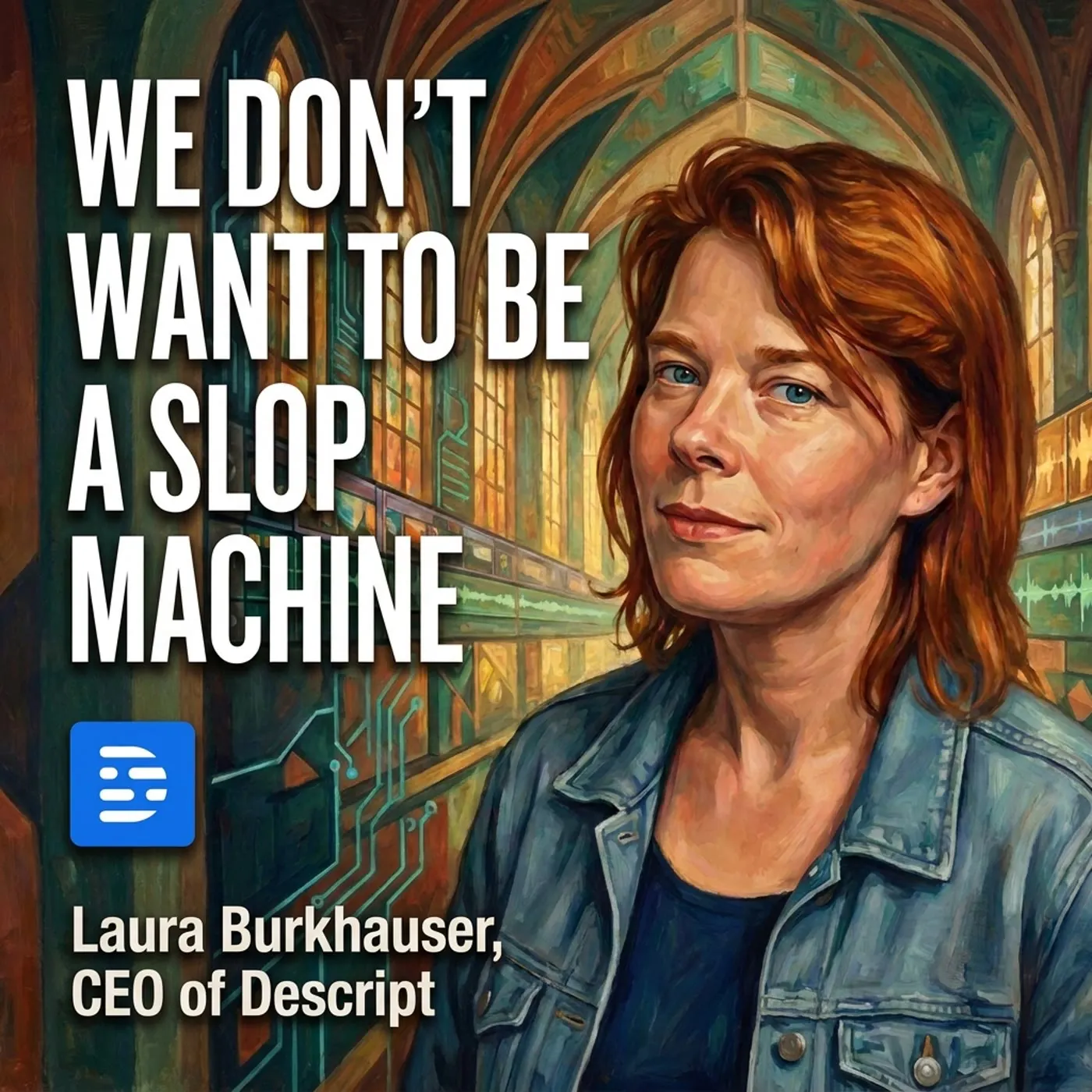
Descript’s API strategy exposes its AI agent's high-level, natural language capabilities, not just low-level functions. This allows other AI agents, like Claude, to 'hire' Descript as a complete video editing team, orchestrating complex tasks with simple prompts.
Related Insights
The power of tools like Claude Code comes from giving the AI access to fundamental command-line tools (e.g., `bash`, `grep`). This allows the AI to compose novel solutions and lets product teams define new features using simple English prompts rather than hard-coded logic.

The paradigm is shifting from using AI as a general chatbot to building a team of 'digital employees.' Claude Skills allow users to encapsulate a specific, repeatable workflow—like drafting a newsletter from tweets—into a tool that can be executed on demand, creating a specialized agent for that job.

Unlike tools like Zapier where users manually construct logic, advanced AI agent platforms allow users to simply state their goal in natural language. The agent then autonomously determines the steps, writes necessary code, and executes the task, abstracting away the workflow.
The developer workflow is evolving beyond "vibe coding." New tools, like Anthropic's updated Claude Code desktop app, are being redesigned as command centers for managing multiple, parallel AI agent tasks across different projects. The developer's role is shifting from prompter to orchestrator of a fleet of agents.

A key capability of advanced AI agents is their ability to read API documentation and write the necessary code ("skills") to integrate with new services on the fly. This turns every tool with an API into a potential native integration, dramatically expanding the agent's capabilities without manual developer work.
Tools like Descript excel by integrating AI into every step of the user's core workflow—from transcription and filler word removal to clip generation. This "baked-in" approach is more powerful than simply adding a standalone "AI" button, as it fundamentally enhances the entire job-to-be-done.
Descript's design principle for its AI agent, Underlord, is that it can't do anything a human user can't, and vice versa. This frames the AI as a true collaborator within the existing product interface, not a separate entity with special powers.
Standard APIs for human developers are often too verbose for AI agents. Notion created agent-centric APIs, like a special markdown dialect and a SQLite interface, by treating the AI as a new type of user. This involved empirical testing to understand what formats agents are naturally good at using.

The future interface for SaaS products won't just be a UI for humans or a REST API for machines. It will be an 'agent harness'—a rich environment of context, documentation, and skills that enables a customer's AI agent to expertly operate the product and extract maximum value.
Anthropic's upcoming 'Agent Mode' for Claude moves beyond simple text prompts to a structured interface for delegating and monitoring tasks like research, analysis, and coding. This productizes common workflows, representing a major evolution from conversational AI to autonomous, goal-oriented agents, simplifying complex user needs.