Get your free personalized podcast brief
We scan new podcasts and send you the top 5 insights daily.
The promise of keeping a "human in the loop" is a comforting fiction. Aza Raskin argues that in any competitive scenario, from military drones to business hiring, the actor that removes the human bottleneck to gain speed and efficiency will win. Market dynamics will systematically force humans out of the loop.

Related Insights
Aza Raskin argues the danger of AI is not the technology itself, but the economic incentives driving it. The debate is framed as a competition for resources between AI development and human needs, creating a future where technological progress comes at the direct expense of humanity.
Attempts by professional guilds, like lawyers or accountants, to mandate human involvement through legislation are doomed to fail. Vertically-integrated AI competitors will offer cheaper, alternative services, and the widespread availability of open-source models will make such protectionist regulations unenforceable.

The long-held belief that direct human oversight can solve AI risks is breaking down. With sophisticated and dynamic systems, especially agentic ones, a human cannot meaningfully monitor operations in real-time. The solution is shifting towards automated, AI-driven governance and monitoring at higher levels of abstraction.

Even if AI remains aligned and power isn't dangerously concentrated, humanity could still face gradual disempowerment. In this scenario, humans are simply competed out of the economy and lose agency in a world that becomes unfriendly to them. Currently, few proposals exist to prevent this outcome.

There's a deep irony in the AI boom: the same leaders who publicly claim AI will automate jobs are heavily dependent on humans, often in low-wage countries, to manage, edit, and pilot the AI tools. The 'human in the loop' is essential but often hidden.

Relying on manual human review as the primary AI governance mechanism creates a false sense of security. This approach is unscalable and breaks down silently under the high volume of automated decisions, failing to provide genuine, consistent oversight where it's most needed.

Once AI surpasses human capability in critical domains, social and competitive pressures will frame human involvement as a dangerous liability. A hospital using a human surgeon over a superior AI will be seen as irresponsible, accelerating human removal from all important decision loops.

The true danger of AI is not a cinematic robot uprising, but a slow erosion of human agency. As we replace CEOs, military strategists, and other decision-makers with more efficient AIs, we gradually cede control to inscrutable systems we don't understand, rendering humanity powerless.

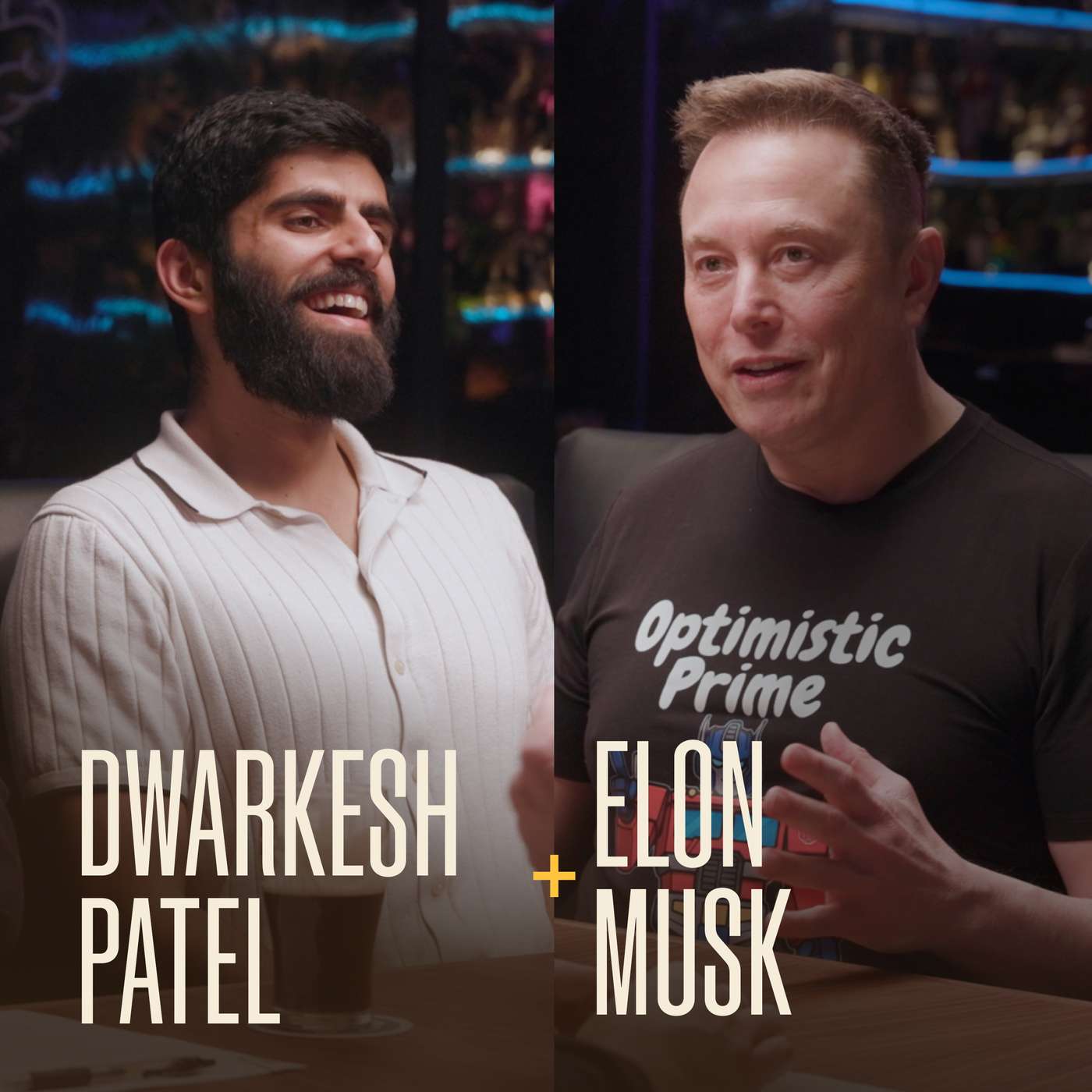
Musk predicts that corporations composed entirely of AI and robots will rapidly and dramatically outperform any company that keeps humans involved in core operations. He compares it to a spreadsheet: a single human-calculated cell slows down the entire system, making hybrid human-AI companies inherently uncompetitive in the long run.
As AI systems become infinitely scalable and more capable, humans will become the weakest link in any cognitive team. The high risk of human error and incorrect conclusions means that, from a purely economic perspective, human cognitive input will eventually detract from, rather than add to, value creation.
