Get your free personalized podcast brief
We scan new podcasts and send you the top 5 insights daily.
Strict statutory appointments create operational urgency within research teams. At ARPA-H, framing every two elapsed weeks as consuming one percent of a three-year tenure prevented bureaucratic delays and drove teams to pursue immediate, active experimentation.

Related Insights
Encourage experimentation with AI, but mitigate risk by giving every pilot a clear budget limit ('a leash') and a deadline ('a clock'). This framework allows for innovation while ensuring underperforming projects are killed quickly, successful ones are funded, and great ones are scaled.

To avoid organizational decay, government agencies like NASA should be established with a fixed lifespan (e.g., 10 years). At sunset, they would be forced to reconstitute, allowing for a re-evaluation of their mission and shedding of unproductive labs, ensuring continued relevance and success.
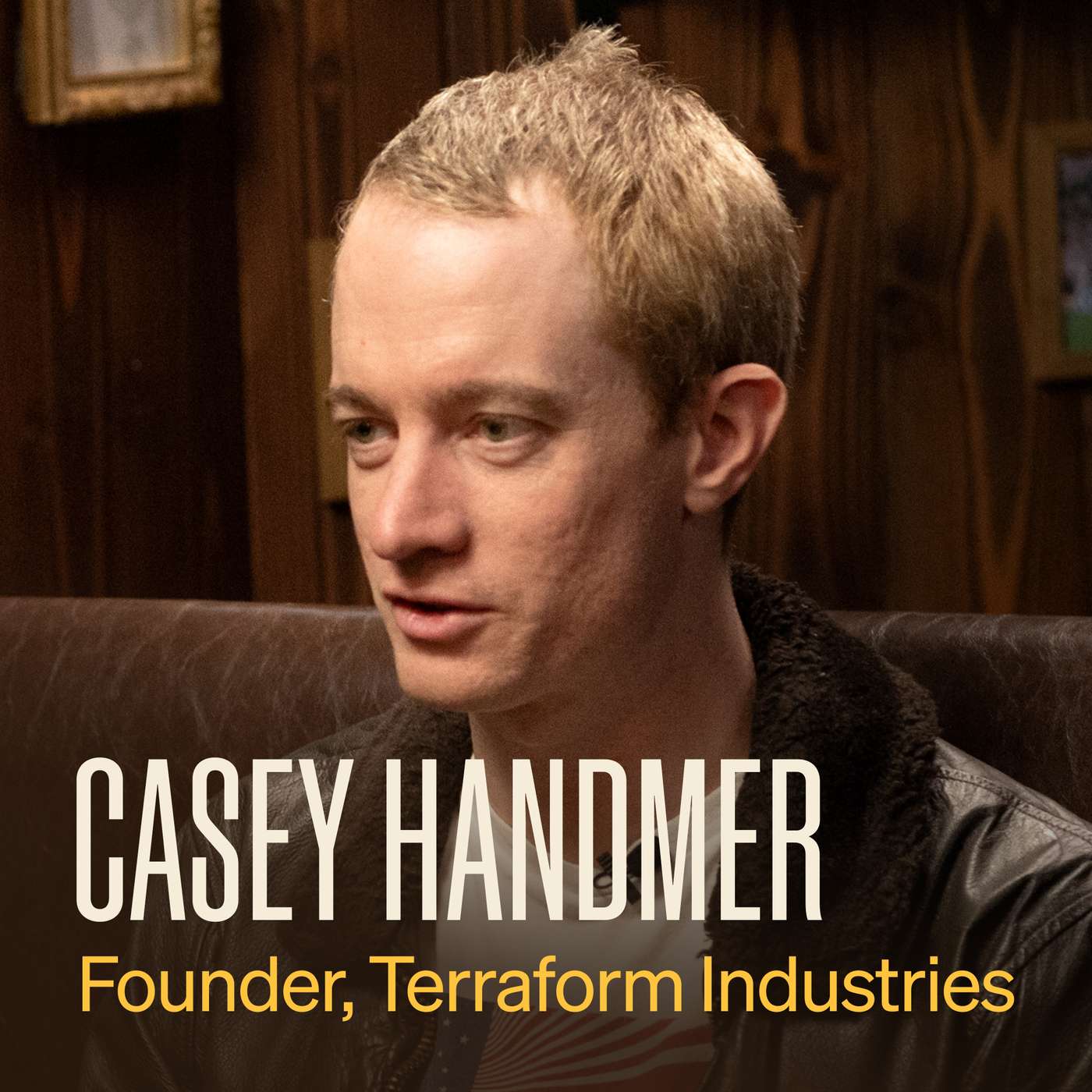
Effective review boards don't just say yes or no. They ask, "What is the next experiment needed to secure the next round of funding?" This approach relies on micro-budgeting for specific tests and regularly rotating board members to prevent political capture and groupthink.

In ROI-focused cultures like financial services, protect innovation by dedicating a formal budget (e.g., 20% of team bandwidth) to experiments. These initiatives are explicitly exempt from the rigorous ROI calculations applied to the rest of the roadmap, which fosters necessary risk-taking.

Pushing for extreme speed does more than just accelerate timelines; it forces teams to triage ruthlessly. It creates a filter that naturally eliminates work on problems that don't absolutely need to be solved, preventing over-engineering and wasted effort. It's not about more hours, but higher focus.

Treat government programs as experiments. Define success metrics upfront and set a firm deadline. If the program fails to achieve its stated goals by that date, it should be automatically disbanded rather than being given more funding. This enforces accountability.

To balance immediate user needs with long-term R&D, Eleven Labs uses a "3-month rule." If a foundational research solution is projected to take more than three months, the product team is empowered to ship a simpler, faster, tactical solution in the interim.

In high-stakes projects like clinical trials, waiting for a scheduled weekly meeting can be an absurdly expensive convenience. Calculating and constantly referencing the 'cost of delay'—which can be millions per day—reframes the problem, creating the urgency needed to get an immediate decision instead of waiting.

To create a high-velocity culture, managers must actively pull deadlines forward. Don't just accept a proposed timeline. Ask what's blocking it, question the actual work hours required, and repeatedly challenge why it can't be done sooner.

The "Speed of Light" (SOL) principle at NVIDIA combats project delays by demanding the absolute physical limit or theoretical minimum time for a task. This forces teams to reason from first principles before layering in practical constraints and excuses.