Get your free personalized podcast brief
We scan new podcasts and send you the top 5 insights daily.
Unlike the standard chemotherapy regimen TCHP, the newer drug T-DXd can cross the blood-brain barrier. This is a crucial advantage for high-risk HER2-positive breast cancer patients, as it offers the potential to prevent brain metastases, a common and devastating site of recurrence for this cancer subtype.

Related Insights
The B7H3-targeted antibody-drug conjugate (ADC) ifanatumab deruxtecan shows a high intracranial response rate in SCLC, numerically even better than its systemic response rate. This suggests excellent CNS penetration, offering a promising strategy for managing brain metastases, a common and difficult challenge in SCLC.
With new CNS-active drugs dramatically improving survival after a brain metastasis diagnosis, some experts are now advocating for routine screening brain MRIs in high-risk patients. The goal is to detect asymptomatic lesions early, potentially preventing catastrophic neurologic events like seizures.
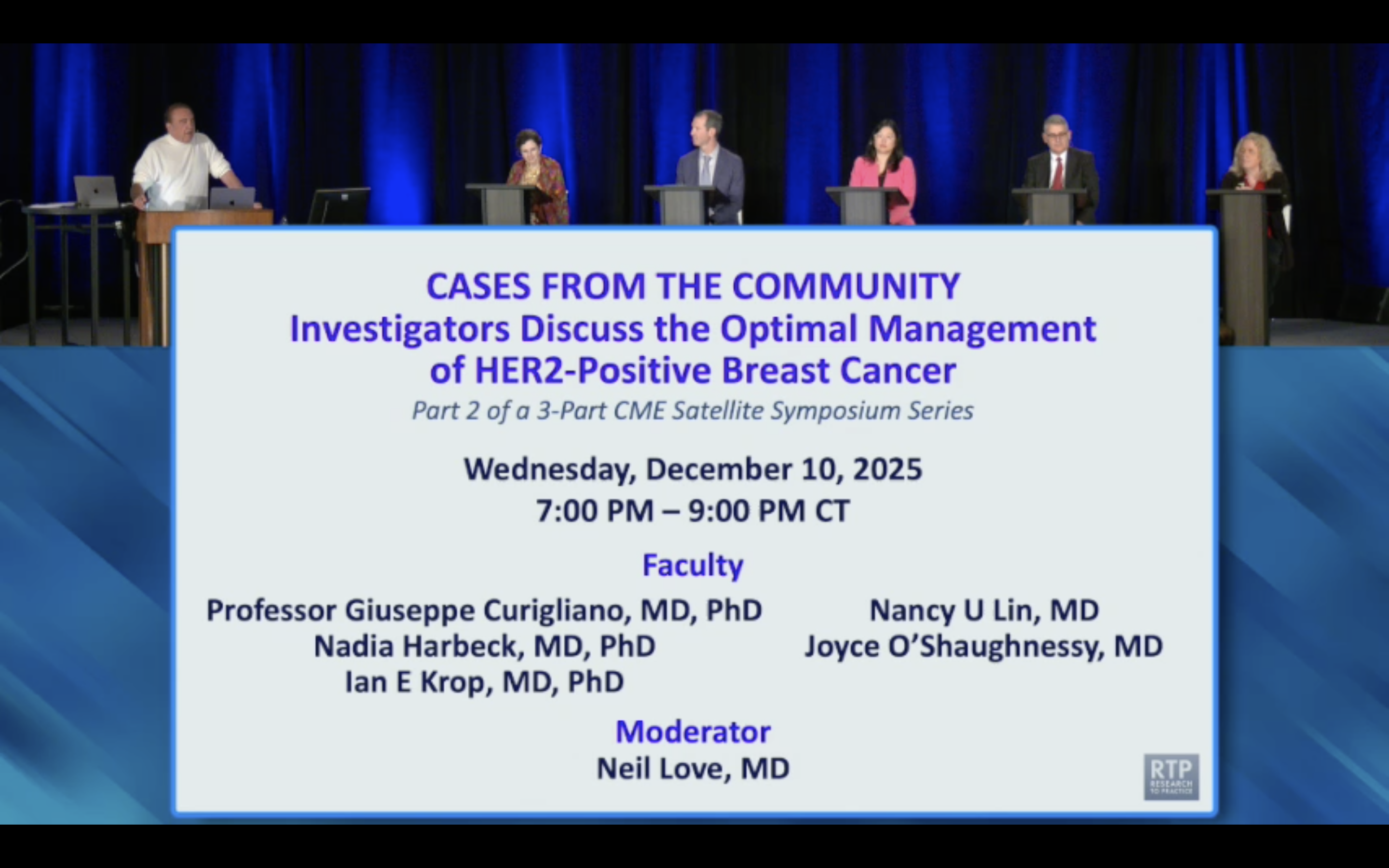
The DESTINY-Breast11 trial showed a neoadjuvant regimen of TDXD followed by THP achieved a 67.3% pathologic complete response (pCR) rate in high-risk HER2+ breast cancer. This is the highest pCR rate seen in a registrational trial, signaling a potential new standard of care.
A non-obvious consequence of effective modern cancer drugs is that patients live longer, allowing more time for cancer cells to metastasize to the central nervous system. The brain's protective blood-brain barrier then ironically shields these new tumors from treatment, creating a growing patient population.

A subtle finding in the DESTINY-Breast11 trial, where TDXD alone underperformed TDXD followed by THP, suggests that taxane-based chemotherapy might remain effective even after a patient's HER2-positive cancer becomes resistant to the antibody-drug conjugate TDXD.

To mitigate long-term toxicity from TDXD, oncologists are proposing an "induction/maintenance" approach. Patients receive TDXD for an initial period to achieve maximal response, then switch to a less toxic maintenance regimen for a "chemotherapy holiday," improving quality of life.
Actuate’s drug was designed to be highly lipophilic (fat-soluble) to cross the blood-brain barrier for CNS treatment. This same property proved crucial for its success in oncology, as it allows the drug to easily penetrate cancer cell membranes and reach the nucleus.
Unlike the intact blood-brain barrier, the blood-tumor barrier within brain metastases is permeable. This "leakiness" allows large molecules like the ADC trastuzumab deruxtecan (TDXD) to enter and deliver its payload, providing a mechanism for its high CNS efficacy.
The high efficacy of neoadjuvant TDXD in high-risk HER2+ breast cancer presents a compelling argument to avoid initial surgery for patients with reasonably sized tumors. There is currently no data to support using adjuvant TDXD for patients who undergo surgery first.
With efficacy and toxicity profiles being nearly identical between the first approved KRAS G12C inhibitors, intracranial activity becomes a key differentiator for clinicians, especially since a third of these lung cancer patients develop brain metastases. Adagrasib's demonstrated CNS activity gives it a slight advantage.