Get your free personalized podcast brief
We scan new podcasts and send you the top 5 insights daily.
Greg Crescenzi defines success as materials, methods, and even results flowing freely by default between academia and industry. Restricting access should be a conscious exception, he says. He also wants industry to share unpublished experiment information, including failures, because that knowledge is valuable to others.

Related Insights
Malina Fan spent months trying to get plasmids, then realized depositing scientists wanted to share but lacked time and infrastructure. Greg Crescenzi says Addgene took over storage, logistics, legal agreements, QC, and curation, removing the burden from both requesters and institutions shipping materials so sharing could scale.
Greg Crescenzi says 90% of Addgene's COVID deposits and resources were made available to industry during the pandemic, enabling a faster collective response. Addgene now wants to extend that same industry access to much of its other translational material, not just crisis-specific reagents, according to him.
When a billion-dollar drug trial fails, society learns nothing from the operational process. The detailed documentation of regulatory interactions, manufacturing, and trial design—the "lab notes" of clinical development—is locked away as a trade secret and effectively destroyed, preventing collective industry learning.
Shana Kelley says CZI has long shared single-cell databases with the community and will keep pushing data out. The organization always preprints its work so others can see results before publication and use the insights to accelerate their own research instead of keeping them internal.
Instead of the traditional one-way flow of technology from academia to industry, Lex Johnson advocates for a reciprocal relationship. Industry leaders can educate university faculty and tech transfer offices on the practical realities of drug development, making future spinouts more efficient and viable.

When a biotech company shutters, it's not a total loss. The scientific dead ends it uncovers prevent others from wasting resources on the same path. These "failures" enrich the ecosystem with crucial knowledge and release experienced talent back into the market.

Greg Crescenzi says Addgene's Solid Bio deal brings a therapeutic company's technology to academic and industry labs. Addgene already sells NEB and Promega products and wants more such partnerships, making reagent sharing flow from industry to academia as well as the reverse, according to him.
Greg Crescenzi says Addgene holds historical, curated information that no one else has and is talking with software and AI companies about partnerships. He sees AI today as rapidly changing the space and wants Addgene's archive to support new data and information products, he says.
The innovation pipeline in biotech often starts in academia with fundamental breakthroughs like CRISPR or single-cell sequencing. Industry then provides the resources and engineering mindset to scale these technologies, robustify them, and generate the massive, high-quality datasets required to power AI-driven discovery.
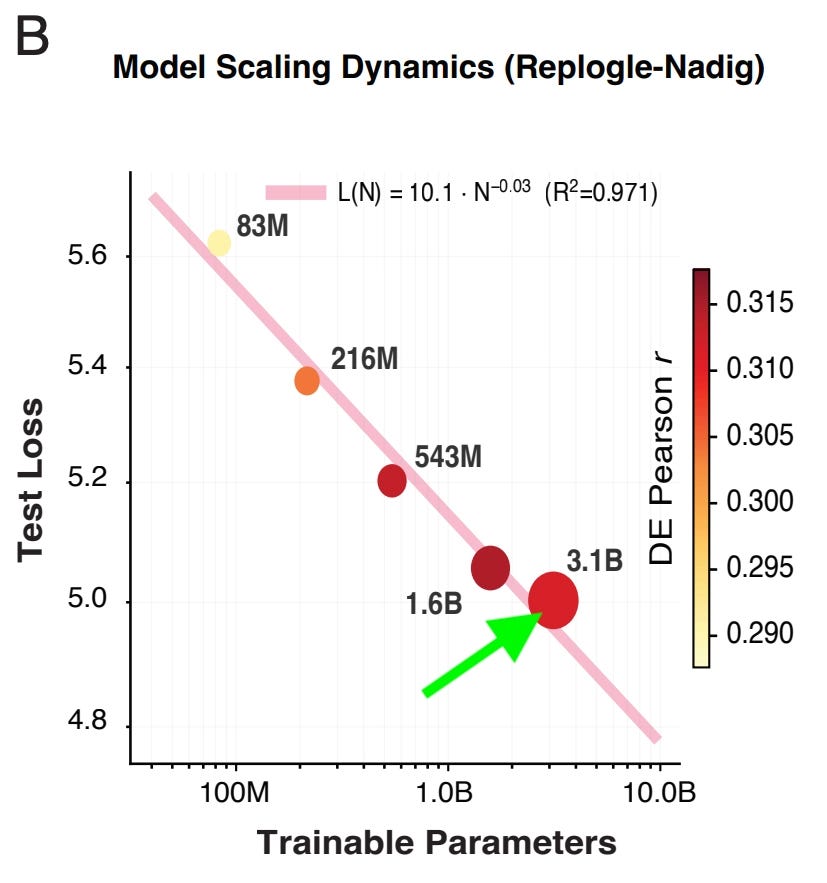
CZI operates with a philosophy of open science, rejecting a proprietary model. The organization actively makes its discoveries, datasets, and tools publicly available, often before formal publication. The stated goal is not to own breakthroughs, but to empower the entire scientific community to build upon their work and accelerate progress collectively.