Get your free personalized podcast brief
We scan new podcasts and send you the top 5 insights daily.
Unlike competitors, Dropbox is not developing its own AI models. Its strategy is to act as a neutral, model-agnostic platform where users can securely apply their choice of AI models to their existing data, with Dropbox providing the essential context and security wrapper.

Related Insights
Rather than betting on a single winning AI model like OpenAI or Gemini, Lenovo is building an "orchestration layer." This software allows users to access the best model for a given task, positioning Lenovo as a flexible, platform-agnostic enabler instead of tying its fate to one ecosystem in a rapidly evolving market.

A key value proposition for vertical AI applications is being model-agnostic. They act as a strategic layer for enterprises, allowing them to route tasks to the best available LLM at any given time. This de-risks enterprise AI strategy from being locked into a single model provider whose performance may be surpassed.

As noted by Chamath Palihapitiya, businesses fear deploying major AI models directly, seeing it as letting the 'fox into the henhouse' where their usage data could train a future competitor. This creates a strategic opening for 'harness-first' companies that offer enterprises control and choice over underlying models.

Modern AI models are powerful but lack context about an individual's specific work, which is fragmented across apps like Slack, Google Docs, and Salesforce. Dropbox Dash aims to solve this by acting as a universal context layer and search engine, connecting AI to all of a user's information to answer specific, personal work-related questions.

To combat reliance on a single AI provider, users can build a personal context layer—a collection of documents, data connections, and skill playbooks. This system acts as personal "alpha," allowing any capable AI model to quickly understand a user's context and perform tasks effectively, ensuring portability and reducing vendor lock-in.

Snowflake is avoiding direct competition in building foundational models. Instead, its strategy is to be the essential 'control plane' for enterprise AI, offering customers a choice of leading models (OpenAI, Anthropic) built upon its core, defensible moat: the secure and governed data layer where enterprise information already resides.
Large enterprises are avoiding commitment to a single AI provider like OpenAI or Anthropic. Instead, they're building control planes and abstraction layers that allow them to hot-swap the underlying models, mitigating technology risk and preventing dependence on one provider's terms of service.

Like Kayak for flights, being a model aggregator provides superior value to users who want access to the best tool for a specific job. Big tech companies are restricted to their own models, creating an opportunity for startups to win by offering a 'single pane of glass' across all available models.

Businesses don't ultimately care about which AI model they use; they want a job done efficiently and securely. The market will evolve towards trusted brands providing abstracted solutions that orchestrate hundreds of different models under the hood to complete a given task.
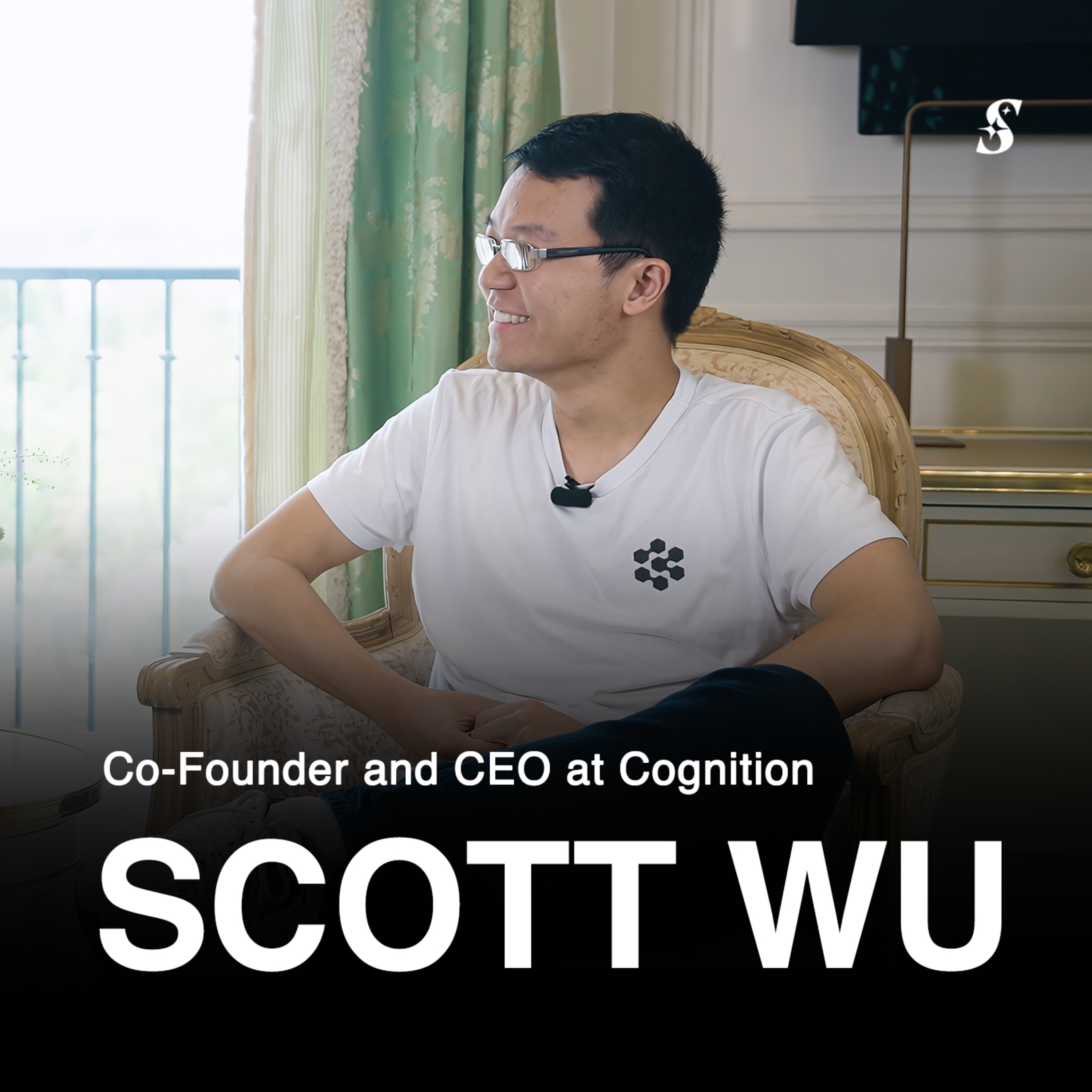
Cognition intentionally remains independent from major AI labs (like OpenAI, Google, Anthropic) to offer a model-neutral platform. This strategy reassures enterprise customers who want long-term partnerships without being locked into a single, potentially superseded, AI model ecosystem, providing flexibility and future-proofing.