Get your free personalized podcast brief
We scan new podcasts and send you the top 5 insights daily.
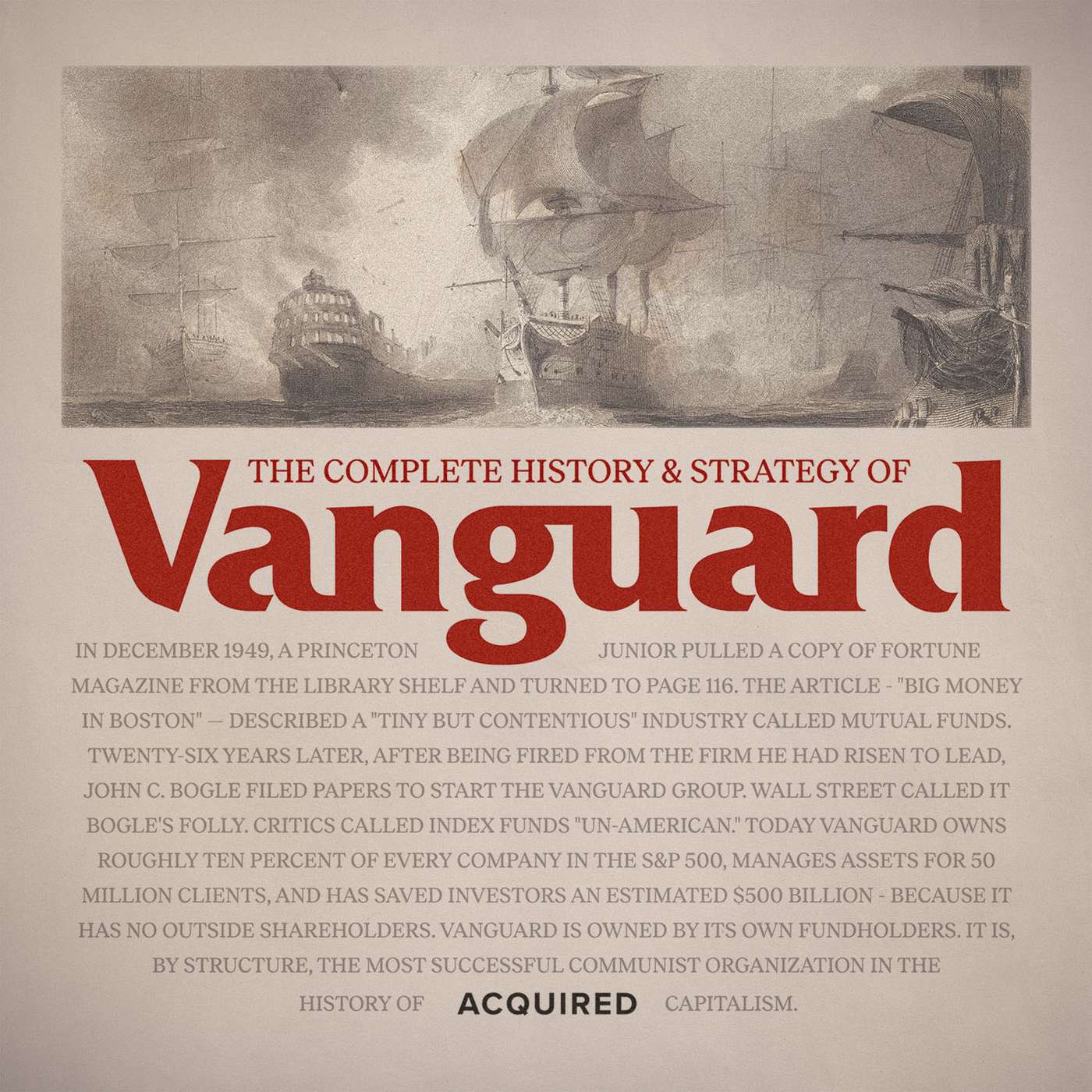
In the mid-20th century, mutual funds were distributed through stockbrokers who earned a 'sales load' of up to 8.5% on every dollar invested. This meant an investor was down 8.5% on day one. This high distribution cost was a key inefficiency that Jack Bogle's direct, no-load model eliminated.
Related Insights
Vanguard founder Jack Bogle initially opposed ETFs, viewing intraday trading as speculation. Leadership overcame this by framing ETFs not as a trading product, but as an 'alternative distribution vehicle' to get their low-cost funds onto brokerage platforms and into advisors' hands, ultimately widening their market.

The current capital market structure, with its high fees, delays, and limited access, is a direct result of regulations from the 1930s. These laws created layers of intermediaries to enforce trust, baking in complexity and rent-seeking by design. This historical context explains why the system is ripe for disruption by more efficient technologies.
Beyond compounding returns, Jack Bogle's core insight was the destructive power of compounding costs. He showed that a 1% annual fee could consume one-third of an investor's long-term gains (e.g., reducing a $1.5M nest egg to $1M over 40 years), making low fees paramount.
When Jack Bogle proposed eliminating management company profits and running funds 'at cost,' it was a fringe idea. There was no pressure from customers, regulators, or activists. He was proposing corporate suicide for a problem only he seemed to see, highlighting how far his thinking was ahead of the industry.
Vanguard's first index fund had a ~2% expense ratio (180 bps), far from today's near-zero fees. This historical fact shows that for innovative financial products, low costs are an outcome of achieving massive scale, not a viable starting point. Early fees must be high enough to build a sustainable business.

The market for all-in-one asset allocation funds remains saturated with expensive, tax-inefficient mutual funds despite superior low-cost ETFs. The transition is slow because incumbent firms rely on investor inertia—the "death, divorce, or drawdowns" events that trigger portfolio reviews—to keep assets in legacy products, delaying an inevitable shift to more efficient solutions.

Founder Jack Bogle noted Vanguard's investor-owned structure was never copied because "there's no money in it" for external shareholders. The model's core competitive advantage is its inherent unprofitability for anyone but the end customer, making it unattractive for competitors.

Economist Thomas Philippon's research shows the unit cost of financial intermediation has remained flat for over a century. Technological efficiency gains have been captured by the financial sector through higher fees and compensation rather than being passed on to investors, keeping overall costs stagnant.

Vanguard's low-cost strategy is a direct result of its unique corporate structure. Since the company is owned by its fund investors, there's no incentive to generate profits for outside shareholders. Excess earnings are returned to customers via lower fees, a concept Jack Bogle called "strategy follows structure."
Counterintuitively, the case for indexing strengthened as markets became dominated by professionals. In the 1970s, active managers could easily beat unsophisticated retail investors. By the 1990s, with professionals on both sides of every trade, outperformance became much harder, making low-cost indexing superior.