Get your free personalized podcast brief
We scan new podcasts and send you the top 5 insights daily.
While the West obsesses over algorithmic superiority, the true AI battlefield is physical infrastructure. China's dominance in manufacturing data center components and its potential to compromise the power grid represent a more fundamental strategic threat than model capabilities.

Related Insights
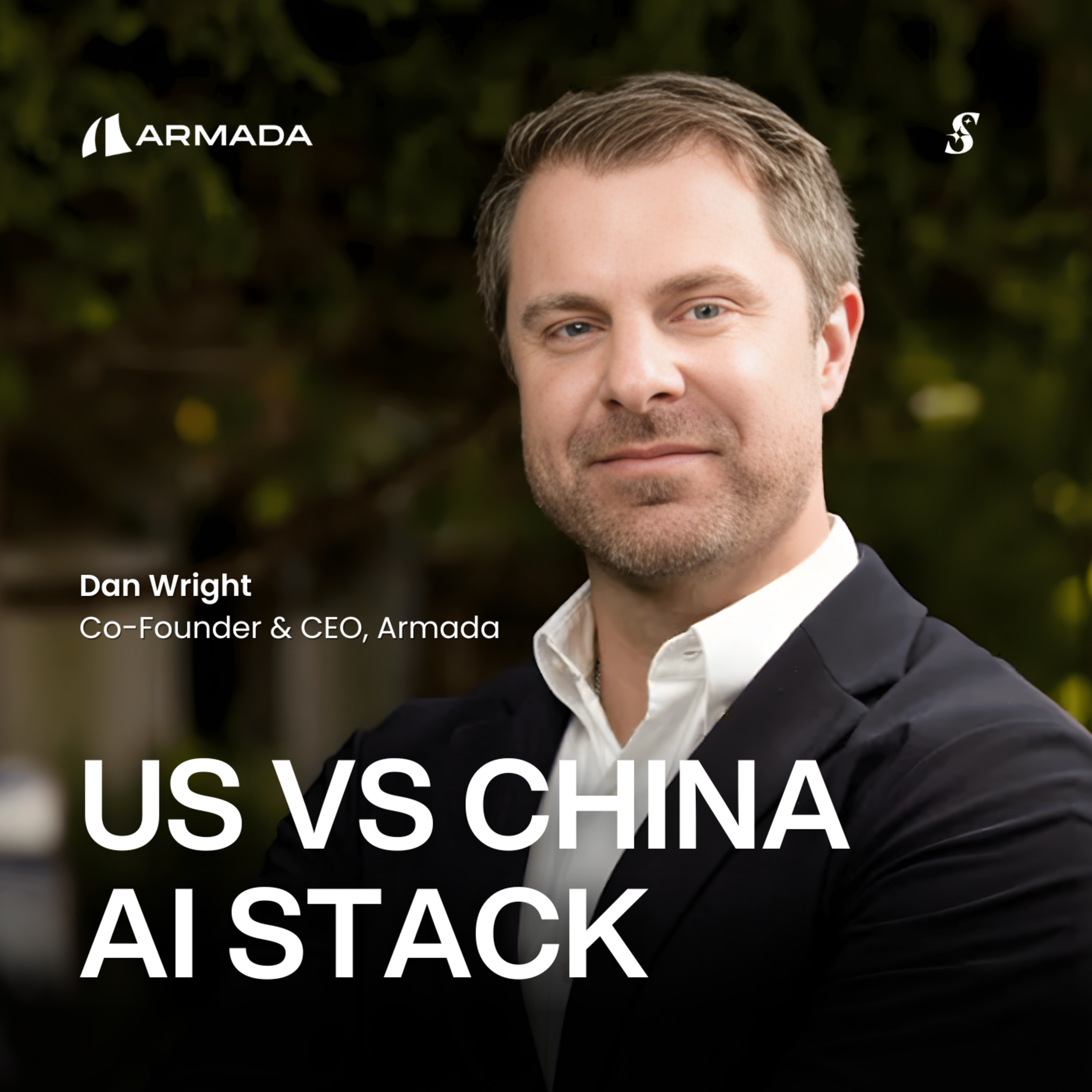
The competition in AI infrastructure is framed as a binary, geopolitical choice. The future will be dominated by either a US-led AI stack or a Chinese one. This perspective positions edge infrastructure companies as critical players in national security and technological dominance.
The strategic competition with China is often viewed through a high-tech military lens, but its true power lies in dominating the low-tech supply chain. China can cripple other economies by simply withholding basic components like nuts, bolts, and screws, proving that industrial basics are a key geopolitical weapon.

While the US currently leads in AI with superior chips, China's state-controlled power grid is growing 10x faster and can be directed towards AI data centers. This creates a scenario where if AGI is a short-term race, the US wins. If it's a long-term build-out, China's superior energy infrastructure could be the deciding factor.

While the focus is on chips and algorithms, the real long-term constraint for US AI dominance is its aging and stagnant power grid. In contrast, China's massive, ongoing investments in renewable and nuclear energy are creating a strategic advantage to power future data centers.

Beyond algorithms and talent, China's key advantage in the AI race is its massive investment in energy infrastructure. While the U.S. grid struggles, China is adding 10x more solar capacity and building 33 nuclear plants, ensuring it will have the immense power required to train and run future AI models at scale.
![Dan Wang - The US vs China In The 21st Century - [Invest Like the Best, EP.444] thumbnail](https://megaphone.imgix.net/podcasts/e1599a88-a9f6-11f0-b532-e3695bb27d60/image/0f5c07552cef2689e5834d56786ad6f1.jpg?ixlib=rails-4.3.1&max-w=3000&max-h=3000&fit=crop&auto=format,compress)
Contrary to the narrative of a simple "tech race," the assessment is that China is already ahead in physical AI and supply chain capabilities. The expert warns that this gap is not only expected to last three to five years but may widen at an accelerating rate, posing a significant long-term competitive challenge for the U.S.

Beyond the well-known semiconductor race, the AI competition is shifting to energy. China's massive, cheaper electricity production is a significant, often overlooked strategic advantage. This redefines the AI landscape, suggesting that superiority in atoms (energy) may become as crucial as superiority in bytes (algorithms and chips).

The US is betting on winning the AI race by building the smartest models. However, China has strategically mastered the entire "electric stack"—energy generation, batteries, grids, and manufacturing. Beijing offers the world the 21st-century infrastructure needed to power AI, while Washington focuses on 20th-century energy sources.

While the West may lead in AI models, China's key strategic advantage is its ability to 'embody' AI in hardware. Decades of de-industrialization in the U.S. have left a gap, while China's manufacturing dominance allows it to integrate AI into cars, drones, and robots at a scale the West cannot currently match.

The AI race is a national security imperative, akin to the Cold War arms race. However, the US is critically dependent on China for the copper, rare earths, and other materials required to build and power AI data centers, creating a massive strategic vulnerability.
