Get your free personalized podcast brief
We scan new podcasts and send you the top 5 insights daily.
Early super-reflective coatings were unviable for cities because they created a dangerous mirror-like glare. New formulations solve this by embedding cheap silica aerogel beads in a polymer. These beads scatter light randomly, achieving high reflectivity while appearing as a normal matte white surface.

Related Insights
The value of nano-machining extends beyond dimensional accuracy. For automotive headlamp molds, it produces a mirror finish directly on the tool steel, reducing the highly skilled, tedious, and manual polishing process from eight hours down to 40 minutes.

The concept of solar geoengineering originated from a 2006 proposal by Nobel laureate Paul Crutzen. He foresaw that reducing health-harming sulfur pollution would eliminate its planet-cooling side effect and suggested intentionally placing reflective particles high in the atmosphere to replicate the cooling with fewer health risks.
The traditional scientific method in materials science—hypothesize, experiment, learn—is being replaced. AI enables a new paradigm: treating the vast space of all possible molecules as a searchable database. Scientists can now query for materials with desired properties, radically accelerating discovery.

Google DeepMind's AI has expanded the catalog of known stable crystals from 40,000 to over 400,000. These AI-predicted materials are now being lab-tested and could lead to breakthroughs in physics-limited industries by enabling technologies like better electric vehicle batteries and superconductors.

Efforts to reduce air pollution, particularly sulfur emissions from shipping and industry, have had the unintended consequence of speeding up global warming. These pollutants created reflective aerosol particles that cooled the planet. Removing them, while beneficial for health, has made Earth absorb more solar energy.
Beyond typical applications, Xiaomi deploys AI in fundamental material science. It simulated over 100 material formulas to find the optimal composition for its car's chassis. This moves AI from a process optimization tool to a core R&D engine for creating physical products.

Traditional aerospace talent struggled with the company's novel reflector technology. They discovered that fashion designers, skilled in tailoring 2D fabric into 3D shapes, possessed the ideal expertise to create the perfectly flat, complex mirrors.

Designing new materials involves balancing multiple competing objectives, like cost, stability, and performance. Active learning is particularly powerful for navigating these trade-offs, offering a 100-1000x speedup for each objective you add, making it ideal for finding the 'needle in a haystack' material.
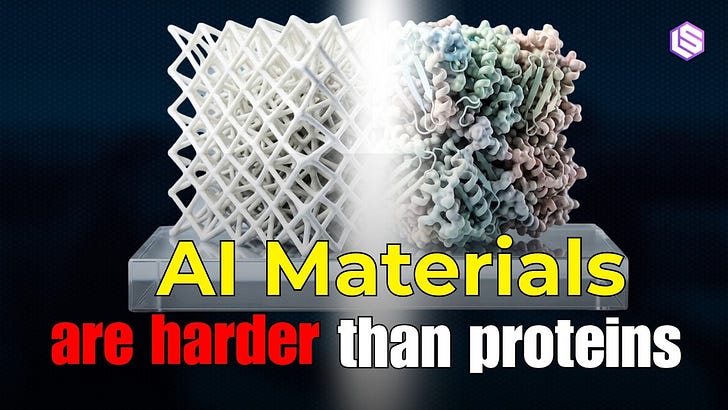
AI models can screen vast material spaces to identify novel solutions that defy conventional chemical intuition. Heather Kulik's group used AI to discover a quantum mechanical phenomenon that made a polymer four times tougher, a design experimentalists admitted they would never have conceived on their own.
New paints that reflect over 90% of sunlight can cool surfaces below the ambient temperature. They exploit a natural 'atmospheric window' to radiate thermal energy directly into the cold of deep space. This process provides cooling without consuming energy, unlike conventional air conditioning.