Get your free personalized podcast brief
We scan new podcasts and send you the top 5 insights daily.
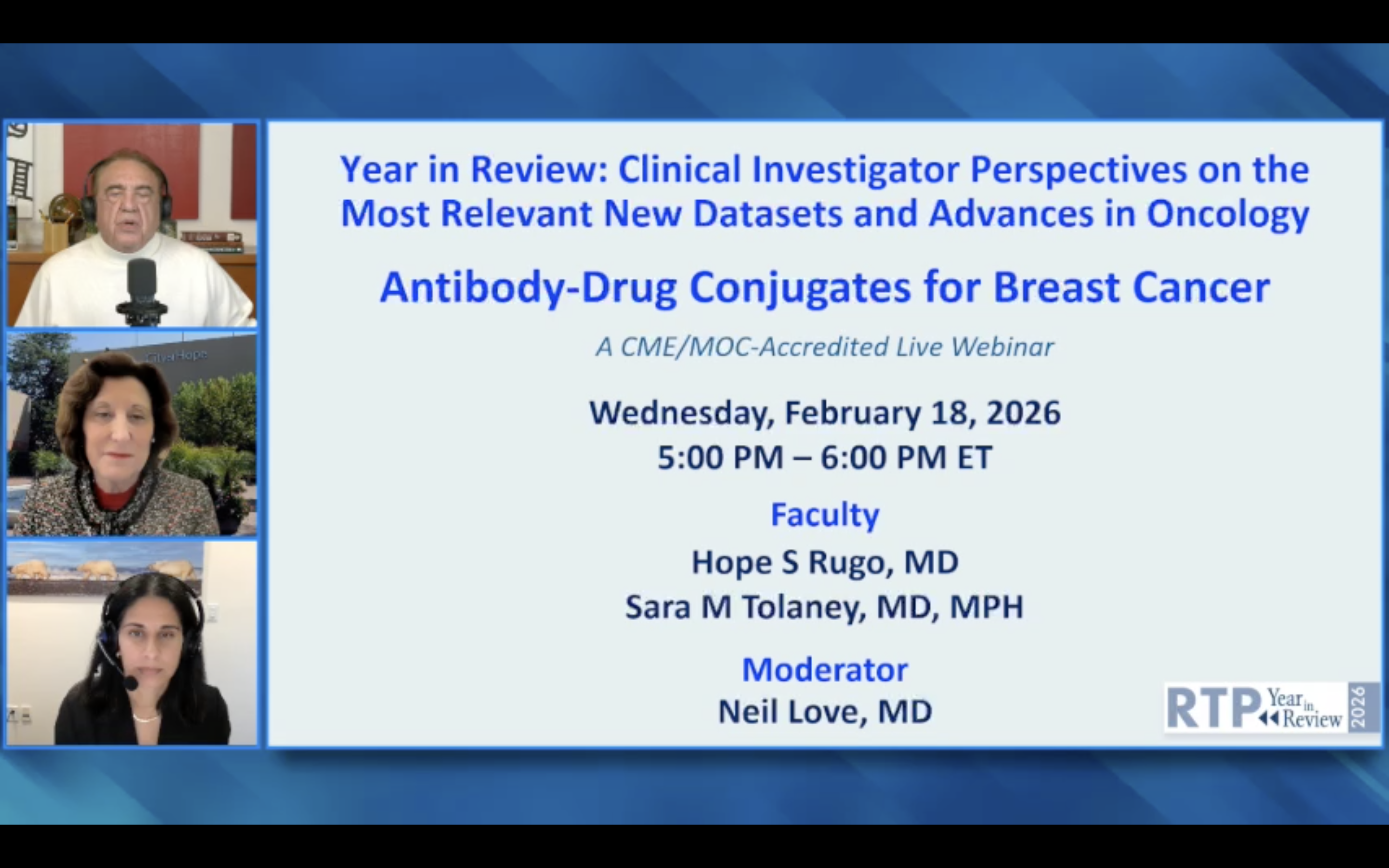
When sequencing antibody-drug conjugates, clinical experience suggests that resistance to the chemotherapy payload is a primary driver of failure. Therefore, oncologists tend to avoid using another ADC with the same payload consecutively, preferring to switch both target and payload if possible.
Related Insights
Real-world data suggests that using one antibody-drug conjugate (ADC) immediately after another is often ineffective. A potential strategy to overcome this resistance is to administer a different class of chemotherapy before starting the second ADC.
Patients whose ovarian cancer progresses on the folate-targeted ADC mirvetuximab may still respond to a subsequent folate-targeted ADC with a different cytotoxic payload. This suggests that the folate receptor alpha target remains viable and that resistance may be payload-specific, opening new sequencing strategies.
The TROPION-PanTumor01 study showed that patients who progressed on the TROP2-ADC sacituzumab govitecan still achieved responses to a second TROP2-ADC, Dato-DXD. This suggests that targeting the same antigen with a different payload can overcome initial resistance, informing future treatment sequencing.
Experts question the efficacy of sequencing ADCs like EV (Nectin-4 target) and DV (HER2 target) because they share the same MMAE chemo payload. Since resistance is often tied to the payload, not the target antibody, switching targets may not overcome resistance, though anecdotal responses have been observed.

When planning treatment for patients who will receive multiple antibody-drug conjugates (ADCs), the prevailing clinical strategy is to focus on alternating the drug's payload (e.g., a tubulin inhibitor vs. a topoisomerase I inhibitor). This approach is believed to be more effective at overcoming resistance than alternating the cell-surface target.

Rather than moving through distinct lines of therapy, a future strategy could involve an "ADC switch." When a patient progresses on an ADC-IO combination, the IO backbone would remain while the ADC is swapped for one with a different, non-cross-resistant mechanism, adapting the treatment in real-time.
Emerging data shows that a second ADC, particularly one with the same payload, often has limited efficacy. This suggests clinicians must be highly strategic in selecting the first ADC, as it may be their most impactful opportunity for this class of drugs.
Contrary to concerns about cross-resistance between HER2 antibody-drug conjugates (ADCs), retrospective data shows TDM-1 remains effective after progression on TDXD. This suggests the different cytotoxic payloads are key, allowing for effective sequencing and challenging the assumption that progression on one ADC class member precludes using another.

As multiple effective Antibody-Drug Conjugates (ADCs) become available, the primary clinical challenge is no longer *if* they work, but *how* to use them best. Key unanswered questions involve optimal sequencing, dosing for treatment versus maintenance, and overall length of therapy, mirroring issues already seen in breast cancer.
Historically, therapies for platinum-resistant ovarian cancer were so ineffective that the order of administration was irrelevant. With the advent of multiple active ADCs, the concept of treatment sequencing and potential cross-resistance based on payloads or targets has become a critical, and entirely new, clinical consideration for this disease.