Get your free personalized podcast brief
We scan new podcasts and send you the top 5 insights daily.
As AI democratizes content creation, the sustainable strategy for creators is to build an IP framework—a world with rules and a vibe—that empowers their community to co-create within it. This shifts the focus from top-down content to fostering a creative ecosystem, as exemplified by Rockstar's Grand Theft Auto.

Related Insights
Roblox's leadership intentionally directs a larger portion of revenue back to its creator community rather than maximizing corporate profits. This strategy fosters a more engaged and innovative developer base, which in turn drives the platform's overall success and long-term defensibility.

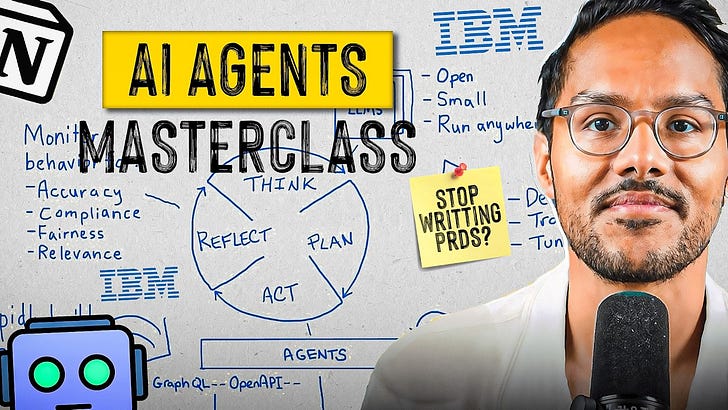
While AI tools once gave creators an edge, they now risk producing democratized, undifferentiated output. IBM's AI VP, who grew to 200k followers, now uses AI less. The new edge is spending more time on unique human thinking and using AI only for initial ideation, not final writing.
In the AI era, a creator's job will evolve from producing content to architecting their community's digital ecosystem. This involves tweaking a custom algorithm to guide AI-generated content, ensuring it aligns with the community's values and delivers specific, positive outcomes for members.
The Savannah Bananas create deep fan loyalty by "world building," not just branding. They've developed an internal mythology with its own rules and language (e.g., the significance of the number 11). This makes fans feel like they're part of an exclusive, immersive universe, similar to Disney or Marvel.

As AI drives the cost of content creation to zero, the world floods with 'average' material. In this environment, the most valuable and scarce skill becomes 'taste'—the ability to identify, curate, and champion high-quality, commercially viable work. This elevates the role of human curators over pure creators.
![Ari Emanuel - The Anti-AI Bet - [Invest Like the Best, EP.448] thumbnail](https://megaphone.imgix.net/podcasts/c5910280-c4dd-11f0-94be-ab6a7a5865b0/image/1e5a2263eb62fcde200846919e24419a.jpg?ixlib=rails-4.3.1&max-w=3000&max-h=3000&fit=crop&auto=format,compress)
As AI and no-code tools make software easier to build, technological advantage is no longer a defensible moat. The most successful companies now win through unique distribution advantages, such as founder-led content or deep community building. Go-to-market strategy has surpassed product as the key differentiator.

The most creative use of AI isn't a single-shot generation. It's a continuous feedback loop. Designers should treat AI outputs as intermediate "throughputs"—artifacts to be edited in traditional tools and then fed back into the AI model as new inputs. This iterative remixing process is where happy accidents and true innovation occur.
The next generation of social networks will be fundamentally different, built around the creation of functional software and AI models, not just media. The status game will shift from who has the best content to who can build the most useful or interesting tools for the community.

The rapid pace of change, accelerated by AI, demands brands become more fluid. Rigid, static brand guidelines are obsolete, replaced by generative systems that can evolve with user needs and market trends while retaining a core identity.

The promise of AI shouldn't be a one-click solution that removes the user. Instead, AI should be a collaborative partner that augments human capacity. A successful AI product leaves room for user participation, making them feel like they are co-building the experience and have a stake in the outcome.
