Get your free personalized podcast brief
We scan new podcasts and send you the top 5 insights daily.
Gemini's year-plus-old knowledge cutoff isn't a bug but a strategic choice. Google prioritizes teaching the model to effectively leverage real-time search for fresh information rather than relying on constantly updated parametric knowledge. The critical skill for the model becomes knowing when to search versus when to use its internal knowledge.

Related Insights
Ceramic AI founder Anna Patterson explains their pivot from training to search was driven by a key insight: providing models with live data via low-cost search is far more efficient and timely than the expensive, slow process of continuous retraining.
For AI Search Optimization (AEO), content freshness is critical. Research shows that content updated within the last three months is three times more likely to be cited by LLMs like ChatGPT compared to content left untouched for six months or more, revealing a steep drop-off curve.

When querying ChatGPT for trends or tactics, failing to specify a time period (e.g., 'in the last 60 days') will result in outdated information. The model defaults to data that is, on average, at least a year old, especially for fast-moving fields like marketing.

When designing smaller models, it's inefficient to use limited parameters for memorizing facts that can be looked up. Jeff Dean advocates for focusing a model's capacity on core reasoning abilities and pairing it with a retrieval system. This makes the model more generally useful, as it can access a vast external knowledge base when needed.
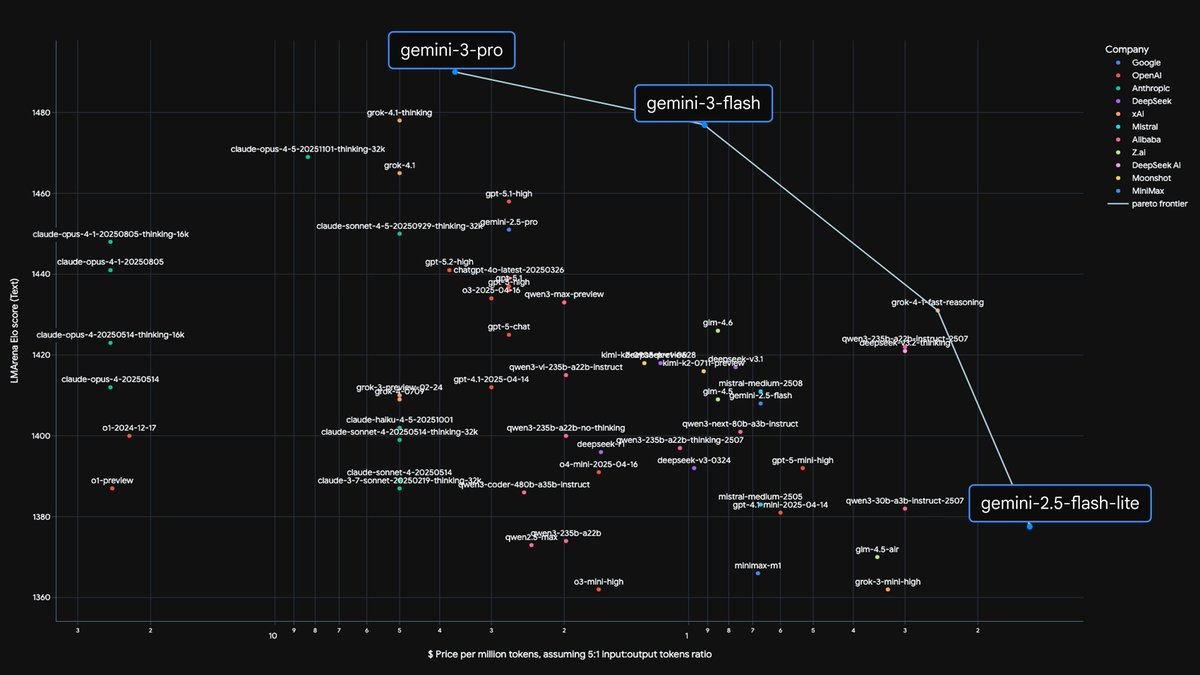
Google's focus on fast, cost-effective models like Gemini 3.5 Flash is driven by the needs of its massive-scale products (e.g., Search). For billions of users, low latency and cost are more critical than absolute peak performance, as users are often unwilling to wait for a slightly smarter but slower response.
The dominance of AI tools like ChatGPT, which favor new and recently updated information, is rendering traditional 'set it and forget it' evergreen content obsolete. AI citations are, on average, nearly a year newer than traditional search results, signaling a fundamental shift in content strategy that marketers must adapt to.

Google's Titans architecture for LLMs mimics human memory by applying Claude Shannon's information theory. It scans vast data streams and identifies "surprise"—statistically unexpected or rare information relative to its training data. This novel data is then prioritized for long-term memory, preventing clutter from irrelevant information.

Unlike traditional search engines where "evergreen" content can perform well for years, LLMs place a higher value on the freshness of content. To stay relevant in AI-driven search, marketers must consistently update, iterate on, and expand upon their core content pieces.

Unlike chatbots that rely solely on their training data, Google's AI acts as a live researcher. For a single user query, the model executes a 'query fanout'—running multiple, targeted background searches to gather, synthesize, and cite fresh information from across the web in real-time.

AI's preference for recency extends beyond the content to the webpage itself. Pages that haven't been updated in over a year are more than twice as unlikely to be cited by AI models. This means marketers must continuously update the pages, not just the content on them, to maintain visibility in AI search.