Get your free personalized podcast brief
We scan new podcasts and send you the top 5 insights daily.
Mistral's $1.4B investment in Swedish AI infrastructure is more than an expansion; it's a political move. By building a "fully European AI stack," Mistral is positioning itself as the regional alternative to US tech giants, capitalizing on growing desires for data sovereignty amid fraying political ties.

Related Insights
Rather than trying to predict specific geopolitical crises, Siemens builds resilience by creating separate technology stacks for different regions. For instance, its industrial AI for China is trained on Chinese LLMs, while its US counterpart uses American models, creating independent and compliant systems.

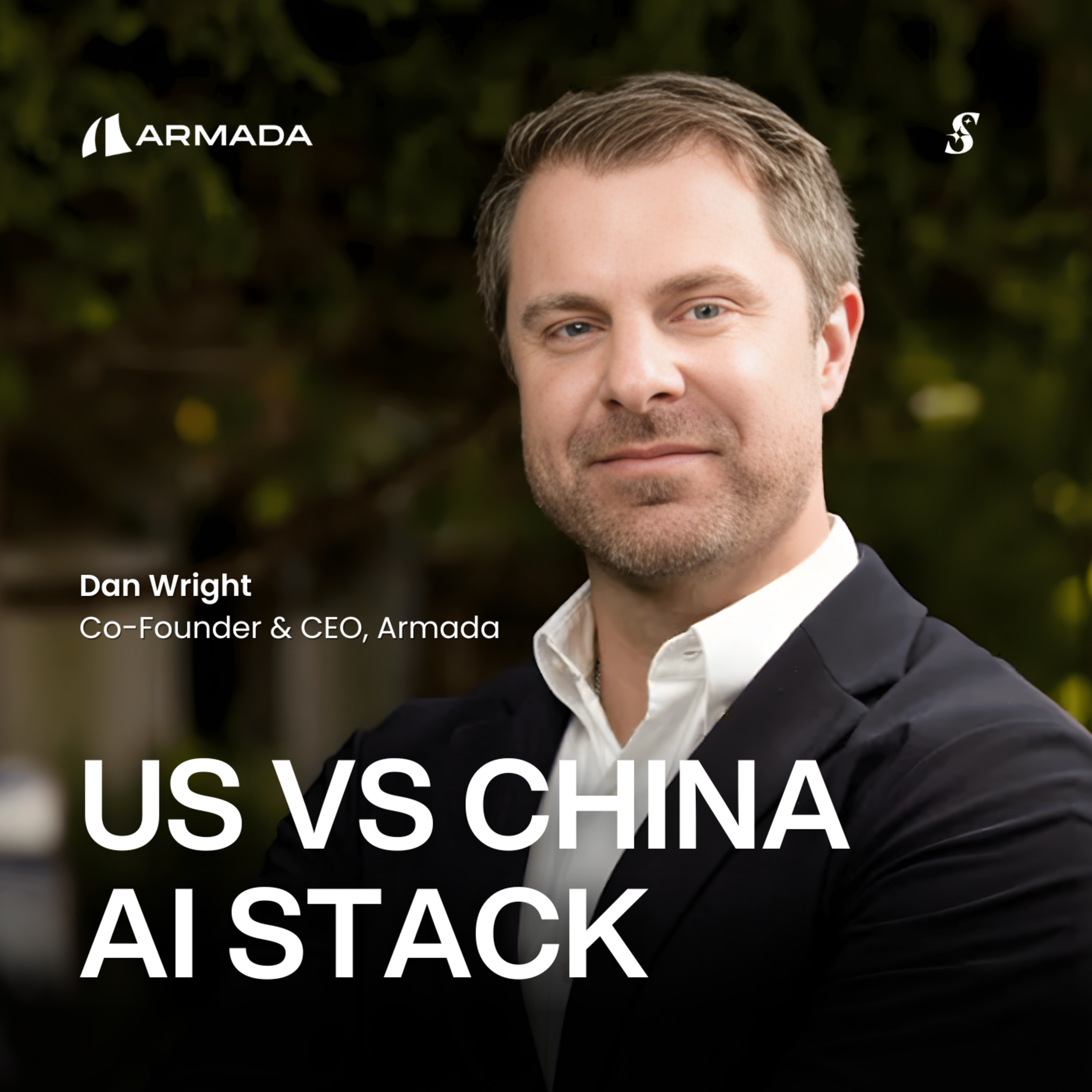
The competition in AI infrastructure is framed as a binary, geopolitical choice. The future will be dominated by either a US-led AI stack or a Chinese one. This perspective positions edge infrastructure companies as critical players in national security and technological dominance.
While data residency is a concern, political resistance and energy shortages may slow data center construction in the US and Europe. This could force Western AI companies to utilize the massive, rapidly-built capacity in places like the UAE, making the region a critical AI infrastructure hub.

The capital expenditure for AI infrastructure mirrors massive industrial projects like LNG terminals, not typical tech spending. This involves the same industrial suppliers who benefited from previous government initiatives and were later sold off by investors, creating a fresh opportunity as they are now central to the AI buildout.

The real investment case for AI in Europe is not in creating foundational models but in adoption. The continent's vast 'old economy' index has significant potential for productivity gains. As AI's return on investment becomes clear, Europe could be re-rated as a major beneficiary of AI adoption, capitalizing on its large industrial base.

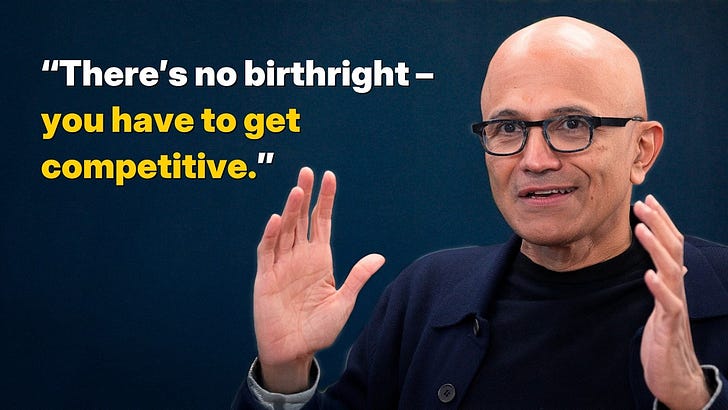
As countries from Europe to India demand sovereign control over AI, Microsoft leverages its decades of experience with local regulation and data centers. It builds sovereign clouds and offers services that give nations control, turning a potential geopolitical challenge into a competitive advantage.
Despite its talent, Europe struggles to scale domestic tech companies, leaving it strategically vulnerable. It's forced to depend on US cloud providers it views with suspicion or Chinese alternatives it also distrusts, with no viable third option.
The UK is leveraging its post-Brexit autonomy to create a more favorable regulatory environment for AI and tech compared to the EU. This "pro-business" pragmatism, demonstrated during a recent state visit, has successfully attracted tens of billions in investment commitments from US tech giants like Microsoft, Google, and NVIDIA.

The push for sovereign AI clouds extends beyond data privacy. The core geopolitical driver is a fear of becoming a "net importer of intelligence." Nations view domestic AI production as critical infrastructure, akin to energy or water, to avoid dependency on the US or China, similar to how the Middle East controls oil.

For Europe to compete in AI, it must overcome its aversion to large-scale energy projects. The winning strategy is to co-locate massive compute infrastructure in areas with cheap, abundant energy, like Norwegian wind farms. Without this, Europe risks becoming a 'tourist economy' built on past glories.