Get your free personalized podcast brief
We scan new podcasts and send you the top 5 insights daily.
Create an agent that automatically reviews pull requests after CI checks pass. The agent scores PRs on risk factors like blast radius and security. Low-risk PRs are auto-approved and merged, while high-risk ones are flagged for human review, dramatically speeding up deployment velocity.

Related Insights
As AI agents and copilots accelerate code creation from numerous sources, the primary challenge for engineering teams becomes validating this massive influx of pull requests. This makes the code review process the new critical choke point in the software development lifecycle.

The ease of creating PRs with AI agents shifts the developer bottleneck from code generation to code validation. The new challenge is not writing the code, but gaining the confidence to merge it, elevating the importance of review, testing, and CI/CD pipelines.
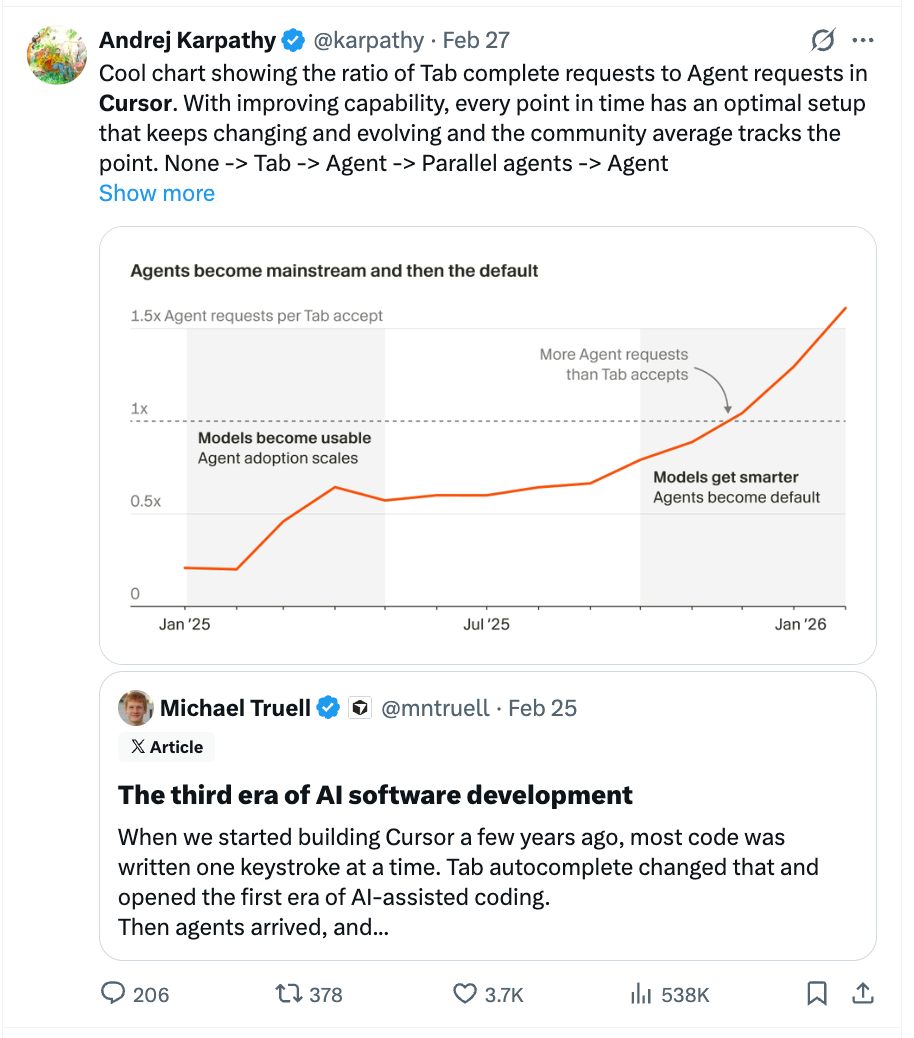
Traditional software development processes, like peer code reviews, were built for a cadence of 10-15 PRs per month. When AI agents enable a 10x increase in output, the human team becomes the bottleneck, forcing a shift towards AI-driven review and validation.

A custom '$land' skill delegates the entire post-push process to the agent. It autonomously handles waiting for reviews, fixing CI flakes, merging from upstream to resolve conflicts, and managing the merge queue. This automates the tedious 'last mile' of software delivery.
To meet compliance rules requiring a human approver, an AI bot can perform the full review and signal its approval with a gray checkmark. This transforms the human's role from a time-consuming reviewer into a final approver who can confidently merge the code in two clicks.

Contrary to the belief that AI introduces risk, Intercom's AI code review agent led to a lower revert rate for AI-approved code. This demonstrates that AI can enhance safety and quality, not just speed, by systematically enforcing standards on every pull request.
A common objection to auto-approving pull requests is compliance. However, it is possible to maintain frameworks like SOC 2 by formalizing the AI review process within risk and code review policies, ensuring every automated action is auditable, queryable, and defensible.
Solo developers can integrate AI tools like BugBot with GitHub to automatically review pull requests. These specialized AIs are trained to find security vulnerabilities and bugs that a solo builder might miss, providing a crucial safety net and peace of mind.

The team leverages Codex's automation for advanced dev workflows. This includes keeping pull requests mergeable by automatically resolving conflicts and fixing build issues, and running scheduled jobs to find and fix subtle, latent bugs in random files.

In an agent-driven workflow, human review becomes the primary bottleneck. By moving reviews to after the merge, the team prioritizes agent throughput and treats human attention as a scarce resource for high-level guidance, not gatekeeping individual pull requests.