Get your free personalized podcast brief
We scan new podcasts and send you the top 5 insights daily.
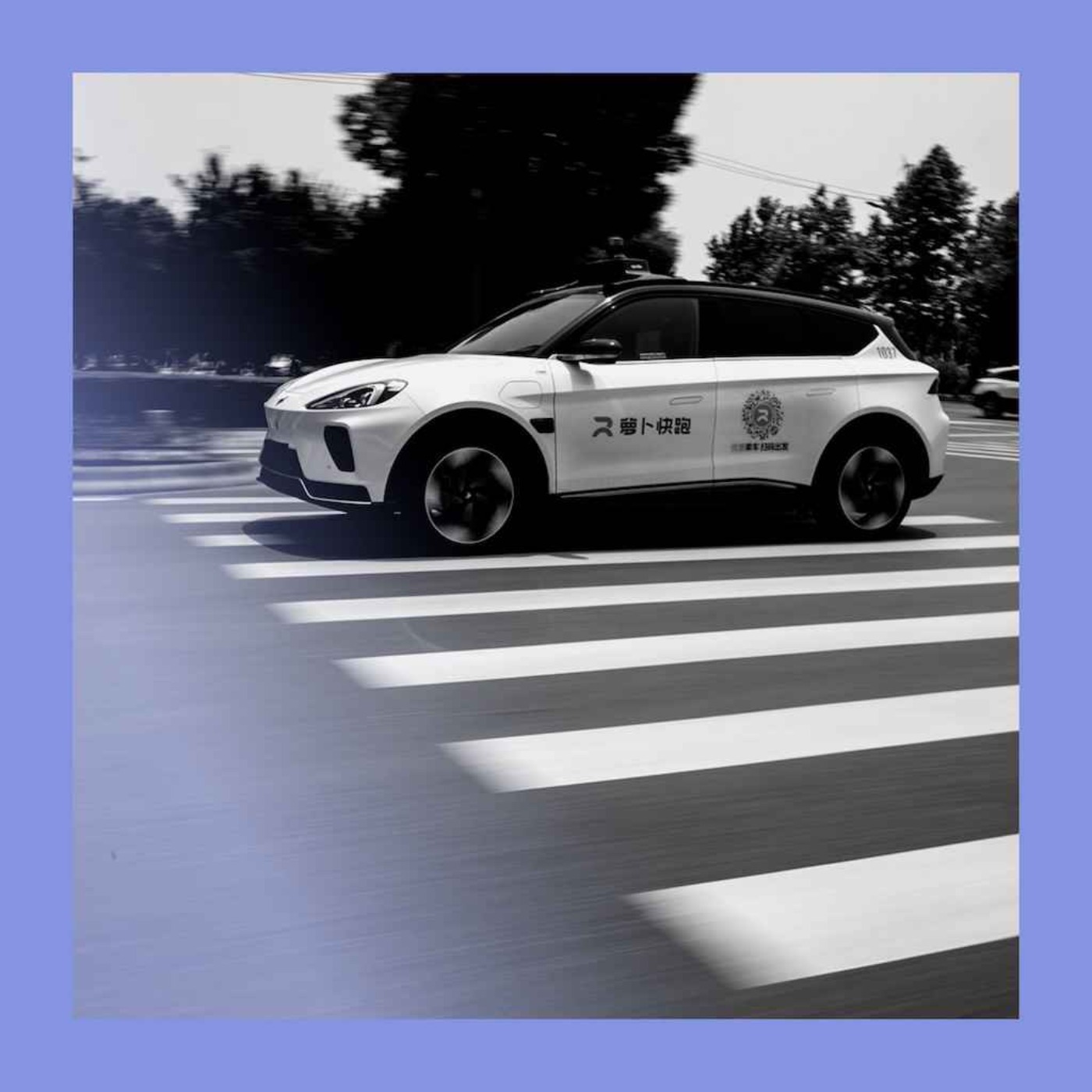
Contrary to perceptions of rigid control, China accelerates tech progress by empowering local regulators to be agile. These regulators create urban "test beds" for technologies like autonomous taxis, which entices talent and investment, turbocharging development cycles far ahead of Western counterparts.
Related Insights
In China, mayors and governors are promoted based on their ability to meet national priorities. As AI safety becomes a central government goal, these local leaders are now incentivized to create experimental zones and novel regulatory approaches, driving bottom-up policy innovation that can later be adopted nationally.

According to Nvidia's CEO Jensen Huang, China's real threat in the AI race isn't just its technology but its centralized ability to bypass the state-by-state regulations and power constraints bogging down US companies. While the US debates 50 legislative frameworks, China rapidly deploys infrastructure, creating a significant speed advantage.
Contrary to the common narrative of a stifling 'crackdown,' Joe Tsai argues China's increased tech regulation established a 'new normal' that is better for business. By clarifying the 'red lines' around monopoly and privacy, the government created a more predictable environment, which is preferable to the previous era of unchecked, chaotic competition.

By coining the term 'low altitude economy,' China is signaling a deliberate, top-down industrial strategy to own the market for autonomous flying vehicles (EVTOLs) and delivery drones. This isn't just about a single company; it's about creating and regulating a new economic sector to establish a global manufacturing and operational lead.

Unlike the U.S. government's recent strategy of backing single "champions" like Intel, China's successful industrial policy in sectors like EVs involves funding numerous competing companies. This state-fostered domestic competition is a key driver of their rapid innovation and market dominance.

China is no longer just a low-cost manufacturing hub for biotech. It has become an innovation leader, leveraging regulatory advantages like investigator-initiated trials to gain a significant speed advantage in cutting-edge areas like cell and gene therapy. This shifts the competitive landscape from cost to a race for speed and novel science.

Uber's CEO argues China's EV dominance is a product of a unique hybrid model. The government sets a top-down strategic goal, but then over 100 domestic companies engage in "brutal," bottoms-up competition. The winners, like BYD, emerge battle-tested and highly innovative.

China's government sets top-down priorities like dominating EVs. This directive then cascades to provinces and prefectures, which act as hundreds of competing, state-backed venture capital funds, allocating capital and talent to achieve the national strategic goal in a decentralized but aligned way.

China is poised to become the next leader in biotechnology due to a combination of structural advantages. Their regulatory environment is moving faster, they have a deep talent pool, and they can conduct clinical trials at a greater speed and volume than the U.S., giving them a significant edge.
Contrary to the Western perception of a monolithic state-run system, China fosters intense competition among its provinces. Provincial leaders are incentivized to outperform each other, leading to massive, parallel innovation in industries like EVs and solar, creating a brutally efficient ecosystem.
