Get your free personalized podcast brief
We scan new podcasts and send you the top 5 insights daily.
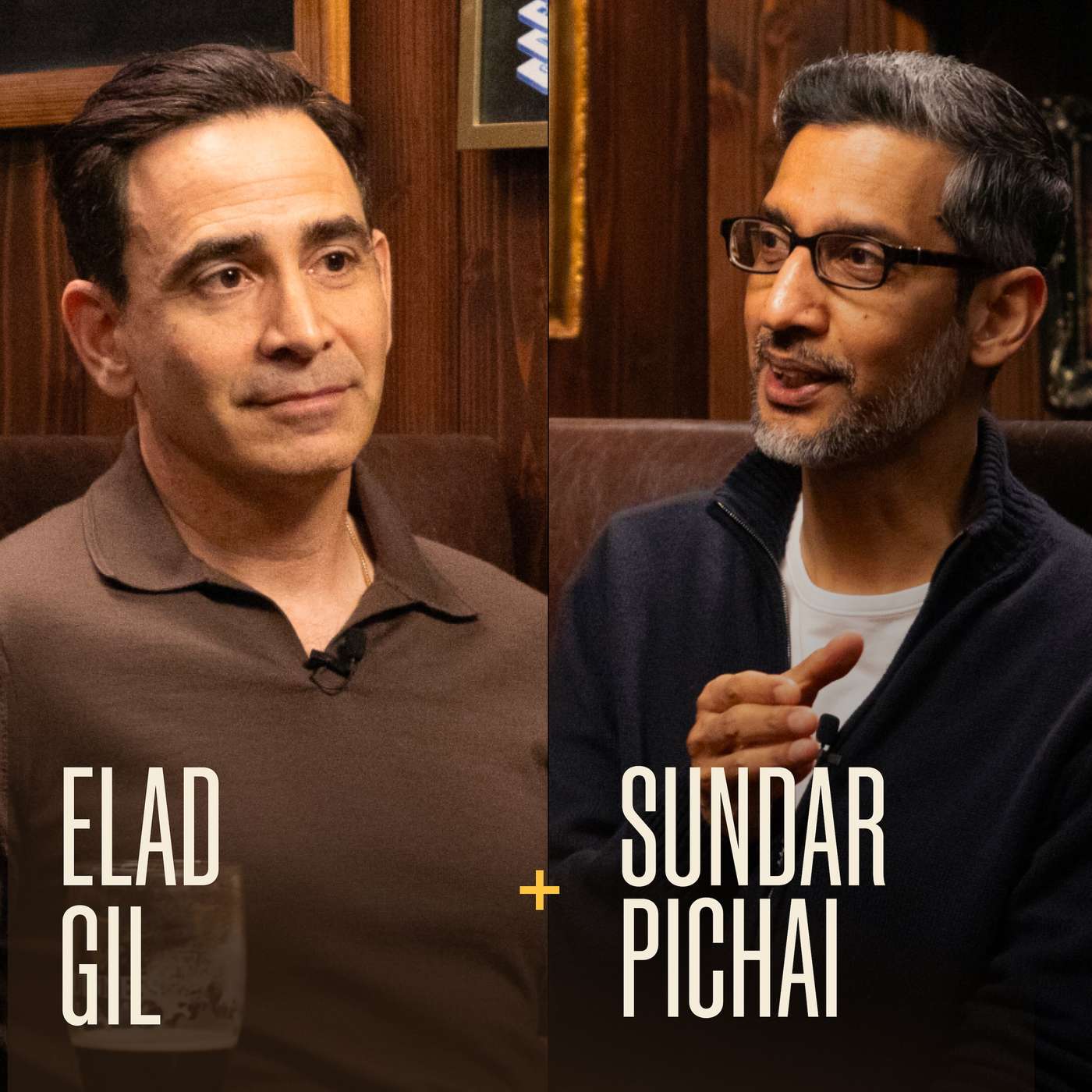
Google's various AI initiatives—intelligent search, agent platforms like Spark, and app-building tools—are destined to converge. The future of search, per Pichai, is a unified system that can execute complex tasks (e.g., plan a trip) rather than just linking to information.

Related Insights
Google is integrating AI agents directly into search, allowing users to create ongoing tasks like monitoring apartment listings. This transforms search from a tool for one-time information retrieval into a persistent service that works 24/7, a fundamental shift in its core function and user interaction model.

CEO Sundar Pichai sees the 'AI moment' as a way to unify product development. By building on a common infrastructure like Gemini, teams can create consistent, cross-product features, countering the company's reputation for launching fragmented or overlapping products.
The future of search is not linking to human-made webpages, but AI dynamically creating them. As quality content becomes an abundant commodity, search engines will compress all information into a knowledge graph. They will then construct synthetic, personalized webpage experiences to deliver the exact answer a user needs, making traditional pages redundant.

Contrary to the narrative that AI will kill search, Google sees AI as an expansionary force. Features like AI overviews and Google Lens are driving a 70% YoY increase in visual searches, fulfilling new types of user curiosity and increasing the total volume of questions asked.

For years, Google has integrated AI as features into existing products like Gmail. Its new "Antigravity" IDE represents a strategic pivot to building applications from the ground up around an "agent-first" principle. This suggests a future where AI is the core foundation of a product, not just an add-on.

Google's strategy involves the core AI model progressively absorbing the surrounding tooling and infrastructure (the "scaffolding"). This creates a standardized, extensible "harness" that accelerates development and ensures a consistent, high-quality agentic experience across Google's vast and diverse product landscape, from Search to consumer apps.

Instead of being replaced by AI chatbots or agents, Pichai believes Search will evolve to manage them. Users will run multiple, long-running tasks, and Search will become the interface to orchestrate these agentic flows, expanding its capabilities rather than becoming obsolete.
The evolution of search won't stop with LLMs. The next stage involves autonomous AI agents that complete tasks like booking travel on a user's behalf. Marketers must shift their focus from answering human queries to ensuring their products and services are discoverable and selectable by these agents.

The future of AI interaction won't be a multitude of specialized apps. Instead, it will likely converge into a smaller number of powerful, generalized input boxes that intelligently route user intent, much like the Chrome address bar or Google's main search page.

Google's "AI mode," powered by Gemini 3, is replacing static blue links with dynamically generated, interactive user interfaces. This shift means search results will become lightweight, composable apps tailored to the query, fundamentally altering SEO and the concept of website traffic.