Get your free personalized podcast brief
We scan new podcasts and send you the top 5 insights daily.
While most apps are labeled "13+" to avoid regulatory burdens, Roblox deliberately welcomes younger users. This has forced the company to become a world leader in digital safety innovations like age-banded communication and advanced filtering, turning a compliance headache into a key business differentiator.

Related Insights
Following Australia's recent law restricting social media access to users 16 and older, Europe is now considering similar legislation. This signals a potential worldwide regulatory shift towards stricter age-gating, which could fundamentally alter user acquisition and marketing strategies for platforms and teen-focused brands.

Roblox's stock plummeted after it lost 12 million users, not from declining popularity, but from strictly enforcing its 13+ age policy via selfie video verification. This highlights the direct financial conflict platforms face between maximizing user growth metrics and responsibly implementing safety and compliance measures.

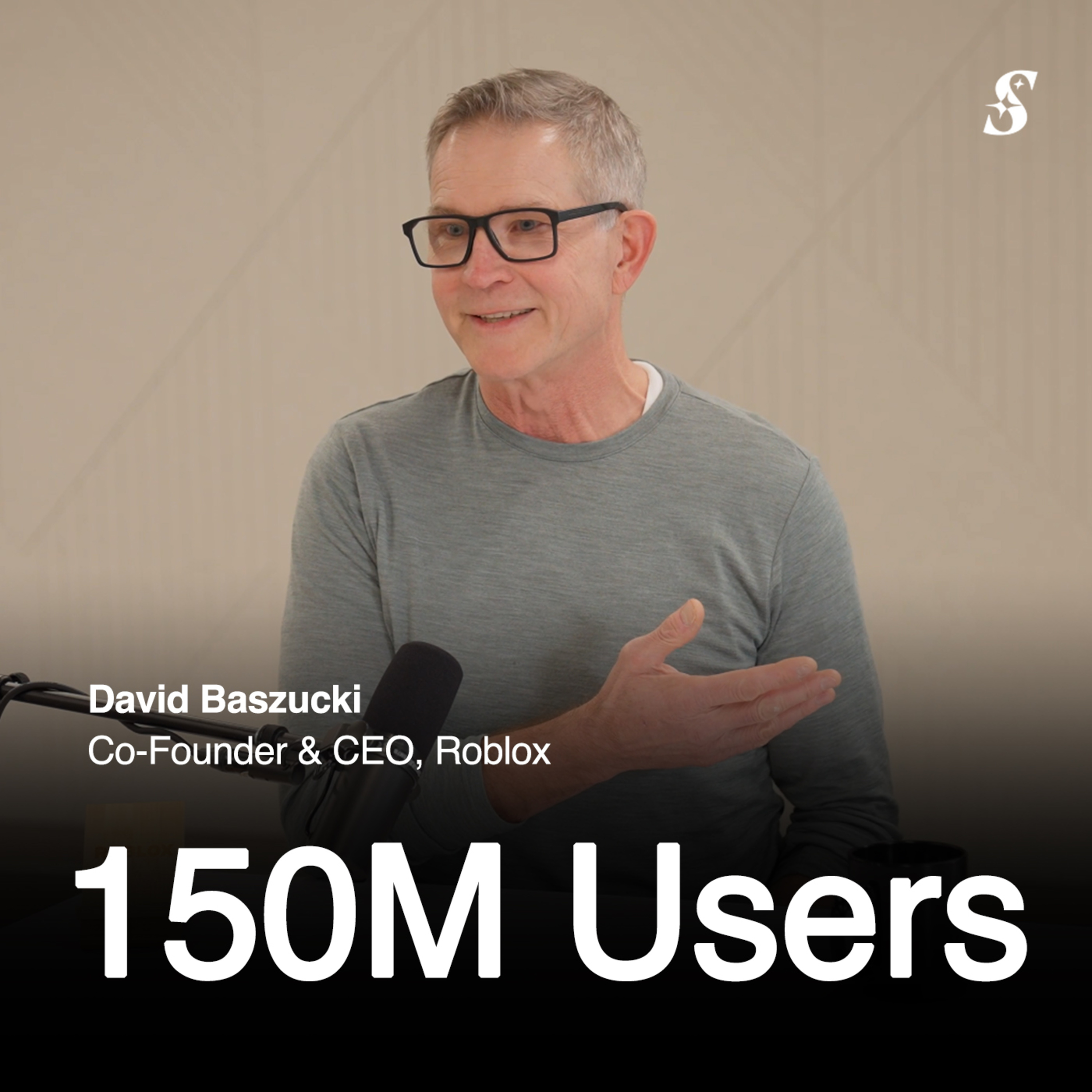
Roblox CEO Dave Bazooki articulated the company's grand ambition: to expand from its current 3% share to capture 10% of the entire global gaming market. This strategy positions Roblox not as a single game but as a foundational platform for creators, similar to an operating system for interactive experiences.

Despite its stock dropping 20% after making under-16 accounts private-by-default, Pinterest's young user base nearly doubled a year later. The move resonated with Gen Z's desire for safer, less performative online spaces, turning a perceived business risk into a major growth driver and competitive advantage.

Roblox is making its discovery algorithm more transparent to creators. The CEO explains this creates positive pressure on the company itself. By exposing the logic, they are forced to build a more robust and sophisticated algorithm that is harder to manipulate, benefiting the entire ecosystem.

CEO Dave Baszucki views Roblox's primary competitor not as another company like Fortnite, but as its own ability to execute on its vision. With only ~4% of the $200B global gaming market, the main challenge is building a better platform to capture more of that existing pie.
Entrepreneurs often see the kids' market as less crowded and thus easier to enter. The reality is the opposite: it's less crowded because it's significantly more complex, with far more laws and regulations (like COPPA) that founders must navigate successfully to survive.

Roblox's leadership frames their total addressable market beyond the $200 billion gaming industry. They are building for the "human co-experience market," viewing their platform as a new communication medium akin to a sci-fi holodeck where people share experiences.
Social media companies often claim it's technically difficult to remove underage users. However, when Australia passed a law requiring it, platforms immediately deactivated 5 million teen accounts, proving the capability exists but is deliberately withheld in unregulated markets like the U.S.

Instead of monetizing core communication, Club Penguin offered its heavily moderated (and costly) chat service for free. This ensured a safe environment for all children, not just those from wealthy families, aligning their business model with their core mission of universal safety.