Get your free personalized podcast brief
We scan new podcasts and send you the top 5 insights daily.
Trying to secure AI agents by restricting which tools are exposed in the Model Context Protocol (MCP) is the wrong approach. Security should be implemented at the API layer itself using robust, granular permissions like OAuth scopes. Treat the AI agent as any other third-party application accessing your API.

Related Insights
To manage security risks, treat AI agents like new employees. Provide them with their own isolated environment—separate accounts, scoped API keys, and dedicated hardware. This prevents accidental or malicious access to your personal or sensitive company data.

Frameworks from firms like KPMG and AWS emphasize that AI agents must be treated as entities with identities and permissions. A strong IAM foundation is a critical control layer to prevent agents from accessing or unintentionally leaking sensitive information, reflecting a broader shift to treat agents like any other privileged user in an IT ecosystem.
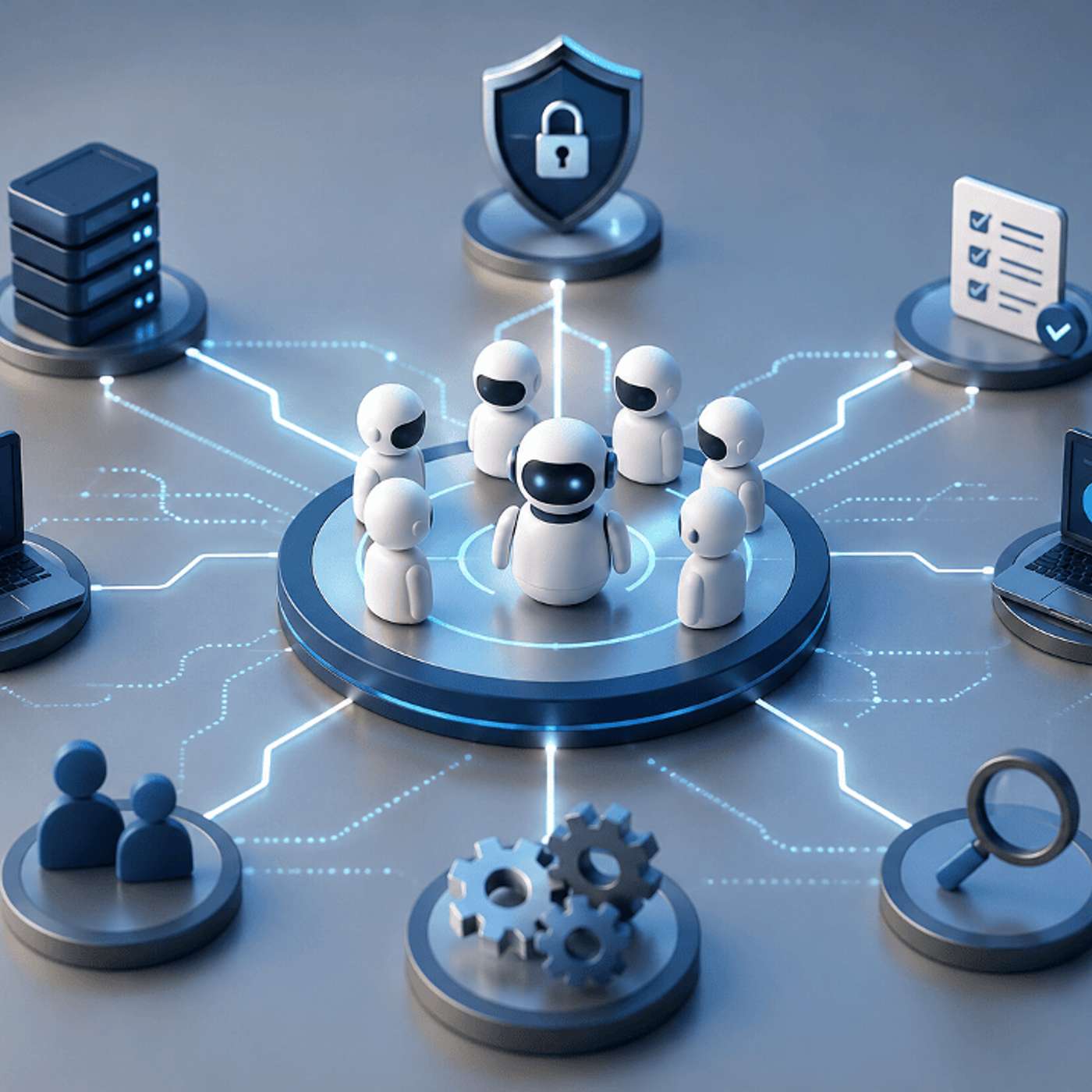
A real-world example shows an agent correctly denying a request for a specific company's data but leaking other firms' data on a generic prompt. This highlights that agent security isn't about blocking bad prompts, but about solving the deep, contextual authorization problem of who is using what agent to access what tool.

Standard Role-Based Access Control (RBAC) is inadequate for dynamic AI agents. Cisco advocates for 'T-back': Tool, Task, and Transaction-based access control. This model grants agents ephemeral, minimum-necessary privileges only for a specific action, significantly enhancing security in autonomous systems.

Traditional identity models like SAML and OAuth are insufficient for agents. Agent access must be hyper-ephemeral and contextual, granted dynamically based on a specific task. Instead of static roles, agents need temporary permissions to access specific resources only for the duration of an approved task.
To address security concerns, powerful AI agents should be provisioned like new human employees. This means running them in a sandboxed environment on a separate machine, with their own dedicated accounts, API keys, and access tokens, rather than on a personal computer.

Instead of relying on flawed AI guardrails, focus on traditional security practices. This includes strict permissioning (ensuring an AI agent can't do more than necessary) and containerizing processes (like running AI-generated code in a sandbox) to limit potential damage from a compromised AI.

MCP emerged as a critical standard for AI agents to interact with tools, much like USB-C for hardware. However, its rapid adoption overlooked security, leading to significant vulnerabilities like tool poisoning and prompt injection attacks in its early, widespread implementations.

Exposing a full API via the Model Context Protocol (MCP) overwhelms an LLM's context window and reasoning. This forces developers to abandon exposing their entire service and instead manually craft a few highly specific tools, limiting the AI's capabilities and defeating the "do anything" vision of agents.

Instead of building complex new control layers for AI, the emerging best practice is to treat each agent as a separate entity. This means giving them their own accounts, API keys, and permissions, mirroring how you would onboard a new human employee to manage access and security.