Get your free personalized podcast brief
We scan new podcasts and send you the top 5 insights daily.
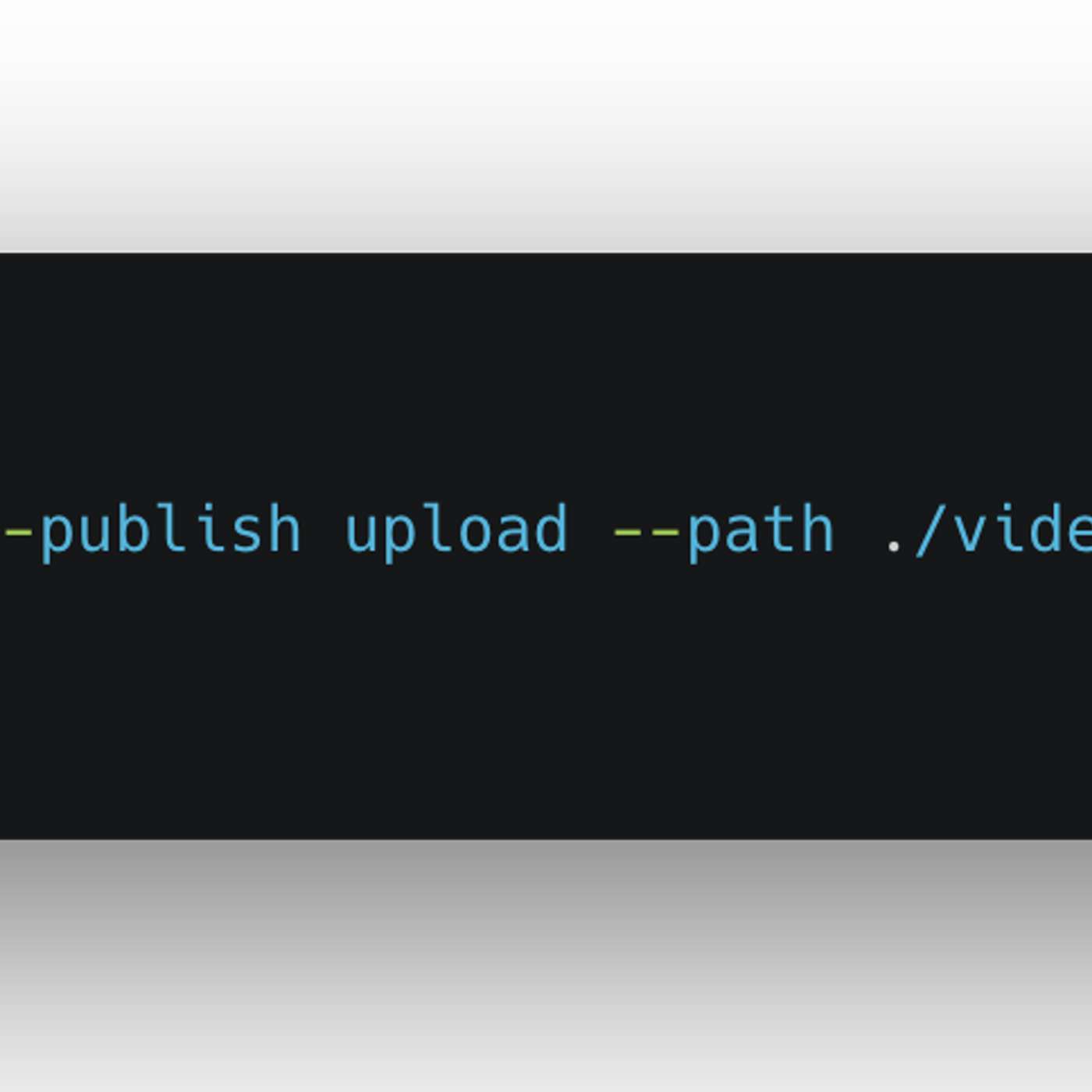
The developer chose NPX to distribute their 'YouTube Publish' tool, which allows users to run it with a single command without any global installation. This strategy significantly lowers the barrier to entry and friction for users, improving the overall developer experience for open-source tools.
Related Insights
The new paradigm for building powerful tools is to design them for AI models. Instead of complex GUIs, developers should create simple, well-documented command-line interfaces (CLIs). Agents can easily understand and chain these CLIs together, exponentially increasing their capabilities far more effectively than trying to navigate a human-centric UI.

The developer built a hybrid CLI tool using Node.js for a zero-install user experience via NPX and argument parsing, while leveraging Python's more mature Google API client for the core functionality. This polyglot approach capitalizes on the distinct strengths of each ecosystem to deliver a better final product.
The enthusiastic reception for Google's Workspace CLI reveals a counter-intuitive trend: old-school Command-Line Interfaces are becoming the preferred way for AI agents to interact with software. Unlike humans, agents don't need GUIs and benefit from the CLI's deterministic, low-friction nature, avoiding the 'abstraction tax' of newer API layers.

AI plugins (MCPs) constantly consume valuable context window space, even when not in use. Integrating tools via Command-Line Interfaces (CLIs) is more efficient. The AI can execute local CLI commands as needed, providing full tool functionality without the persistent context overhead.

The biggest barrier for designers entering the codebase isn't writing code, but the complex, brittle setup of a local development environment. Tools that abstract this away into one-click, sandboxed environments are critical for unlocking designer participation.
Beyond raw model intelligence, the usability of the developer interface is paramount. The updated Codex CLI for GPT-5.4 offers a "massively better" experience through reduced approval friction and real-time progress updates, making it a more practical and appealing tool for developers than its competitors.
The new Codex desktop application aims to make programming more accessible by eliminating the complex and often frustrating initial setup of development environments. By removing the need to configure a terminal, CLI, and IDE, it allows users with a conceptual understanding of programming to start building immediately with natural language.

When prototyping new AI-powered ideas, build them as command-line interface (CLI) tools instead of web apps. The constrained UI of the terminal forces you to focus on the core workflow and logic, preventing distraction from visual design and enabling faster shipping of a functional version.

Tools like v0 abstract away complex setup processes like installing Homebrew, VS Code, and project dependencies. This not only speeds up development but also acts as an educational bridge, allowing less technical users to participate in the software engineering process without getting bogged down by environment setup.

To encourage designers intimidated by Git and terminals to use a code playground, Notion created custom slash commands like `/create` and `/deploy`. These commands abstract complex processes, provide instructions if prerequisites are missing, and guide users through workflows like branching and deploying, lowering the barrier to entry.