Get your free personalized podcast brief
We scan new podcasts and send you the top 5 insights daily.
Despite aiming for mass automation, Tesla's Optimus production is bottlenecked by the highly complex robot hands. Each hand requires over 100 small components to be assembled manually, which is inefficient, costly, and a major hurdle to achieving Elon Musk's goal of producing thousands of robots per week.

Related Insights
A core step in Elon Musk's scaling algorithm is to 'Automate Last.' Tesla discovered that automating a process before it's manually optimized is a recipe for disaster. The Model 3 production crisis was only solved when they abandoned the over-automated line and started building cars by hand in a tent.

Tesla's near-bankruptcy with the Model 3 was caused by prematurely automating an unproven manufacturing line. They saved the company by building cars by hand in a tent. This painful lesson established their core principle: automation is like concrete, and you must perfect the process manually before locking it in, or you might bury yourself.
Tesla’s core principle to "automate last" came from the disastrous Model 3 launch, where a pre-automated production line failed, forcing the company to build cars by hand in a tent to survive. The experience proved that automating a flawed process only speeds up failure, cementing the need to perfect a manual process first.
Generalist CEO Pete Florence argues that dexterity—the ability for a robot to use its "hands" for complex manipulation—is the real holy grail of robotics. Solving challenges like wire harnessing, which is impossible for programmed robots, unlocks far more commercial value than simply creating humanoids that can walk.

An analyst argues that manufacturing a car is a solved problem, whereas building a humanoid robot involves replicating millions of years of biological evolution in hands, feet, and eyes. This represents a far greater engineering challenge with a less clear commercial ROI compared to Tesla's core automotive business.
Despite public demos of the Optimus robot appearing simplistic, Tesla's substantial supply chain commitments, like a $750 million order for actuators, indicate that mass production is much closer than perceived. This suggests a "shock and awe" product reveal is on the horizon.

Learning from Elon Musk's "over-robotization" at Tesla, Varsavsky's Overture focuses on automating the most difficult, skill-based steps in the IVF lab, like sperm injection (ICSI). They avoid automating simple tasks like moving a vial, which a human can do easily, ensuring a more practical and effective approach.

Musk identifies three primary challenges for humanoid robots: real-world intelligence, manufacturing at scale, and the hand. He asserts that from an electromechanical standpoint, perfecting the human-like hand is more difficult than all other physical components combined, requiring custom-designed actuators from first principles.
The company’s assembly line isn't fully automated. They use robots for repetitive tasks but rely on humans for high-dexterity operations, like installing small screws, that are difficult and costly to automate. This pragmatic approach balances capital expenditure with operational flexibility.
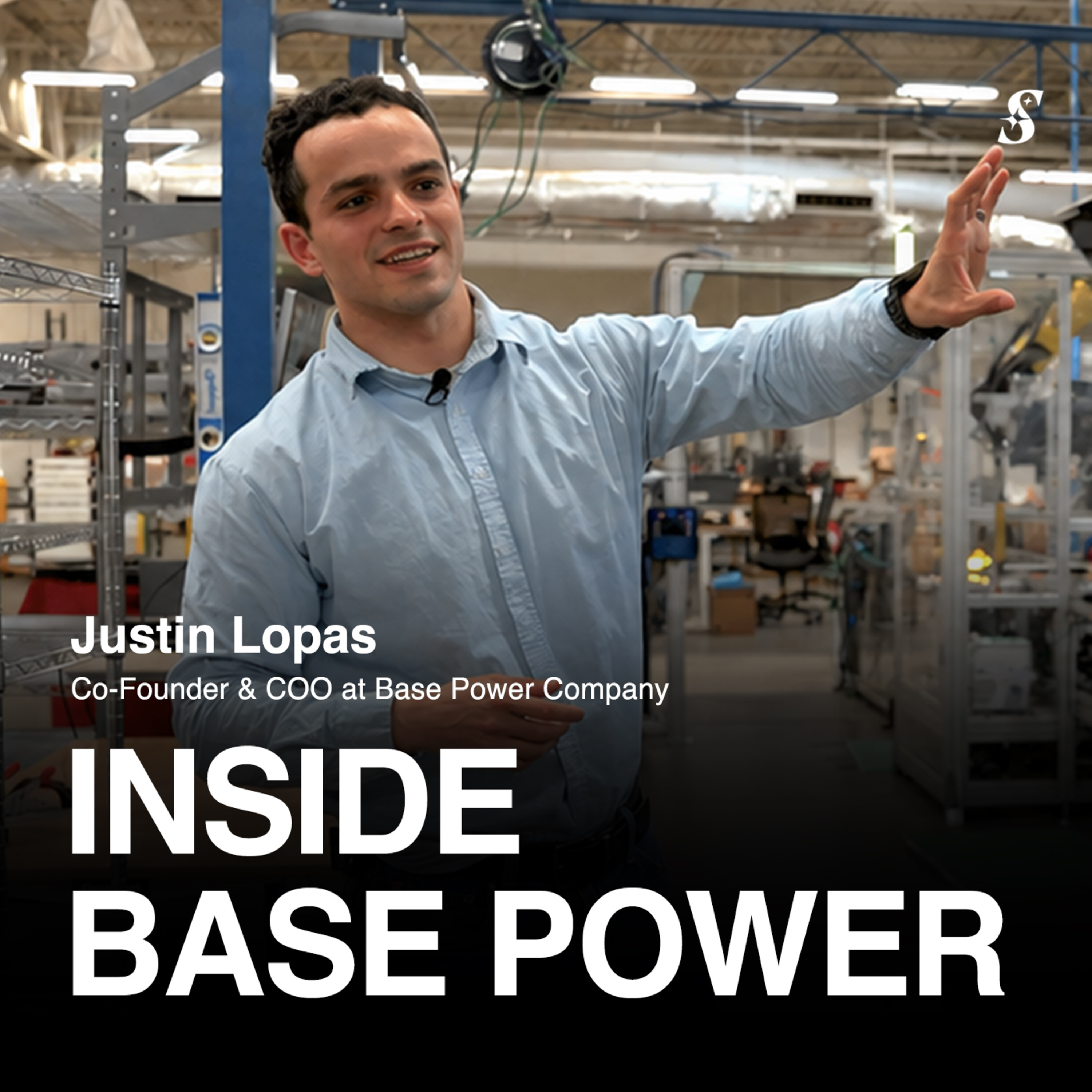
Despite producing over 250 drones daily, Neros uses manual assembly lines because their product isn't designed for automation yet. For rapidly evolving hardware, manual stations provide necessary flexibility. Introducing automation would require a significant product redesign, which is counterproductive during fast development cycles.
