Get your free personalized podcast brief
We scan new podcasts and send you the top 5 insights daily.
AI can act as a personal research assistant that synthesizes information based on your unique learning style. Define a framework for how you learn (e.g., history, first principles), and the AI can generate custom guides on any topic, even visualizing complex ideas as cartoons for easier digestion.

Related Insights
Create a powerful "second brain" by consolidating your podcasts, newsletters, and other content into a single markdown file. This plain-text document is easily consumed by AI agents, training them on your specific knowledge, tone, and frameworks. This allows the AI to generate outputs that are filtered through your unique expertise.

Unlike previous technological shifts that required external training, AI removes its own barrier to entry. If you feel overwhelmed, you can simply ask an AI tool to create a personalized, step-by-step learning plan for your specific goals and schedule.
Knowledge transfer will be re-routed through AI. Instead of creating lectures or documentation for people, experts will create content optimized for agents (e.g., simple code, markdown docs). The agents will then serve as infinitely patient, personalized tutors for any human learner.
People focus on what AI can do *for* them, but a greater opportunity is what AI can teach them. For the first time, everyone has access to a patient, expert tutor. Professionals should spend their spare time asking an AI to train them in new domains, from coding to product management.

Instead of only using AI to generate final assets, use it as a learning tool to build deep understanding. Ask it to break down complex concepts and explain how things work. This scaffolds your learning and equips you with the foundational knowledge needed to debug real-world problems.
The next evolution in AI-driven education isn't just personalizing pace, but reframing entire subjects through a student's unique passions. For example, an AI could teach physics principles using football analogies for a sports-loving child, making abstract concepts more relatable and memorable than a one-size-fits-all curriculum.

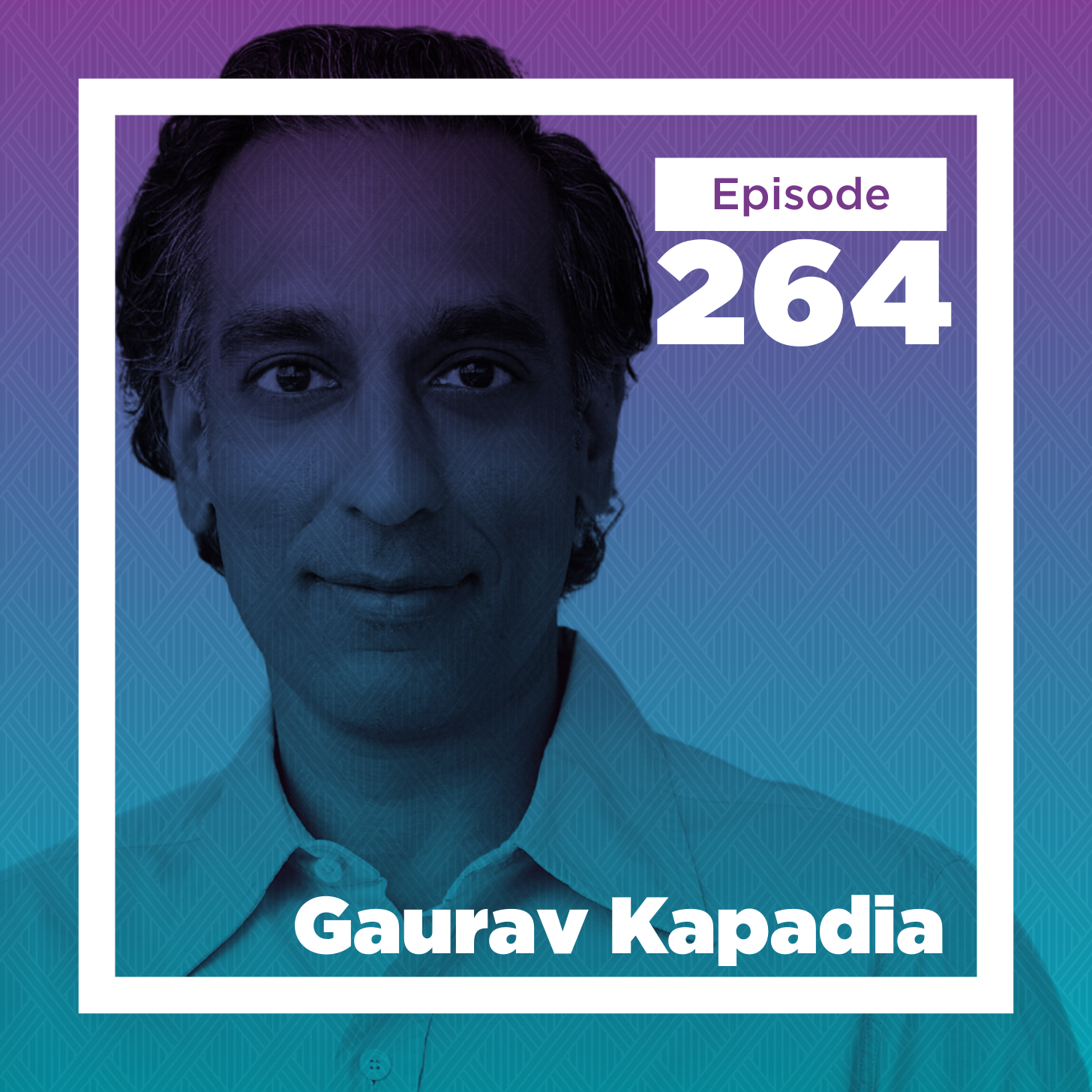
Investor Gaurav Kapadia uses AI as a knowledge augmenter to go deep on new subjects. Where he once hired university master's students to create custom curricula on topics like art history or Shakespeare, he now uses AI as his 'first port of call' for in-depth, personalized learning.
Instead of allowing AI to atrophy critical thinking by providing instant answers, leverage its "guided learning" capabilities. These features teach the process of solving a problem rather than just giving the solution, turning AI into a Socratic mentor that can accelerate learning and problem-solving abilities.
AI can overcome the common hurdle of "what do I teach?" for family members. By providing the AI with a person's interests (e.g., gardening) and the child's goals, it can generate a structured, personalized curriculum that makes them a confident and effective tutor.

Sendbird's CEO uses AI to create deep, structured 'learning centers' on complex topics like neuroscience. By prompting an LLM to act as an expert researcher, he generates an entire, custom curriculum that he can explore offline for deep learning.