Get your free personalized podcast brief
We scan new podcasts and send you the top 5 insights daily.
Contrary to spy fiction, the most effective and “crazy” intelligence gathering involves embedding surveillance technology into mundane infrastructure. For instance, building a hijackable, covert cell tower into a tractor that an adversary then purchases and deploys themselves is far more plausible and powerful than planting a tracking device in a tooth.

Related Insights
Fearing information leaks from Ukraine's Security Service, anti-corruption investigators couldn't use modern wiretaps. Instead, they resorted to old-school methods like physically locating targets and planting bugs. This highlights how state capture can cripple modern investigative tools, forcing reliance on riskier, analog techniques.

While drones get the headlines, operators on the front lines in Ukraine identified Starlink as the most critical technology. This reveals that the foundational layer for future conflict is resilient, decentralized communication, which enables all other advanced systems to function in contested environments.

While the West obsesses over algorithmic superiority, the true AI battlefield is physical infrastructure. China's dominance in manufacturing data center components and its potential to compromise the power grid represent a more fundamental strategic threat than model capabilities.

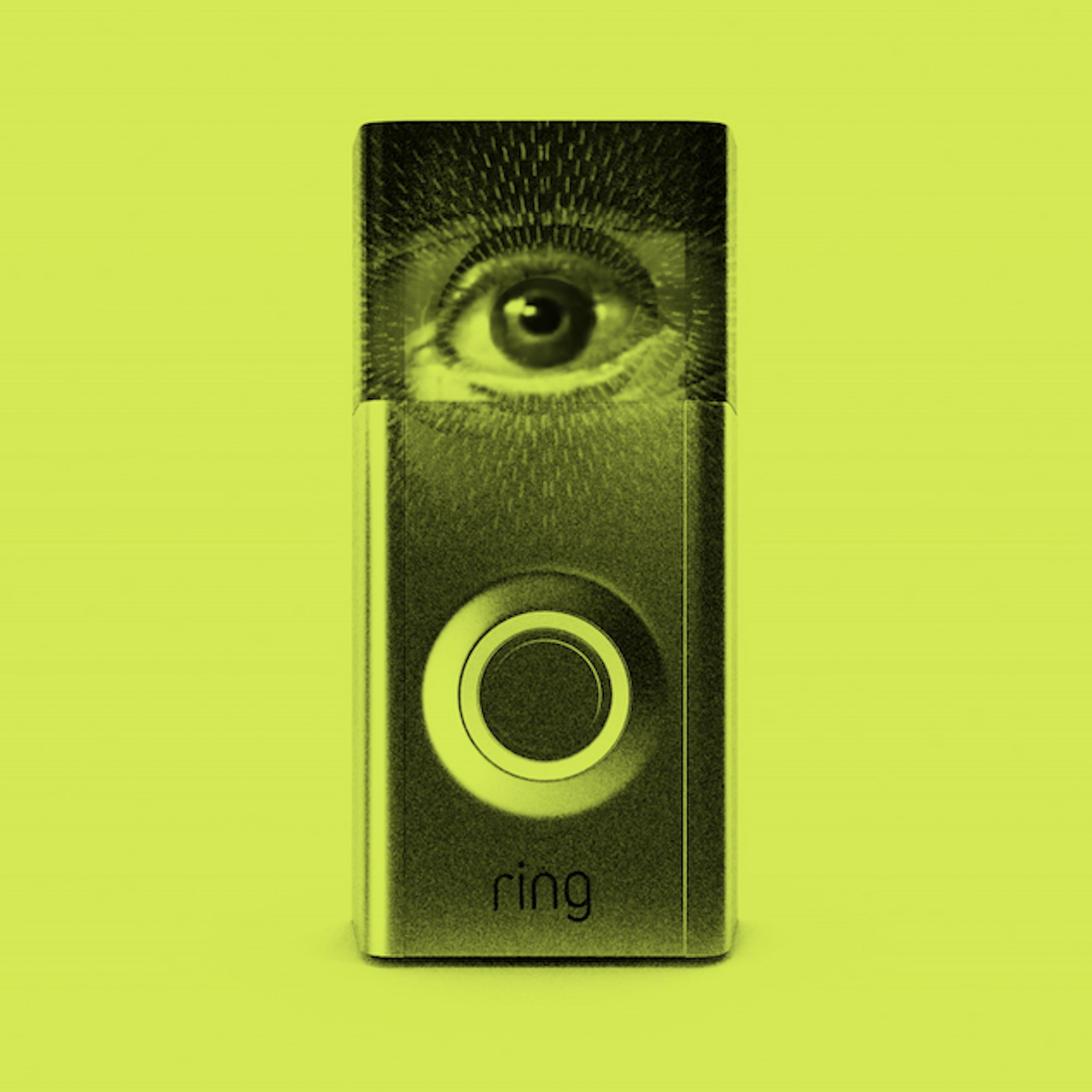
Ring's Super Bowl ad framed its AI surveillance as a benign tool to find lost dogs. Critics and the public immediately saw this as a way to normalize and develop powerful technology that could easily be used to track people, revealing how a harmless use-case can mask more controversial long-term capabilities.
The level of sophistication in publicly accessible technology, such as AI, significantly lags behind what intelligence agencies possess. As an example, the CIA had a mechanical, camera-equipped dragonfly for surveillance in 1967. This suggests that what we see as cutting-edge consumer tech is likely a decade-old version of classified systems.

While optical camouflage to trick the human eye is a solved technology, it's irrelevant on the modern battlefield. Adversaries rely on a wide spectrum of sensors like infrared, thermal, and radar, which can easily detect optically-cloaked objects, making the technology strategically impractical for Anduril's customers.

Former CIA officer John Kiriakou claims, based on WikiLeaks' Vault 7, that intelligence agencies can remotely control a car's computer to cause a crash or convert a smart TV's speaker into a microphone for surveillance, even when the device is off.
Anduril developed functional optical camouflage that makes drones nearly invisible to the human eye. However, the technology is not deployed because modern adversaries use thermal, infrared, LiDAR, and radar sensors, which would easily detect such a system. Hiding in the visible spectrum alone is an obsolete advantage.
Military balloons, a technology from the 1700s, are making a high-tech comeback. Armed forces are developing them as cost-effective platforms for surveillance, guiding munitions, and even deploying armed drones behind enemy lines. They fill a strategic gap between traditional aircraft and satellites, especially for persistent, low-altitude surveillance.

The Israelis bought a pager company, convinced Hezbollah to order from them, and inserted explosives into the devices. After routing the pagers through multiple countries, they activated all explosives simultaneously, wiping out Hezbollah's leadership in a single, coordinated supply-chain attack.