Get your free personalized podcast brief
We scan new podcasts and send you the top 5 insights daily.
When implementing tools like AI, a leader's instinct is to build the perfect system for their team. A better approach is to demonstrate the tool's potential, then intentionally delete the solution and task the team with recreating it. This teaches them the critical skill of fishing, rather than just giving them a fish.

Related Insights
Prescribing solutions atrophies your team's thinking. It's far more effective to teach them a process for analyzing data and designing solutions themselves. This empowers them to find better answers than you could alone.

Business leaders often assume their teams are independently adopting AI. In reality, employees are hesitant to admit they don't know how to use it effectively and are waiting for formal training and a clear strategy. The responsibility falls on leadership to initiate AI education.

Senior leaders feel pressure to be AI experts, but everyone is learning. The effective response isn't creating slide decks, but joining teams in bootcamps to use the tools and learn together. The new leadership craft is about asking better questions, not pretending to have all the answers.

The best test of knowledge is the ability to teach it. By having employees explain a new AI tool or workflow to their peers, they are forced to solidify their own understanding and identify knowledge gaps. This process turns passive learning into active expertise.

Simply buying an AI tool is insufficient for understanding its potential or deriving value. Leaders feeling behind in AI must actively participate in the deployment process—training the model, handling errors, and iterating daily. Passive ownership and delegation yield zero learning.

The most effective way to integrate AI is not through individual training but by empowering teams to redesign their own work processes. This team-level approach fosters agency and ensures AI is used to solve real, shared problems, which is more powerful than simply making individuals 'AI literate'.

While senior leaders are trained to delegate execution, AI is an exception. Direct, hands-on use is non-negotiable for leadership. It demystifies the technology, reveals its counterintuitive flaws, and builds the empathy required to understand team challenges. Leaders who remain hands-off will be unable to guide strategy effectively.

Leading an AI transformation requires more than just delegation. Leaders must personally engage by building their own compounding AI 'stack'—a collection of skills, context files, and workflows. This hands-on experience is essential for developing intuition, understanding the technology's potential, and leading from the front.

To lead in the age of AI, it's not enough to use new tools; you must intentionally disrupt your own effective habits. Force yourself to build, write, and communicate in new ways to truly understand the paradigm shift, even when your old methods still work well.
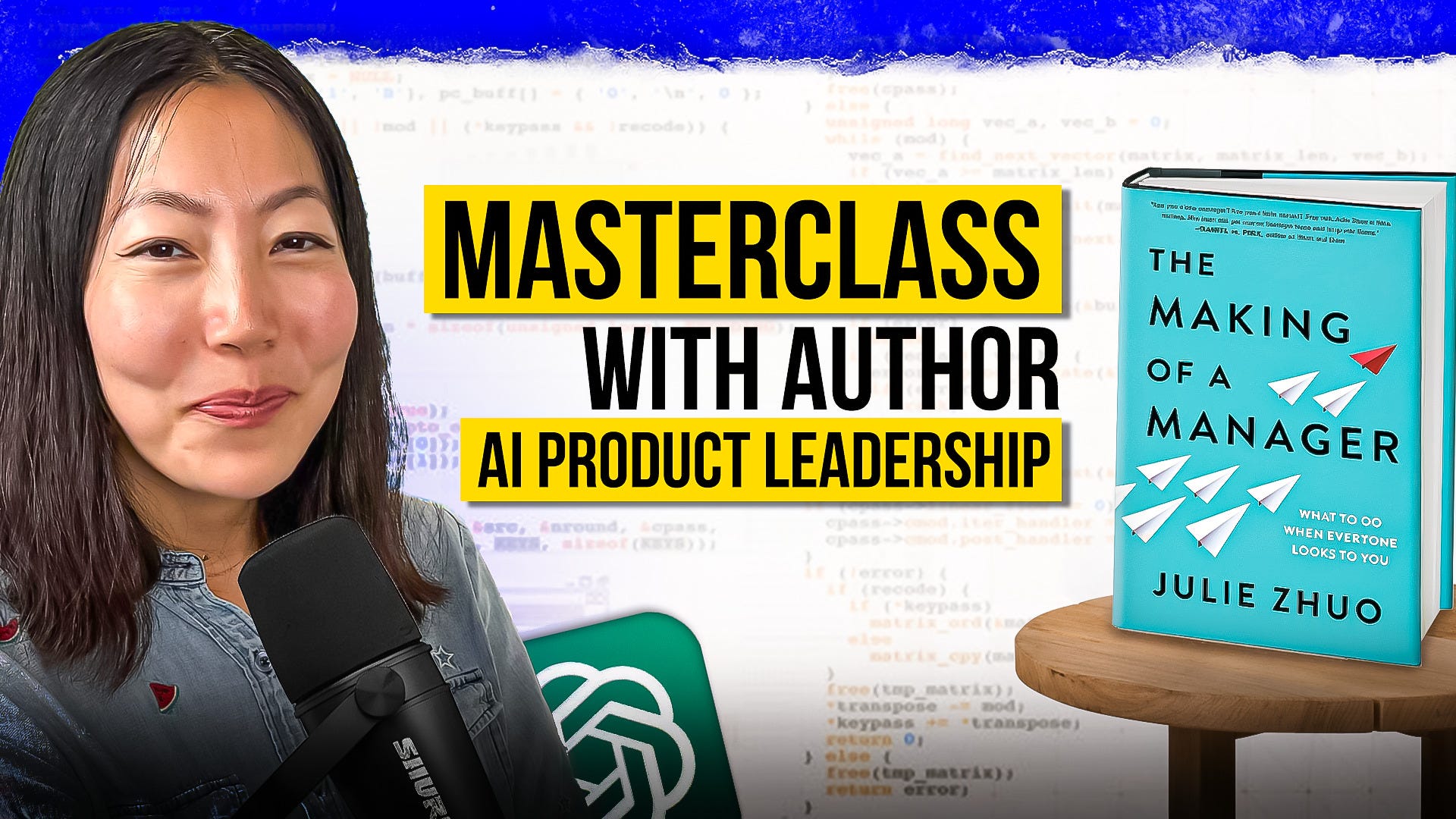
A leader's role is to teach their team, not just provide answers. Even if you can build a solution faster (like an AI agent), doing it for your team deprives them of a critical learning opportunity. The best approach is demonstrating what's possible, then empowering them to build it themselves.