Get your free personalized podcast brief
We scan new podcasts and send you the top 5 insights daily.
To create a new subnet, founders pay for a limited slot via a Dutch auction. The TAO paid isn't burned or taken by a central party; it's used to create the initial liquidity pool between TAO and the new subnet's token, bootstrapping its market.

Related Insights
Instead of making high-risk bets on individual subnets (the 'startups' of the ecosystem), purchasing the underlying TAO token provides diversified exposure to the entire network. This strategy allows investors to bet on the overall growth of decentralized AI without needing to pick specific winners.

Bittensor applies its own principles recursively: the main blockchain is a permissionless mechanism that selects and rewards the most effective *other* mechanisms (the subnets). This creates a competitive market for building valuable systems, turning innovation into a mineable commodity.
Unlike traditional equity, owning a subnet's token grants you a piece of its operational engine — the part that generates the product. The overarching company, with its revenue streams and intellectual property, is owned via separate, illiquid equity, creating a dual investment structure.

While traditional AI startups are funded by venture capital, Bittensor's subnet structure allows anyone to buy tokens and invest in nascent AI projects. This opens up participation in the economic upside of the AI boom to a broader, non-accredited public.
To prevent founders from dumping tokens, Bittensor is exploring smart contracts that lock owner tokens as a condition of operating a subnet. Control could be tied to who locks the most tokens, codifying long-term conviction and replacing trust with on-chain governance.
Some subnets are evolving their economic models. Instead of rewarding many 'miners' for contributing compute power, they are moving to a system where miners compete to submit the best-performing AI model. This focuses the network's value on intellectual property and innovation rather than commoditized hardware.
BitTensor operates as a network of competitive subnets, creating a marketplace for specialized, "narrow" AI models. This competitive structure drives down costs and improves quality, positioning it as the go-to source for future AI agents that will automatically select the most efficient models for specific tasks.

Bitstarter acts as an incubator for BitTensor subnets, funding the high upfront cost of a "slot" and providing compute resources. In return, it takes a small (3%) share of token emissions for a limited time (90 days), a much less extractive model than traditional early investors.
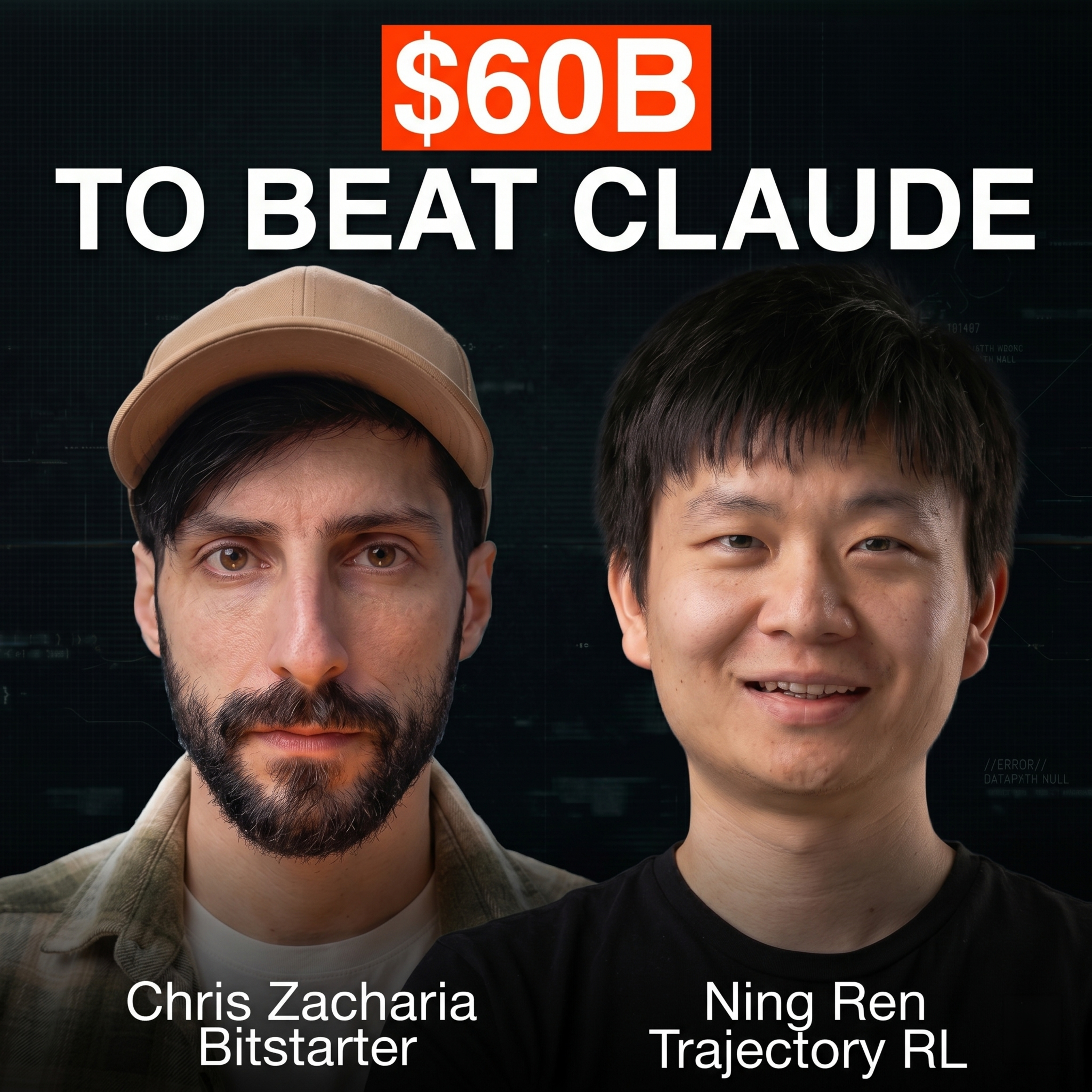
BitTensor's network operates as a "market of markets" for AI services. Its subnets use a promotion and relegation model, like European soccer leagues, where underperforming projects lose their slot to new competitors. This creates constant pressure to innovate and deliver value.

BitTensor's subnet model creates a decentralized marketplace for digital services like lead generation. Anonymous "miners" compete to provide the best data, while "validators" ensure quality. This adversarial system continuously drives down the price of the service, aiming for true commodity pricing.
