Get your free personalized podcast brief
We scan new podcasts and send you the top 5 insights daily.
RAMP's internal AI tool is built on the principle of not limiting user upside. Instead of simplifying the tool by removing features for non-technical users, they make advanced complexity invisible while preserving full capability, breaking from conventional software design wisdom.

Related Insights
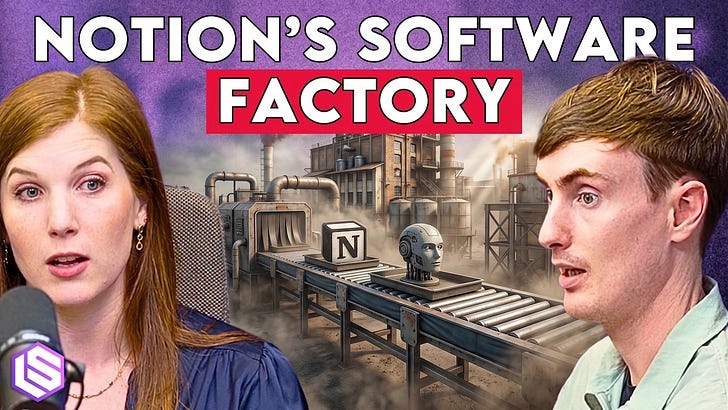
For its Custom Agents feature, Notion rejected the goal of making it "as easy as possible to use." They realized simplifying the interface would abstract away critical interpretability and diminish the tool's power, so they aligned on building a deep, sophisticated product for "the top of the class."
Anthropic's Cowork isn't a technological leap over Claude Code; it's a UI and marketing shift. This demonstrates that the primary barrier to mass AI adoption isn't model power, but productization. An intuitive UI is critical to unlock powerful tools for the 99% of users who won't use a command line.
RAMP found employees were stuck not because AI models were weak, but because the setup was too painful. They built an internal platform, "Glass," to provide a fully configured AI workspace from day one, proving the 'harness' is the key to enterprise-wide adoption.
Ramp's internal tool, "Inspect," allows non-technical roles like PMs and designers to generate and merge production-ready code. This dramatically accelerates development for quality-of-life improvements and minor features, activating the entire company as builders, not just the engineering team.

A major focus for OpenAI's design team is the growing gap between what their models are capable of and what users actually know they can do. The design team's job is to create interfaces and tools that expose the model's full potential to the user.
With AI coding assistants, the barriers to shipping software are eroding. At Ramp, designers and customer support agents are now shipping code to production. This suggests a future where the traditional, siloed Engineering, Product, and Design (EPD) team structure becomes obsolete.
Despite models demonstrating PhD-level capabilities, most people only use them for basic tasks. The biggest hurdle for AI companies is not making models smarter, but bridging this usability gap by making advanced power easily accessible to the average person, likely through better interfaces and agents.

Kraftful built a complex system with six AI agents but never exposed this to users. Its success came from hiding the AI and focusing relentlessly on delivering simple insights that solved a specific user problem, proving users care about outcomes, not the underlying tech.
AI chat interfaces are often mistaken for simple, accessible tools. In reality, they are power-user interfaces that expose the raw capabilities of the underlying model. Achieving great results requires skill and virtuosity, much like mastering a complex tool.
The most effective application of AI isn't a visible chatbot feature. It's an invisible layer that intelligently removes friction from existing user workflows. Instead of creating new work for users (like prompt engineering), AI should simplify experiences, like automatically surfacing a 'pay bill' link without the user ever consciously 'using AI.'