Get your free personalized podcast brief
We scan new podcasts and send you the top 5 insights daily.
In the nutrient-poor, highly radioactive environment inside the ruined reactor, scientists theorize that bacteria may have evolved to use ionizing radiation as an energy source. This discovery could inform genetic engineering for organisms designed to survive in extreme environments like space or Mars.

Related Insights
A Russian drone struck a maintenance garage attached to Chernobyl's New Safe Confinement structure. This random point of impact acted as a shield, preventing a direct hit on the highly vulnerable 1986 sarcophagus underneath, which could have led to a far worse outcome.
The first practical step toward making space habitable is developing microbe-based bioreactors. These systems will use local materials on the Moon and Mars to produce essentials like food, medicine, and plastics, creating the self-sustaining ecosystems required for any long-term human presence off-Earth before large-scale terraforming is possible.

After the mass evacuation, the absence of human activity allowed the Chernobyl exclusion zone to transform into a massive, accidental nature reserve. This has allowed scientists to study ecosystem recovery from radiation, revealing a surprisingly diverse and abundant array of wildlife, from endangered horses to wolves.
In Gabon, ancient uranium deposits naturally initiated and sustained nuclear fission for millions of years, activated by rainwater. This discovery proves that fission is a natural phenomenon, not just a human invention, challenging perceptions of it as "unnatural."

The belief that "reactors don't explode under socialism" fostered a culture of secrecy and centralized decision-making. Unlike in Western incidents where on-site teams were empowered, evacuating Pripyat required approval from the head of the Soviet Union, fatally delaying the response and exacerbating the crisis.
Radiant founder Doug Bernauer was tasked with powering a Mars colony at SpaceX. After struggling with solar's limitations, Elon Musk suggested nuclear. This R&D directly led him to found Radiant, applying space-grade power concepts to terrestrial energy problems.

To ensure human survival on Mars and beyond, medical countermeasures for radiation and low gravity may be insufficient. The next step in human adaptation could be genetic engineering, creating a new evolutionary path for humans specifically designed to thrive in off-world environments.
Officials faced a dilemma: repair the damaged dome in a high-radiation environment or move the structure, leaving the unstable 1986 reactor exposed. They chose the former, deciding that immediate risk to workers was more acceptable than the catastrophic potential of containment failure.
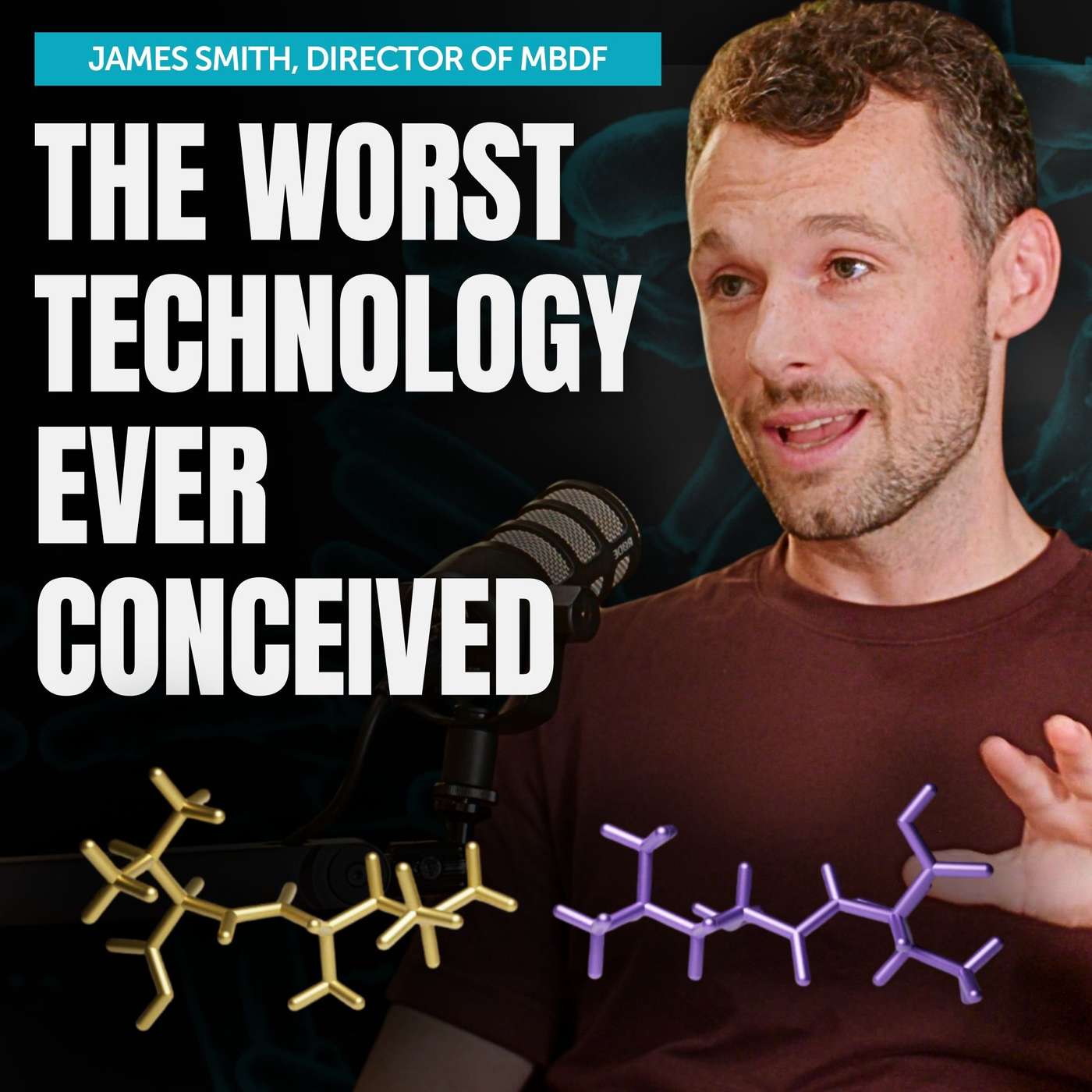
A common misconception is that engineered life would be feeble like current lab-created 'minimal cells'. In reality, a bad actor would create a mirror version of a naturally robust bacterium like E. coli, not a fragile lab specimen, to ensure its survival and virulence in the natural environment.
Beyond optimizing existing biological functions, Frances Arnold's lab uses directed evolution to create enzymes for entirely new chemical reactions, like forming carbon-silicon bonds. This demonstrates that life's chemical toolkit is a small subset of what's possible, opening up a vast "non-natural" chemical universe.
