Get your free personalized podcast brief
We scan new podcasts and send you the top 5 insights daily.
Advances like immunotherapy and Antibody-Drug Conjugates (ADCs) in early-stage Triple-Negative Breast Cancer (TNBC) are so effective that fewer patients are relapsing. This success paradoxically makes it harder to enroll patients in trials for metastatic disease, shifting the trial population toward those with de novo metastatic cancer.

Related Insights
A dramatic epidemiological shift has occurred in HER2+ breast cancer. Due to highly effective adjuvant therapies preventing recurrence, the majority of new metastatic cases (two-thirds) are now de novo, a complete reversal from 15 years ago when relapsed disease dominated.

Clinicians lack evidence to guide treatment for triple-negative breast cancer that relapses shortly after neoadjuvant chemo-immunotherapy. Pivotal trials for new ADCs like Dato-DXD included very few patients with prior immunotherapy, creating a significant and common evidence gap in clinical practice.

The KEYNOTE-756 and Checkmate 7FL trials found high pathological complete response (pCR) rates with neoadjuvant immunotherapy in ER-low (1-10%) breast cancers. This suggests this unique subgroup, often excluded from triple-negative trials but behaving similarly, may benefit significantly from immunotherapy, though it is not yet standard of care.

An increasing proportion of metastatic breast cancer is diagnosed de novo, not as a recurrence. This seemingly negative trend is actually a positive sign that adjuvant therapies are successfully curing more patients with early-stage disease.
The expected rapid approval of the highly effective RAS inhibitor daraxonrasib poses a dual crisis. It creates an urgent need for equitable patient access globally while simultaneously making future randomized trials against standard chemotherapy nearly impossible to recruit, as patients will be unwilling to join the control arm.

In metastatic breast cancer, approximately one-third of patients are unable to proceed to a second line of therapy due to disease progression or declining performance status. This high attrition rate argues for using the most effective agents, such as ADCs, in the first-line setting.
An overall survival (OS) benefit in an adjuvant trial may not be meaningful for patients in systems (e.g., the U.S.) with guaranteed access to the same effective immunotherapy upon recurrence. The crucial, unanswered question is whether treating micrometastatic disease is inherently superior to treating macroscopic disease later, a distinction current trial data doesn't clarify.
As multiple effective Antibody-Drug Conjugates (ADCs) become available, the primary clinical challenge is no longer *if* they work, but *how* to use them best. Key unanswered questions involve optimal sequencing, dosing for treatment versus maintenance, and overall length of therapy, mirroring issues already seen in breast cancer.
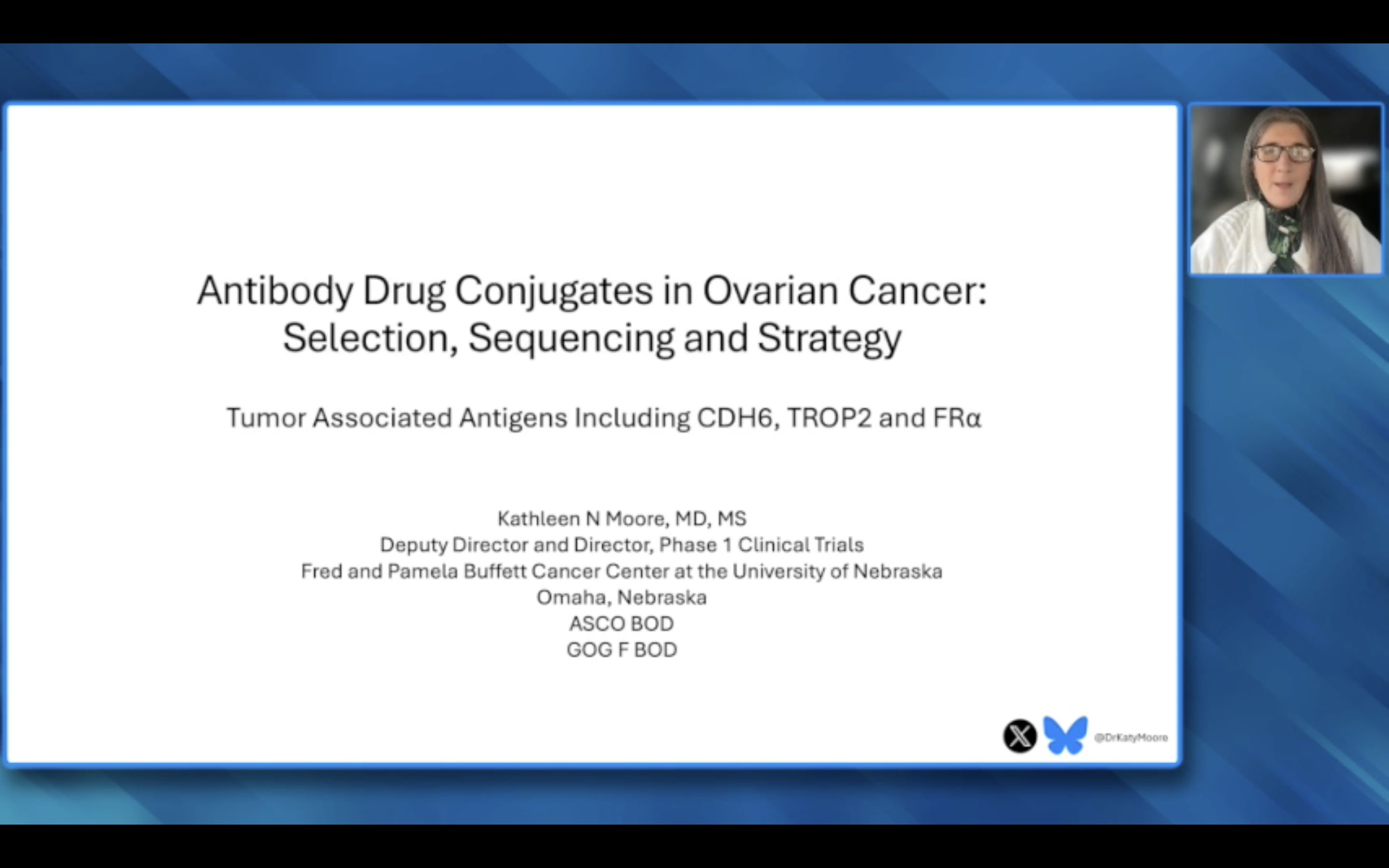
Despite prior speculation of a slowdown, the prominence of Antibody-Drug Conjugates (ADCs) in first-in-human trials at ASCO is "skyrocketing." The volume of new ADC trials now nearly equals that of small molecules and far surpasses traditional monoclonal antibodies.

As more effective targeted therapies move into first- and second-line treatment, patients live longer. A paradoxical outcome is that more patients will survive long enough to become candidates for third-line therapy, potentially expanding this patient population rather than shrinking it.