Get your free personalized podcast brief
We scan new podcasts and send you the top 5 insights daily.
As more effective targeted therapies move into first- and second-line treatment, patients live longer. A paradoxical outcome is that more patients will survive long enough to become candidates for third-line therapy, potentially expanding this patient population rather than shrinking it.

Related Insights
Historically, discussing adjuvant therapy for Stage III colon cancer was quick and straightforward, while Stage II was complex. The advent of ctDNA testing has reversed this dynamic. Stage II decisions are now clearer (treat if positive), while Stage III discussions have become much longer and more nuanced as clinicians integrate ctDNA data with patient preferences.

With pirtobrutinib, time to next treatment often exceeds progression-free survival. This discrepancy exists because disease progression is frequently slow and asymptomatic, meaning clinicians do not need to switch therapies immediately upon seeing radiographic changes, allowing for longer treatment duration.

Retesting for biomarkers with liquid biopsy in the third-line setting is crucial. It can uncover new, actionable mutations that have emerged during treatment or confirm the absence of resistance mutations, potentially allowing patients to benefit from re-challenging with a previously used targeted therapy.
As CAR-T cell therapies are increasingly adopted for second-line treatment of large cell lymphoma, epcoritamab is solidifying its role as a critical, potentially curative replacement option in the third-line setting. This establishes a clear sequential treatment pathway for patients who continue to relapse.

In metastatic breast cancer, approximately one-third of patients are unable to proceed to a second line of therapy due to disease progression or declining performance status. This high attrition rate argues for using the most effective agents, such as ADCs, in the first-line setting.

In oncology R&D, a successful two-drug combination isn't the final goal but the new standard of care to build upon. Researchers immediately begin planning for "triplets"—adding a third agent to the successful doublet—demonstrating a relentless, forward-looking strategy to incrementally improve patient outcomes.

In late-stage metastatic colorectal cancer, the goal shifts from achieving significant tumor shrinkage to stabilizing the disease. This recalibration of 'success' focuses on maintaining quality of life and managing symptoms for patients who have undergone multiple prior therapies.
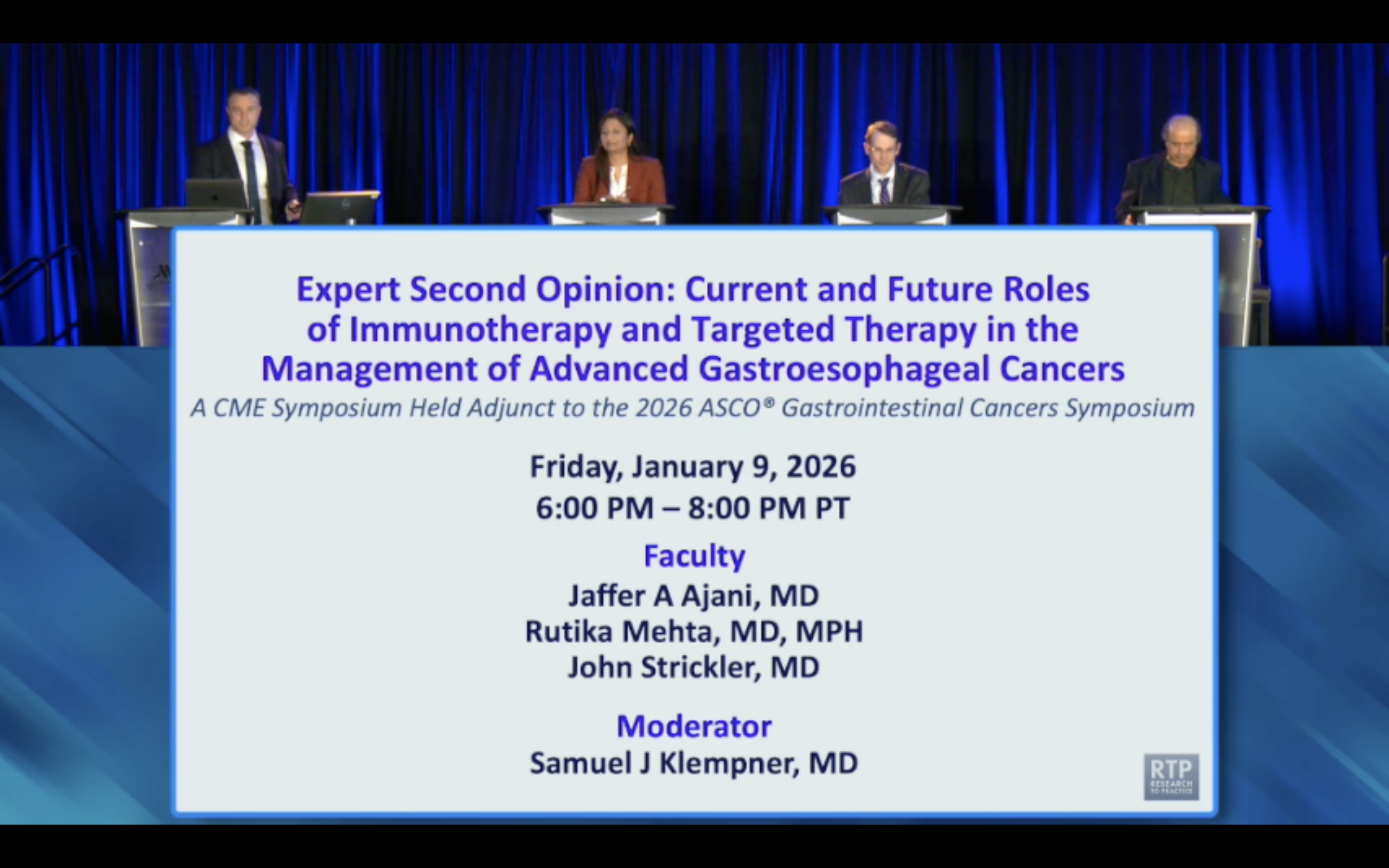
Comparing control arms from the TOGA (11 months OS), KEYNOTE-811 (16 months), and HORIZON (19 months) trials reveals a steady improvement in patient outcomes. This trend, likely due to better second-line therapies and supportive care, makes it harder for new agents to show a relative benefit.
In third-line mCRC, drug selection is heavily guided by a patient's accumulated toxicities. For instance, a patient with bone marrow issues from prior chemotherapy might receive a VEGF inhibitor instead of another chemotherapy agent, prioritizing tolerability and quality of life.
A key lesson in bladder cancer is that patient attrition is rapid between lines of therapy; many who relapse from localized disease never receive effective later-line treatments. This reality provides a strong rationale for moving the most effective therapies, like EV-pembrolizumab, to earlier settings to maximize the number of patients who can benefit.