Get your free personalized podcast brief
We scan new podcasts and send you the top 5 insights daily.
Instead of banning AI tools, educators should escalate the difficulty of problems to a level where students are forced to leverage AI to solve them. This approach pushes students beyond rote memorization into tackling challenges that were previously unsolvable.

Related Insights
To prepare students for an AI world, simply adding AI tools is insufficient. Education must be fundamentally redesigned to prioritize creativity and problem-solving, as traditional knowledge delivery and memorization are rapidly being commoditized by technology.

The education system is fixated on preventing AI-assisted cheating, missing the larger point: AI is making the traditional "test" and its associated skills obsolete. The focus must shift from policing tools to a radical curriculum overhaul that prioritizes durable human skills like ethical judgment and creative problem-solving.

Schools ban AI like ChatGPT fearing it's a tool for cheating, but this is profoundly shortsighted. The quality of an AI's output is entirely dependent on the critical thinking behind the user's input. This makes AI the first truly scalable tool for teaching children how to think critically, a skill far more valuable than memorization.

New features in Google's Notebook LM, like generating quizzes and open-ended questions from user notes, represent a significant evolution for AI in education. Instead of just providing answers, the tool is designed to teach the problem-solving process itself. This fosters deeper understanding, a critical capability that many educational institutions are overlooking.

ASU's president argues that if an AI can answer an assignment, the assignment has failed. The educator's role must evolve to use AI to 'up the game,' forcing students to ask more sophisticated questions, making the quality of the query—not the synthesized answer—the hallmark of learning.

Instead of just banning AI to prevent cheating, one school district experimented by increasing test frequency. This counterintuitively motivated students to use guided AI learning features to master the material, rather than just get homework answers, proving the need to rethink educational workflows.

AI's true potential in education isn't being realized. Instead of banning it to prevent students from doing ninth-grade homework, schools should encourage them to use AI for ambitious projects like designing starships, thereby up-leveling their goals and skills.
Instead of allowing AI to atrophy critical thinking by providing instant answers, leverage its "guided learning" capabilities. These features teach the process of solving a problem rather than just giving the solution, turning AI into a Socratic mentor that can accelerate learning and problem-solving abilities.
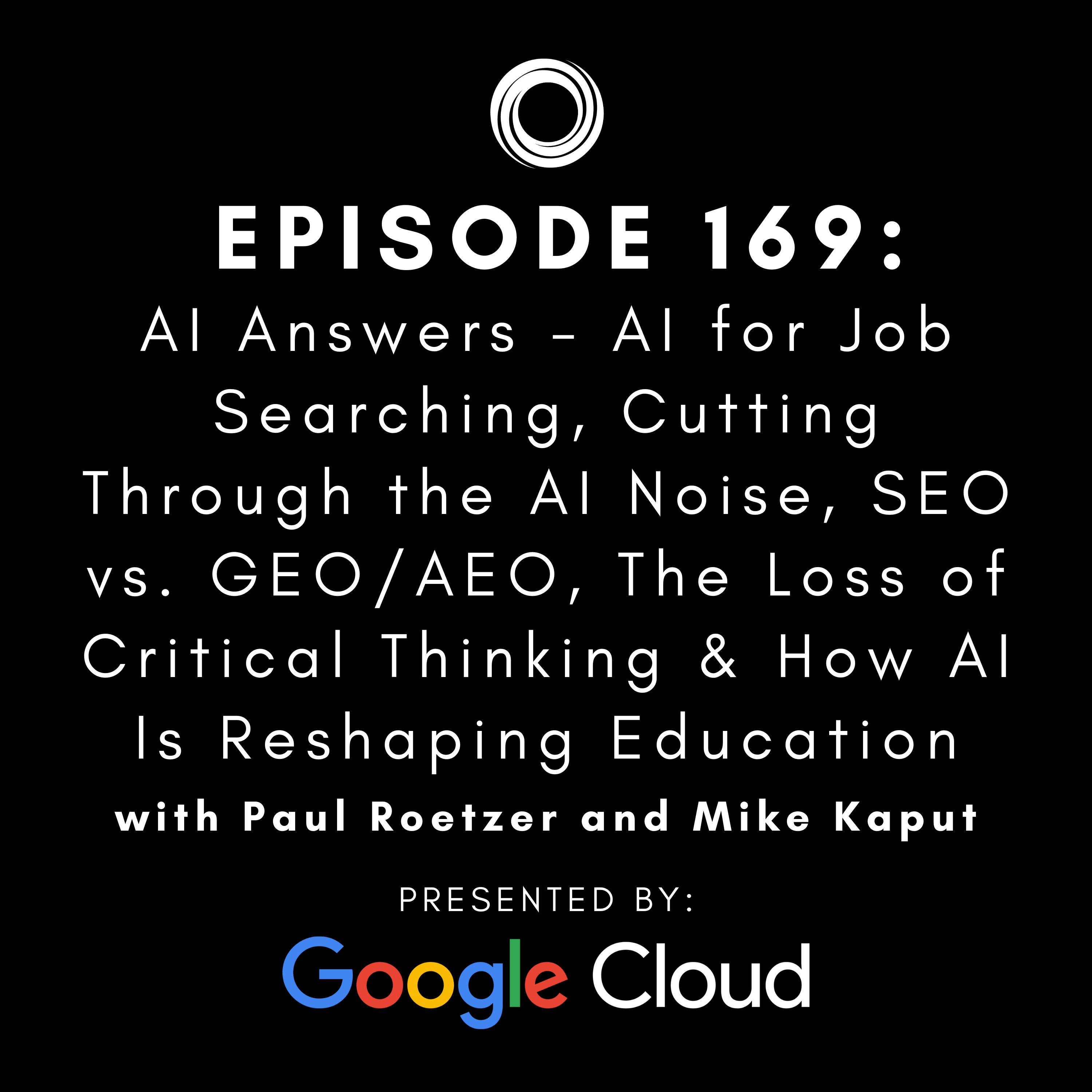
Instead of banning AI, educators should teach students how to prompt it effectively to improve their decision-making. This includes forcing it to cite sources, generate counterarguments, and explain its reasoning, turning AI into a tool for critical inquiry rather than just an answer machine.

The educational fear of AI-driven cheating misses the opportunity. The essential modern skill isn't rote memorization but the ability to use AI to find information and then critically assess the output for accuracy, evolving the teacher's role into coaching media literacy.
