Get your free personalized podcast brief
We scan new podcasts and send you the top 5 insights daily.
Seth Goldstein points out that while merging Tesla and SpaceX would streamline engineer sharing and joint hardware development, Tesla's Shanghai manufacturing base is a major roadblock. Neither the U.S. national security apparatus nor Beijing would readily permit a core defense contractor to own Chinese factories.

Related Insights
The companies' deep operational entanglement and overlapping investor bases create significant conflicts and selling pressure on Tesla stock. A merger is seen as the only logical solution to form a single, pure-play investment vehicle for Elon Musk's long-term vision, eliminating governance issues.
The sequential mergers of X with xAI, then with SpaceX, and potentially Tesla, signal the formation of a single entity. This "Musk Industries" would leverage shared manufacturing learnings and AI development across cars, rockets, robots, and social networks, creating powerful synergies.
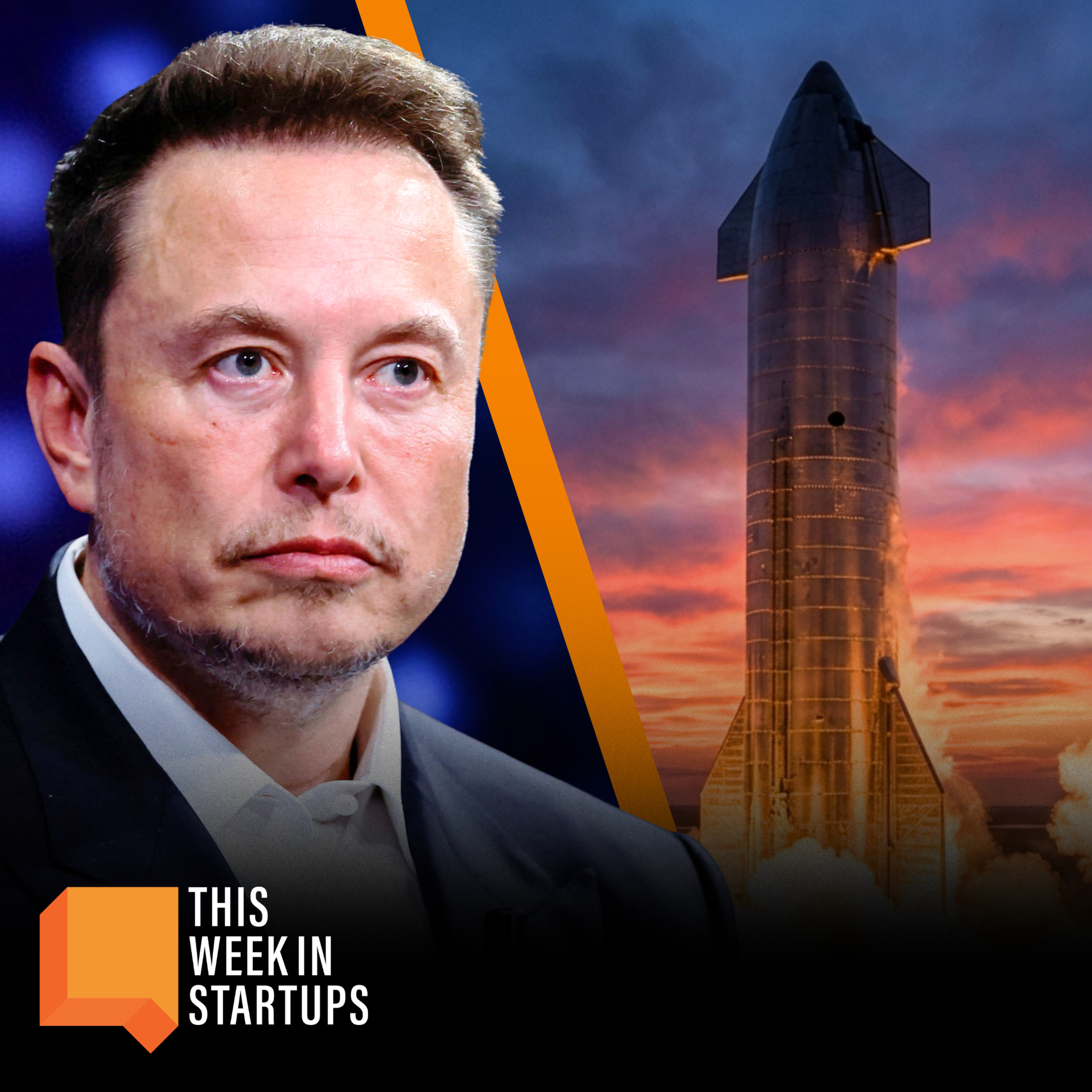
Tim Ferrara says Tesla has never been valued as a car company and is becoming more like SpaceX in AI, chips and car connectivity. He argues Musk must keep his empire together so Tesla isn’t picked off as EV competition grows and self-driving timelines slip. That defensive logic explains why the merger is being explored.
Counterintuitively, U.S. and global auto firms need to collaborate with Chinese suppliers to reduce strategic dependency. The model involves onshoring Chinese hardware and manufacturing expertise while maintaining national control over sensitive AI software and networks, creating a strategic "co-opetition."
A contrarian prediction suggests SpaceX will forgo a traditional IPO and instead execute a reverse merger into Tesla. This strategic move would allow Elon Musk to consolidate control over his two most significant companies under a single cap table and corporate structure.
The primary argument for a SpaceX-Tesla merger isn't just operational efficiency but is about consolidating Elon Musk's focus. For investors betting on his long-term, frontier-tech vision, the deal ensures their capital benefits from his attention, regardless of which company he is dedicating his time to, eliminating conflicts of interest.
An underappreciated reason for taking SpaceX public is to facilitate an eventual merger with Tesla. It is logistically difficult for a large private company to acquire a public one without cash. By going public, Elon Musk can more easily use stock to consolidate his major ventures into one public entity.

Isaacson and the hosts argue that integrating rocket propulsion components and aerospace technology into the Tesla Roadster serves a deeper strategic narrative. The cross-pollination showcases the unified technical capabilities of Tesla and SpaceX, foreshadowing an eventual corporate consolidation between the two entities.

Beyond their stated missions, both Tesla and SpaceX are valued as vehicles for Elon Musk's vision. A merger is a logical step to consolidate this reality, allowing investors to bet on Musk directly rather than choosing between two increasingly overlapping, personality-driven entities.

A merger between SpaceX and Tesla is viewed as a strategic move to formalize SpaceX as the center of Elon Musk's public-facing empire, allowing him to consolidate focus and resources for shared capital-intensive projects.