Get your free personalized podcast brief
We scan new podcasts and send you the top 5 insights daily.
Beyond their stated missions, both Tesla and SpaceX are valued as vehicles for Elon Musk's vision. A merger is a logical step to consolidate this reality, allowing investors to bet on Musk directly rather than choosing between two increasingly overlapping, personality-driven entities.

Related Insights
The companies' deep operational entanglement and overlapping investor bases create significant conflicts and selling pressure on Tesla stock. A merger is seen as the only logical solution to form a single, pure-play investment vehicle for Elon Musk's long-term vision, eliminating governance issues.

The sequential mergers of X with xAI, then with SpaceX, and potentially Tesla, signal the formation of a single entity. This "Musk Industries" would leverage shared manufacturing learnings and AI development across cars, rockets, robots, and social networks, creating powerful synergies.
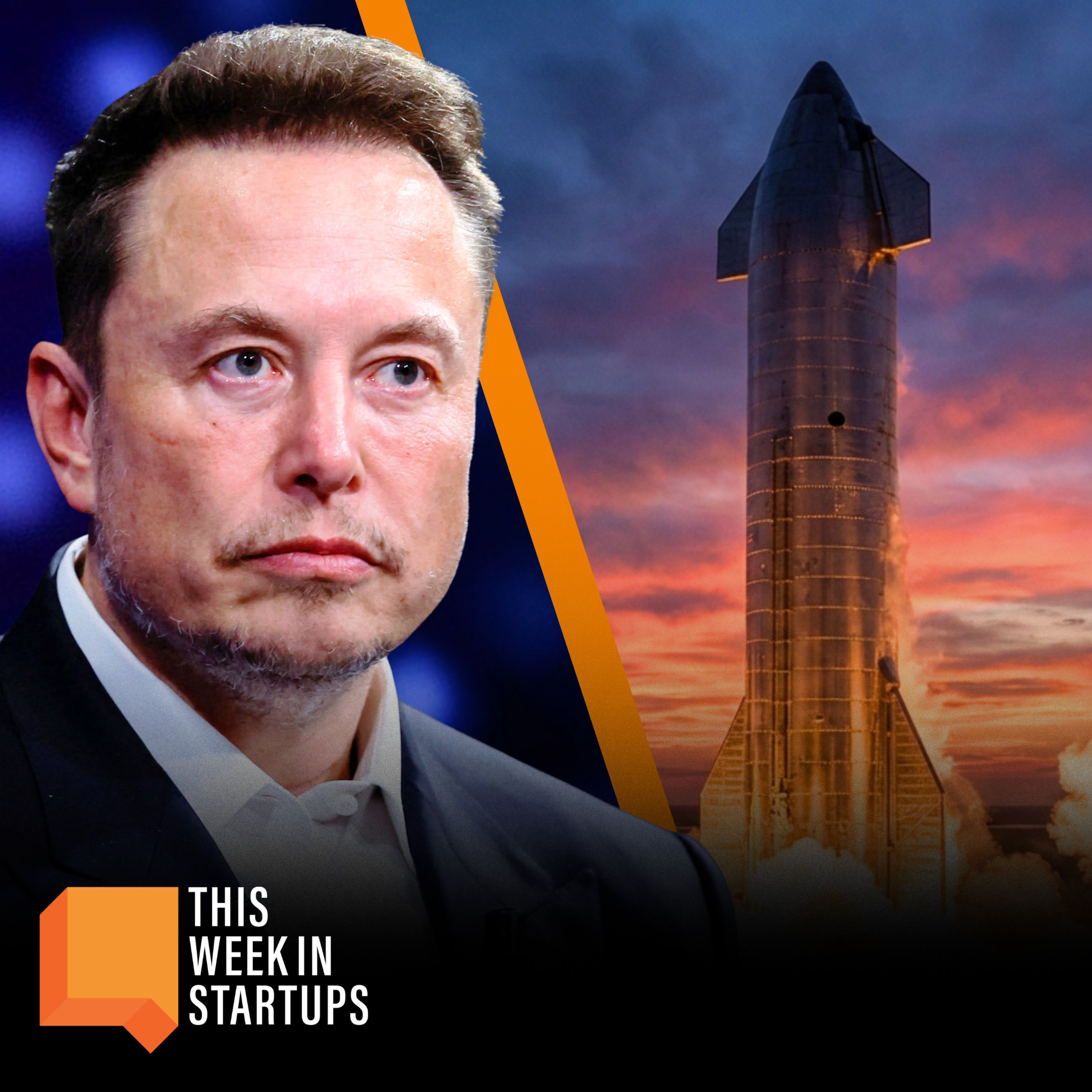
The idea of a single, vertically integrated "Elon Inc." combining SpaceX, X, Tesla, and xAI provides a strategic framework for understanding Musk's moves. This makes seemingly disparate actions, like a potential SpaceX acquisition of XAI, appear as logical steps toward a larger, unified entity.

A contrarian prediction suggests SpaceX will forgo a traditional IPO and instead execute a reverse merger into Tesla. This strategic move would allow Elon Musk to consolidate control over his two most significant companies under a single cap table and corporate structure.
An underappreciated reason for taking SpaceX public is to facilitate an eventual merger with Tesla. It is logistically difficult for a large private company to acquire a public one without cash. By going public, Elon Musk can more easily use stock to consolidate his major ventures into one public entity.

Kara Swisher predicts Elon Musk will consolidate his major companies into one entity. The primary motivation is to use the highly anticipated and potentially overvalued SpaceX IPO to mask declining performance and financial losses at companies like Tesla and X.

The consolidation of SpaceX and xAI is creating a private entity with a valuation rivaling Tesla's public one. This could be a strategic maneuver to accumulate enough private capital and leverage to eventually take Tesla private, unifying Musk's core ventures under a single, privately controlled empire.

The potential merger is a clever financial maneuver. It forces investors who want to buy the highly desirable "Snow White" (SpaceX) to also take on the struggling, overvalued "seven dwarfs" (Tesla and other ventures), bundling the good with the bad.
The primary strategic benefit of SpaceX's IPO is not just capital, but creating a validated, market-to-market valuation. This public price for SpaceX will minimize shareholder lawsuits and governance friction when it eventually merges with the publicly-traded Tesla, simplifying Elon Musk's corporate structure.

A potential merger between Tesla and SpaceX is likely driven by Elon Musk's personal organizing principle of "simplicity." The goal would be to reduce the overhead of running two separate public companies, allowing him to more efficiently invest his time, rather than seeking traditional financial or operational synergies.