Get your free personalized podcast brief
We scan new podcasts and send you the top 5 insights daily.
A skilled mechanical and controls engineer credits his "right brain, left brain" parents—an art teacher and a math teacher—for his success. His childhood was a mix of creative making and analytical projects, demonstrating how a diverse, hands-on upbringing fosters versatile problem-solvers.

Related Insights
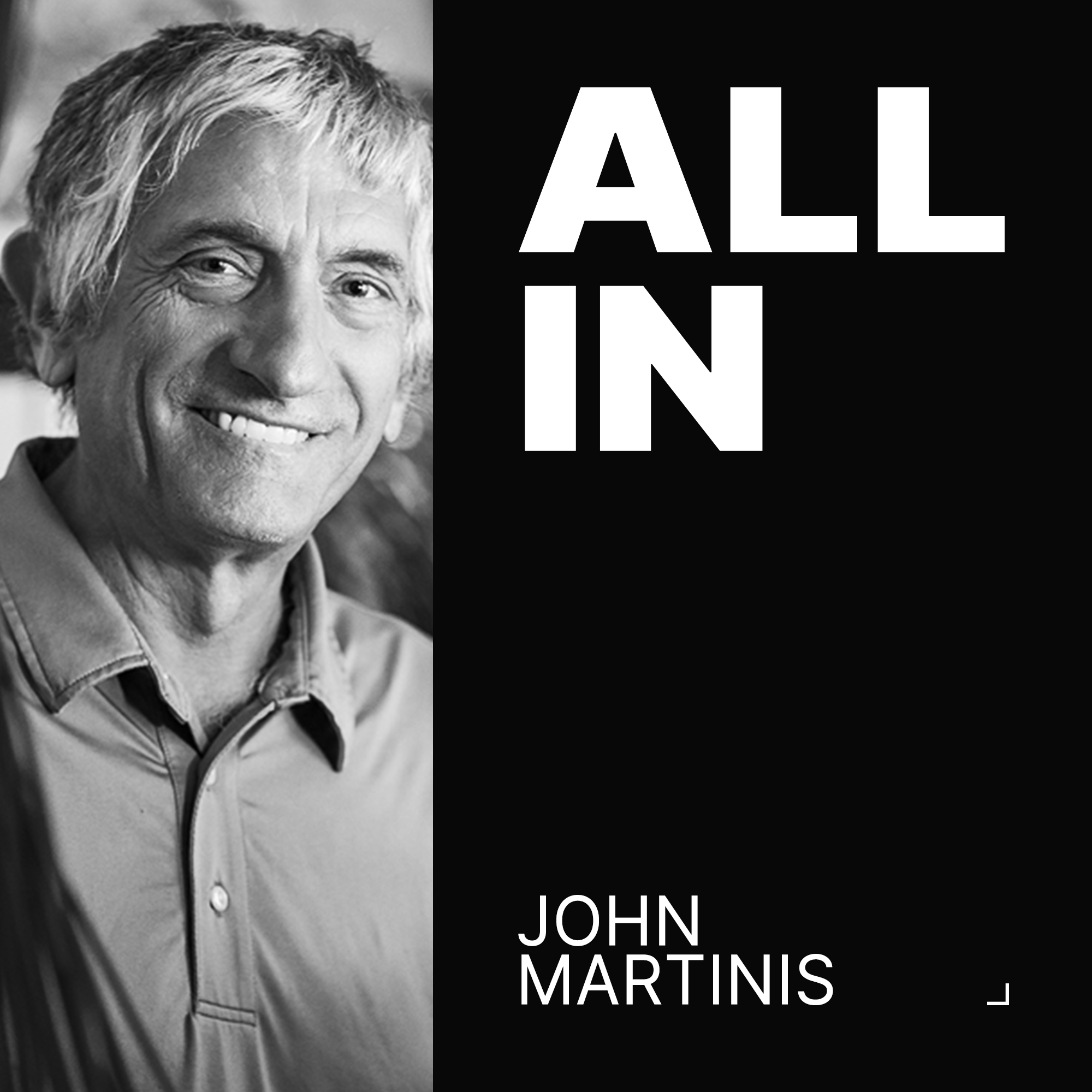
Nobel laureate John Martinis attributes his success to growing up building things with his father. This hands-on experience gave him an intuitive, empirical understanding of physics that proved invaluable for designing and building novel experiments, highlighting the value of practical skills in a theoretical field.
A study of art students found that long-term creative success was predicted not by skill or confidence, but by the tendency to spend more time exploring objects and defining the "problem" of their drawing. True creativity emerges from deeply understanding the situation itself before attempting a solution.

True innovation stems from cognitive and interest diversity. Pairing passionate people from disparate fields—like AI and cheese—sparks more creative conversations and breakthroughs than grouping people with similar interests, which merely creates an echo chamber.

Dr. Li's father prioritized play and curiosity over grades, a stark contrast to the 'tiger parent' stereotype. This "unserious" approach, focused on exploring nature and finding joy in simple things like yard sales, cultivated the inquisitive mindset that later fueled her scientific breakthroughs.

Wozniak believed patience, not just intellect, was his core engineering skill. He learned this through years of gradual, step-by-step learning in childhood projects. This allowed him to focus on perfecting each stage of a design, avoiding the common pitfall of trying to skip intermediate steps.
![Steve Wozniak: The Engineer Who Built Apple [Outliers] thumbnail](https://megaphone.imgix.net/podcasts/173ae9aa-b91e-11f0-8162-63aad90e354b/image/9e812b450021bae886ac0579c1929769.png?ixlib=rails-4.3.1&max-w=3000&max-h=3000&fit=crop&auto=format,compress)
IGI Director Brad Ringeisen attributes his career in science directly to his father, a mathematician who scribbled math problems for him during church services. This anecdote illustrates how early, informal mentorship from a parent can be the critical spark that sustains a child's interest through the challenges of STEM.

The idea for a living computer came not from biologists, but from engineers with backgrounds in signal processing. This highlights how breakthrough innovations often occur at the intersection of disciplines, where outsiders can reframe a problem from a fresh perspective.

Broad learning across many fields is most effective when you have a specific project or area of expertise to apply it to. This focused goal acts as an 'antenna,' allowing you to spot and synthesize seemingly unrelated ideas. Creativity arises not just from wide inputs, but from connecting them to a specific mission.

The objective, high-pressure environment of competitive math contests cultivates a first-principles problem-solving mindset and intense competitive drive. This background proves to be a powerful, if unconventional, training ground for founders navigating the hyper-competitive AI startup landscape.
![Jesse Zhang - Building Decagon - [Invest Like the Best, EP.443] thumbnail](https://megaphone.imgix.net/podcasts/2cc4da2a-a266-11f0-ac41-9f5060c6f4ef/image/7df6dc347b875d4b90ae98f397bf1cb1.jpg?ixlib=rails-4.3.1&max-w=3000&max-h=3000&fit=crop&auto=format,compress)
Delphi CEO Susan Tucci was inspired to pursue engineering because her teachers framed it as a way to improve lives and communities. This mission-driven narrative, rather than a purely technical one, was crucial for attracting her into a male-dominated field, offering a lesson for modern talent acquisition.