Get your free personalized podcast brief
We scan new podcasts and send you the top 5 insights daily.
Many seemingly irreversible life and career decisions can be de-risked through small-scale trials. Before committing, you can test a new neighborhood with a two-week Airbnb stay, test a new car on Turo, or shadow a professional for a day. This reduces uncertainty and prevents costly mistakes.

Related Insights
Don't commit to a rigid career plan. Instead, treat your career like a product. Run small-scale experiments or 'MVPs'—like a 20% project, a volunteer role, or a teaching gig—to test your interest and aptitude for new skills before making a full commitment, then iterate based on the results.
When facing ambiguity, the best strategy is not to wait for perfect information but to engage in "sense-making." This involves taking small, strategic actions, gathering data from them, and progressively building an understanding of the situation, rather than being paralyzed by analysis.

Pursuing a more fulfilling career doesn't require risking financial ruin. Instead of taking a blind leap, you can vet a new direction by "trying it on"—shadowing professionals, conducting informational interviews, and testing the work in small ways to understand its reality before making a full transition.
For big, uncertain choices like schooling, use a formal process: Frame the question, Fact-find without deciding, set a time for a Final decision, and schedule a Follow-up. This structure prevents endless deliberation by acknowledging you can't be 100% certain but can still move forward confidently and revisit the choice later.
Instead of "burning the ships," treat potential career changes as experiments. By starting a new venture as a side hustle without financial pressure, you can explore your curiosity, confirm it's a good fit, and build a "safety net" of confidence and proof before making a full leap.

Spend significant time debating and mapping out a project's feasibility with a trusted group before starting to build. This internal stress-test is crucial for de-risking massive undertakings by ensuring there's a clear, plausible path to the end goal.
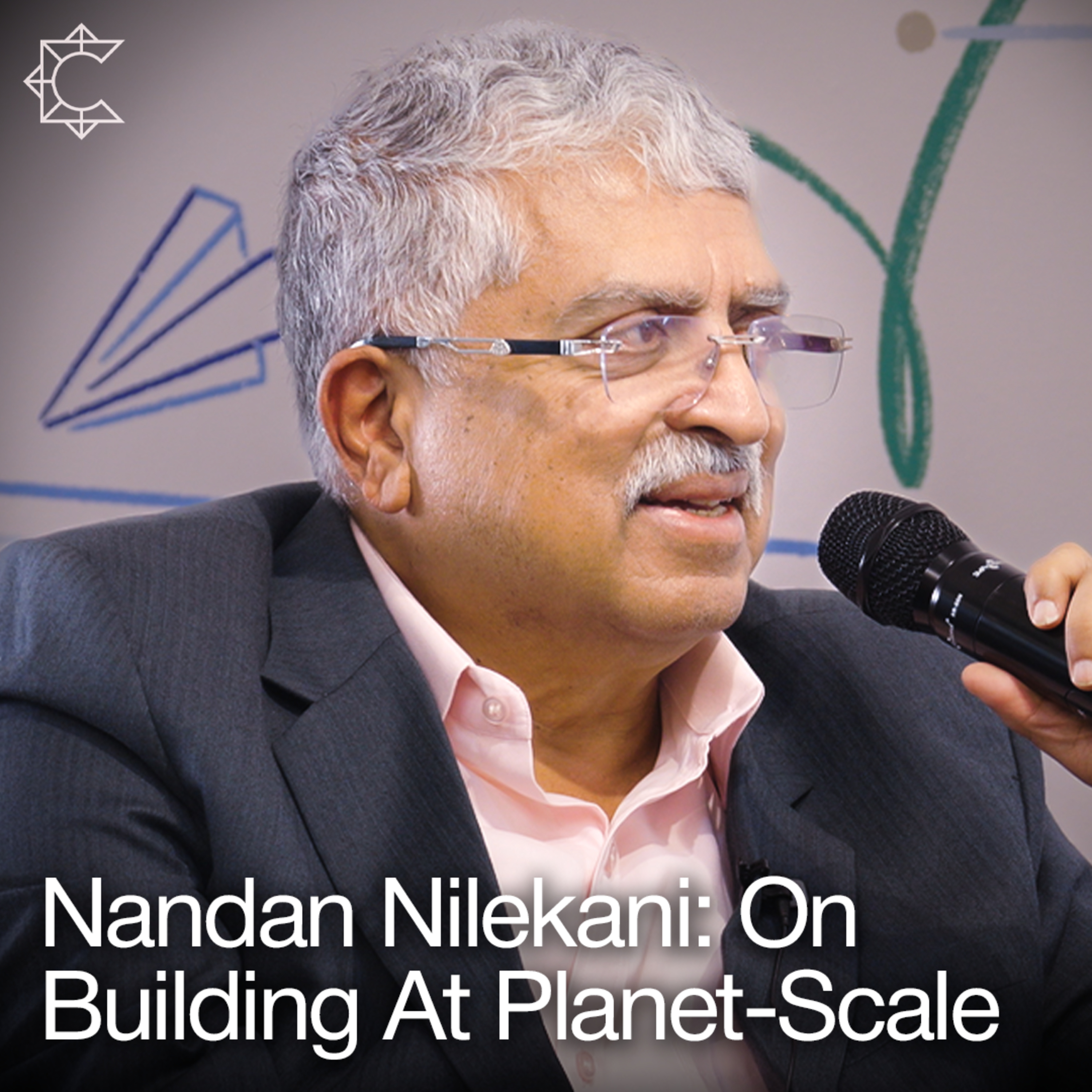
Instead of waiting for complete information, Alexander Titus's model for action is to ensure the next immediate step is not an irreversible mistake. This allows for faster movement and exploration, as most professional decisions can be undone, unlike major life choices like debt or family.

Overcome the fear of big life decisions by making them reversible. First, identify the worst-case scenario and create a pre-planned safety net (e.g., saving enough for a flight home). Once the downside is protected, you can commit to the action with significantly less fear and more focus.
Traditional goal-setting (navigation) fails for life's "wicked problems." Instead, use wayfinding: a prototyping approach of trying things, learning, and adjusting. The jagged, inefficient path is actually the shortest route to an unknown destination.

When customers are hesitant to adopt a new product due to uncertainty about its value or ease of use, lower the upfront cost of trial. Create a low-risk way for them to experience the benefits firsthand, like a car test drive or a 'white glove' training session, to resolve their uncertainty directly.