Get your free personalized podcast brief
We scan new podcasts and send you the top 5 insights daily.
Contrarian analysis suggests Palantir CEO Alex Karp's $17.2M jet expense should be viewed as a cost of goods sold for an international business, not an executive perk. The expense directly correlates with the global travel required to close major deals in markets like Japan and the Middle East, which drives revenue.

Related Insights
To properly evaluate the cost of advanced AI tools, shift your mental framework. Don't compare a $200/month plan to a $20/month entertainment subscription. Compare it to the cost of a human employee, which could be thousands per month. The AI is a productive asset, making its price a high-leverage investment.

Paying billions for talent via acquihires or massive compensation packages is a logical business decision in the AI era. When a company is spending tens of billions on CapEx, securing the handful of elite engineers who can maximize that investment's ROI is a justifiable and necessary expense.

Frame business trips not by a single metric (like ticket sales) but as a portfolio of returns. This includes team-building for remote staff, deepening sponsor relationships, and community engagement. This multi-faceted view provides a more accurate picture of the trip's total value.

Startups are misapplying the "forward-deployed engineer" (FDE) model. This high-touch, embedded-engineering sales approach is only scalable and justifiable for massive, multi-million dollar contracts like Palantir's, not for typical five-figure startup deals.
![Jesse Zhang - Building Decagon - [Invest Like the Best, EP.443] thumbnail](https://megaphone.imgix.net/podcasts/2cc4da2a-a266-11f0-ac41-9f5060c6f4ef/image/7df6dc347b875d4b90ae98f397bf1cb1.jpg?ixlib=rails-4.3.1&max-w=3000&max-h=3000&fit=crop&auto=format,compress)
Palantir commands a massive valuation premium because it is both well-run and unique, with no clear alternatives. This lack of competition dramatically reduces churn risk and increases the durability of future cash flows, justifying a higher multiple than other software companies that operate in more crowded markets.

Karp's pitch at Davos suggests that traditional enterprise SaaS, which standardizes processes across companies, destroys competitive advantage. Palantir’s strategy is to build semi-custom systems that amplify a company's unique "tribal knowledge," betting that differentiation, not commodification, is the future of enterprise software value.

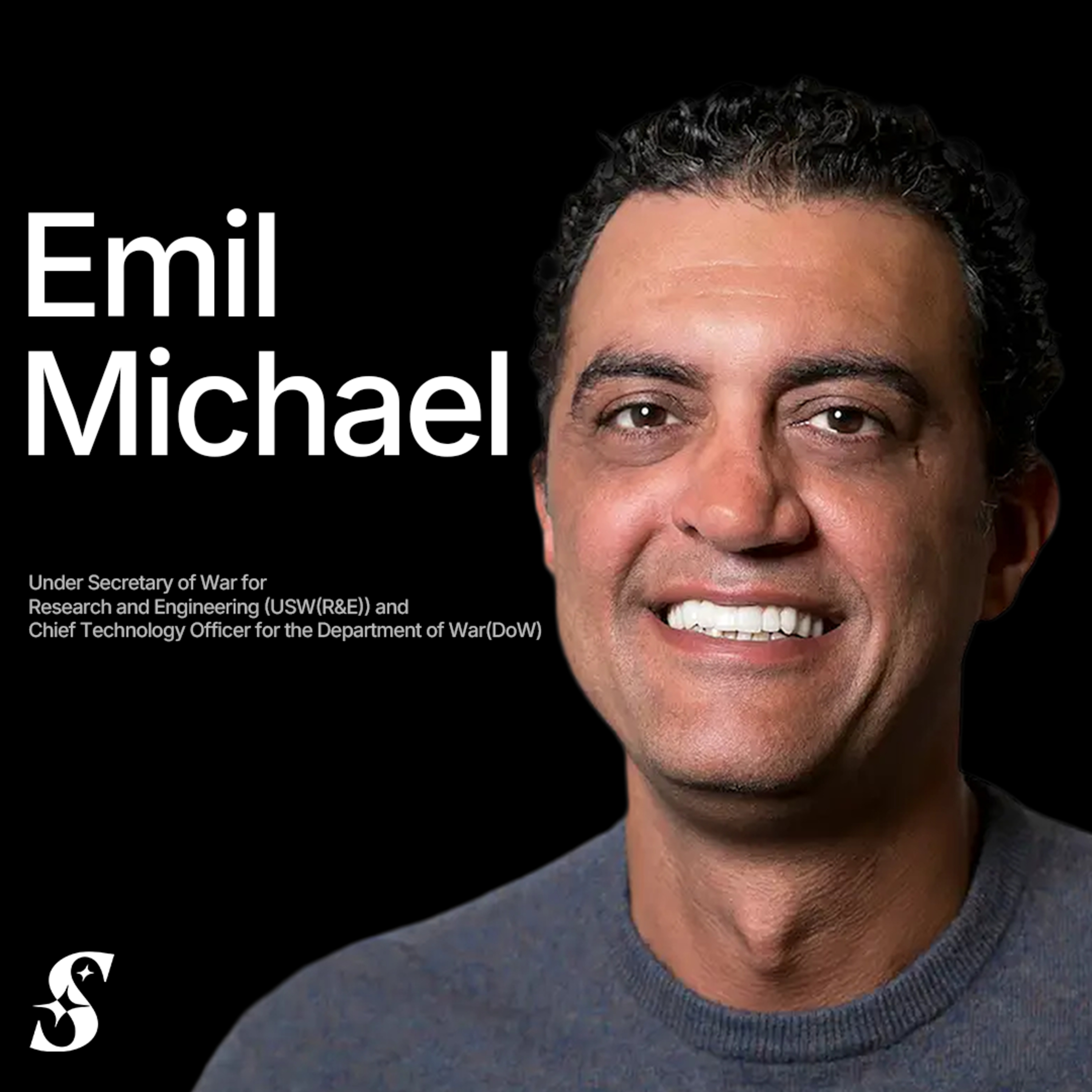
Contrary to its controversial public image, the Under Secretary of War asserts that Palantir's primary value to the government is solving mundane, critical logistics problems. The software helps track assets like tanks and munitions—a basic inventory management function essential for a massive bureaucracy.
Despite its massive price tag, Anthropic's valuation is justifiable on a forward revenue multiple basis. If they achieve another year of hypergrowth, their NTM revenue multiple would be lower than public tech companies like Palantir, making the current round look inexpensive.

Before planning the future, analyze the past. A Profit & Loss (P&L) statement reveals what truly drove revenue and where money was spent. For a deeper, non-obvious analysis, input your P&L into ChatGPT and ask it to act as a financial analyst, identifying trends, overspending, and hidden opportunities.

Beyond salary, many founders use the business to cover personal expenses, effectively increasing their compensation. Founders reported expensing 50% of their rent, Wi-Fi, and gym memberships, while others leverage business credit card points for thousands in monthly cash back—value not reflected on pay stubs.
