Get your free personalized podcast brief
We scan new podcasts and send you the top 5 insights daily.
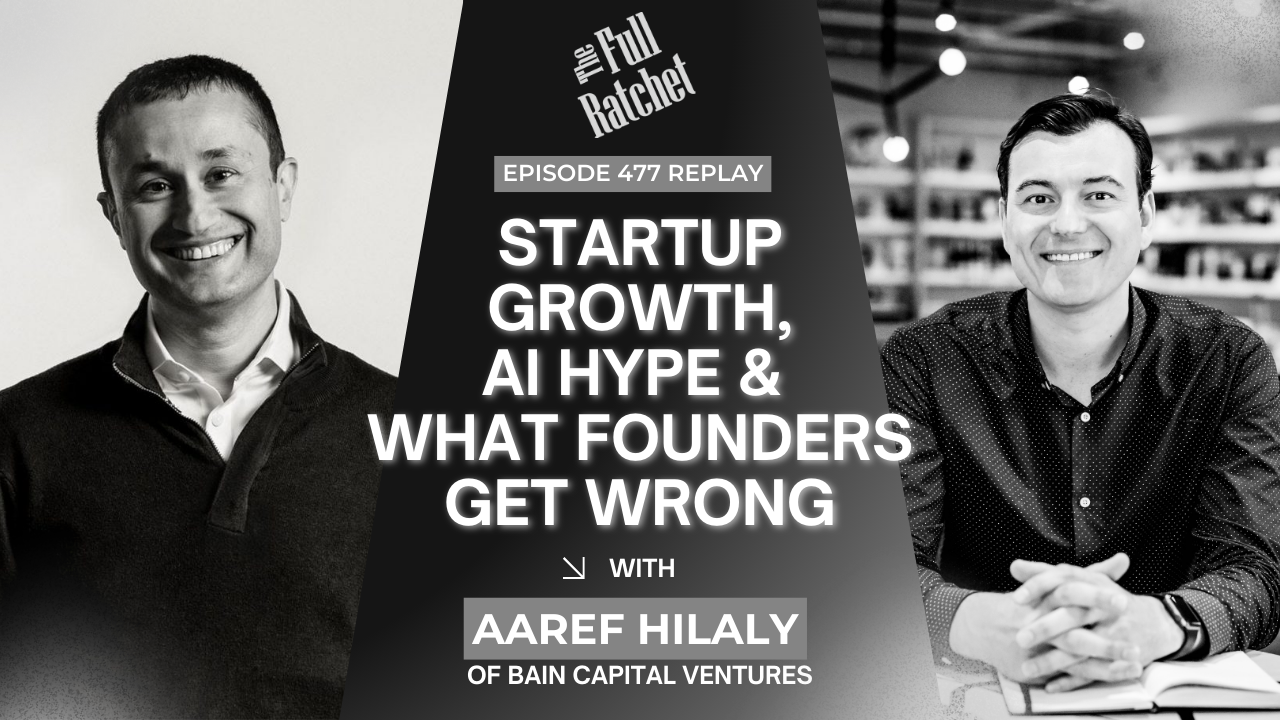
Venture capital lionizes companies with immediate, steep growth ("high slope"). However, many of the most significant, defensible companies like Figma are "area under the curve" stories. They endure a long build phase before emerging as dominant, creating more long-term value than companies with fast but less defensible growth.

Related Insights
The venture narrative focuses on 'slope' (rapid growth) but often misses the value of 'area under the curve' companies. These startups, like Figma, may have a slower growth story as they build deep moats. This long-term focus can create more durable value than high-slope businesses with weaker defensibility.

Unlike COVID's growth, which had a hard population limit, AI's potential is tied to energy and computation, which have vast room to expand. However, its real-world application will manifest as a series of S-curves, as different technologies and industries hit temporary plateaus before the next breakthrough occurs.

With traditional moats gone, the only way to stay ahead is to move faster. Defensibility now comes from the speed at which a team can ship new value and deeply understand its customers, ensuring the product is always one step ahead of a crowded field.

In a world where AI implementation is becoming cheaper, the real competitive advantage isn't speed or features. It's the accumulated knowledge gained through the difficult, iterative process of building and learning. This "pain" of figuring out what truly works for a specific problem becomes a durable moat.

Investors obsess over moats, but in a rapidly changing AI landscape, a startup's ability to quickly build and ship products that unlock latent demand is a more reliable predictor of success than any theoretical defensibility.
Unlike SaaS, deep tech companies have a unique valuation trajectory: a sharp seed-to-Series A increase, a long plateau during R&D, and then massive step-ups post-production. This requires a bimodal investment strategy focusing on early stage and the final private round before inflection.
The enduring moat in the AI stack lies in what is hardest to replicate. Since building foundation models is significantly more difficult than building applications on top of them, the model layer is inherently more defensible and will naturally capture more value over time.

The most significant companies are often founded long before their sector becomes a "hot" investment theme. For example, OpenAI was founded in 2015, years before AI became a dominant VC trend. Early-stage investors should actively resist popular memes and cycles, as they are typically trailing indicators of innovation.

Analysis shows that the themes venture capitalists and media hype in any given year are significantly delayed. Breakout companies like OpenAI were founded years before their sector became a dominant trend, suggesting that investing in the current "hot" theme is a strategy for being late.
The founder of Stormy AI focuses on building a company that benefits from, rather than competes with, improving foundation models. He avoids over-optimizing for current model limitations, ensuring his business becomes stronger, not obsolete, with every new release like GPT-5. This strategy is key to building a durable AI company.
