Get your free personalized podcast brief
We scan new podcasts and send you the top 5 insights daily.
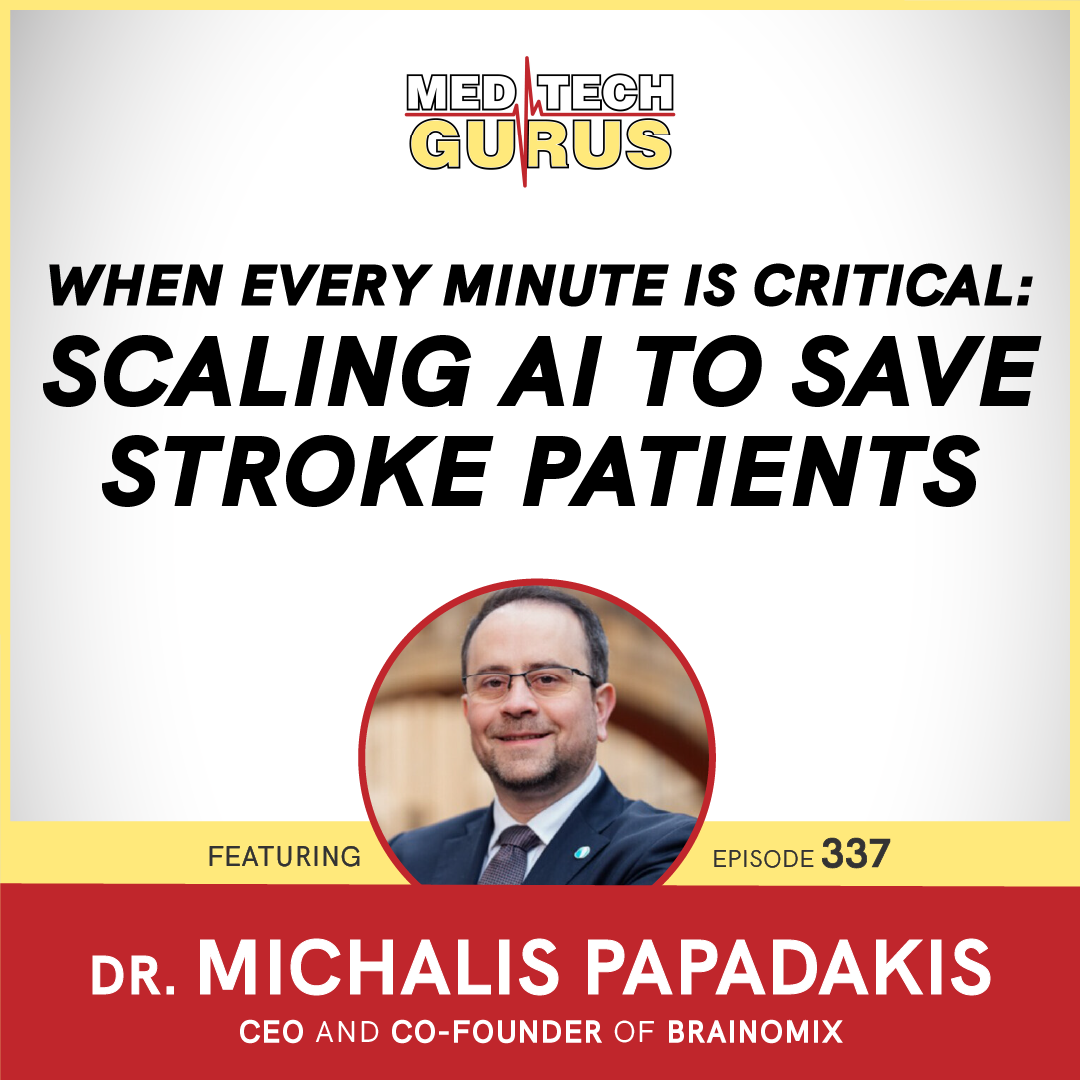
Instead of focusing only on physicians, Brainomix positions its AI as a value-add for the entire stroke treatment ecosystem. By helping increase the use of existing drugs and devices, they create strategic alignment with powerful pharma and med device partners.
Related Insights
Urgency is forcing a major shift in hospital procurement. CIOs are no longer willing to wait years for incumbents like Epic to develop AI tools. They are actively partnering with startups to deploy commercially ready solutions now, prioritizing speed and immediate operational impact over vendor loyalty.
Unlike traditional biotechs seeking pharma validation, Xaira's initial collaborations will be with tech companies for AI tools, lab automation, and compute. This reflects a strategy focused on building the core R&D engine first, seeking partners that accelerate platform development rather than provide capital.

A MedTech startup's initial go-to-market may be hospital-by-hospital sales. However, after building a robust evidence base of clinical and economic impact, the sales focus can shift to enterprise-level deals with regional or national healthcare systems, accelerating growth.
After a year of extensive experimentation, major pharmaceutical companies are now adopting AI at scale, marked by large-scale deals with AI tooling companies. This signals a market inflection point where pharma is moving beyond testing and is actively deploying AI across R&D and commercial functions after seeing demonstrable ROI.

Turbine's pharma partners consistently praised the deep biological competence of its science team. This ability to engage as scientific peers, not just data scientists, built essential trust for early deals when the AI platform was still largely unvalidated.

A successful MedTech platform can be a blueprint for expansion. By identifying new disease areas with similar core problems (e.g., imaging-based diagnosis delays), a company can replicate its proven strategies for product development, evidence generation, and partnerships.
The relationship between AI startups and pharma is evolving rapidly. Previously, pharma engaged AI firms on a project-by-project, consulting-style basis. Now, as AI models for drug discovery become more robust, pharma giants are seeking to license them as enterprise-wide software suites for internal deployment, signaling a major inflection point in AI integration.

AI adoption in healthcare has accelerated by sidestepping slow enterprise sales cycles. Companies like Open Evidence offer free, consumer-like apps directly to doctors (prosumers). This bottom-up approach creates widespread use, forcing organizations to adopt the technology once a critical mass of their staff is already using it.
Long-term competitive advantage will belong not to firms with the best algorithms, but to those that build the most intelligent organizations *around* AI. The key is developing the ability to absorb, direct, and compound AI's power in service of coherent strategic goals.

For critical care AI tools, the key to adoption is not just accuracy but seamless integration. A "zero-click" approach that automatically processes scans and delivers results without adding steps to a clinician's workflow is paramount for buy-in.