Get your free personalized podcast brief
We scan new podcasts and send you the top 5 insights daily.
A successful MedTech platform can be a blueprint for expansion. By identifying new disease areas with similar core problems (e.g., imaging-based diagnosis delays), a company can replicate its proven strategies for product development, evidence generation, and partnerships.
Related Insights
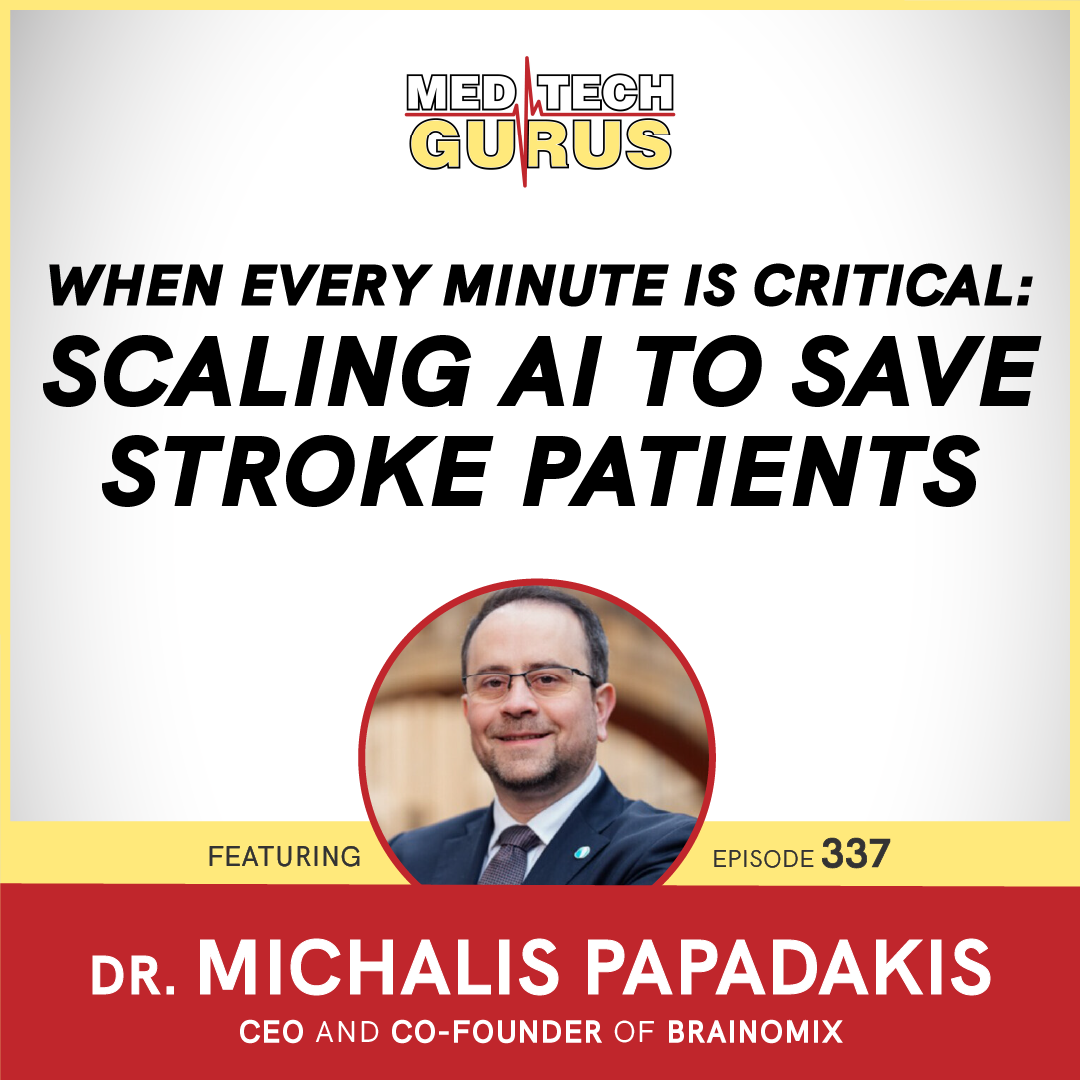
Instead of focusing only on physicians, Brainomix positions its AI as a value-add for the entire stroke treatment ecosystem. By helping increase the use of existing drugs and devices, they create strategic alignment with powerful pharma and med device partners.
A MedTech startup's initial go-to-market may be hospital-by-hospital sales. However, after building a robust evidence base of clinical and economic impact, the sales focus can shift to enterprise-level deals with regional or national healthcare systems, accelerating growth.
Augurex's CEO identified a major opportunity by noting that biomarker use in rheumatology was 10-15 years behind oncology. This "technology lag" between medical specialties signals a significant unmet need and a prime area for innovation, allowing proven concepts from one field to revolutionize another.

EG427 began by focusing narrowly on neurogenic bladder in spinal cord injury patients. This specific application proved the technology's potential, attracted investors, and enabled the company to later expand its pinpoint DNA medicine into a broader platform for neurological diseases.

Experts advise platform technology founders to resist showcasing broad applicability. Instead, they should focus on specific use cases where they can generate compelling evidence, such as for a particular disease or drug modality. This builds credibility and creates a "beachhead" for future expansion.

Major innovation doesn't always require inventing something new. Medtronic proved a 20-year-old therapy, Onyx, could treat a new condition, demonstrating that finding novel applications for existing, proven technologies can be a powerful and efficient R&D strategy.

While its internal pipeline targets oncology, LabGenius partners with companies like Sanofi to apply its ML-driven discovery platform to other therapeutic areas, such as inflammation. This strategy validates the platform's broad applicability while securing non-dilutive funding to advance its own assets towards the clinic.

The next wave of MedTech innovation won't just come from engineers. It will come from creating tools that allow surgeons and clinicians—those who see problems firsthand—to easily prototype and de-risk new device concepts, vastly expanding the market for innovation itself.
For critical care AI tools, the key to adoption is not just accuracy but seamless integration. A "zero-click" approach that automatically processes scans and delivers results without adding steps to a clinician's workflow is paramount for buy-in.
The core technology of detecting "intent" is viewed as a platform. Once the implant is in place for stroke recovery, it can be trained to detect cognitive lapses and provide real-time prompts, creating a system to assist with conditions like dementia or MCI.
