Get your free personalized podcast brief
We scan new podcasts and send you the top 5 insights daily.
Harris realized his strength was in leadership and ideation, not the administrative and optimization tasks required to run a large public company. Admitting this weakness to himself was a difficult but crucial career pivot, leading him to focus on starting companies rather than just scaling them.

Related Insights
The visionary and evangelistic skills that make a great founder are fundamentally different from the operational skills needed to run a large organization. Assuming a founder is the best person to manage a scaled company is a mistake.

Amplitude's CEO describes the painful transition from founder (running to the hardest problem) to large-company executive. The latter role requires embracing hierarchy, saying "no" to most things, and managing through leverage rather than direct contribution—a skill set many founders resist and fail to learn.
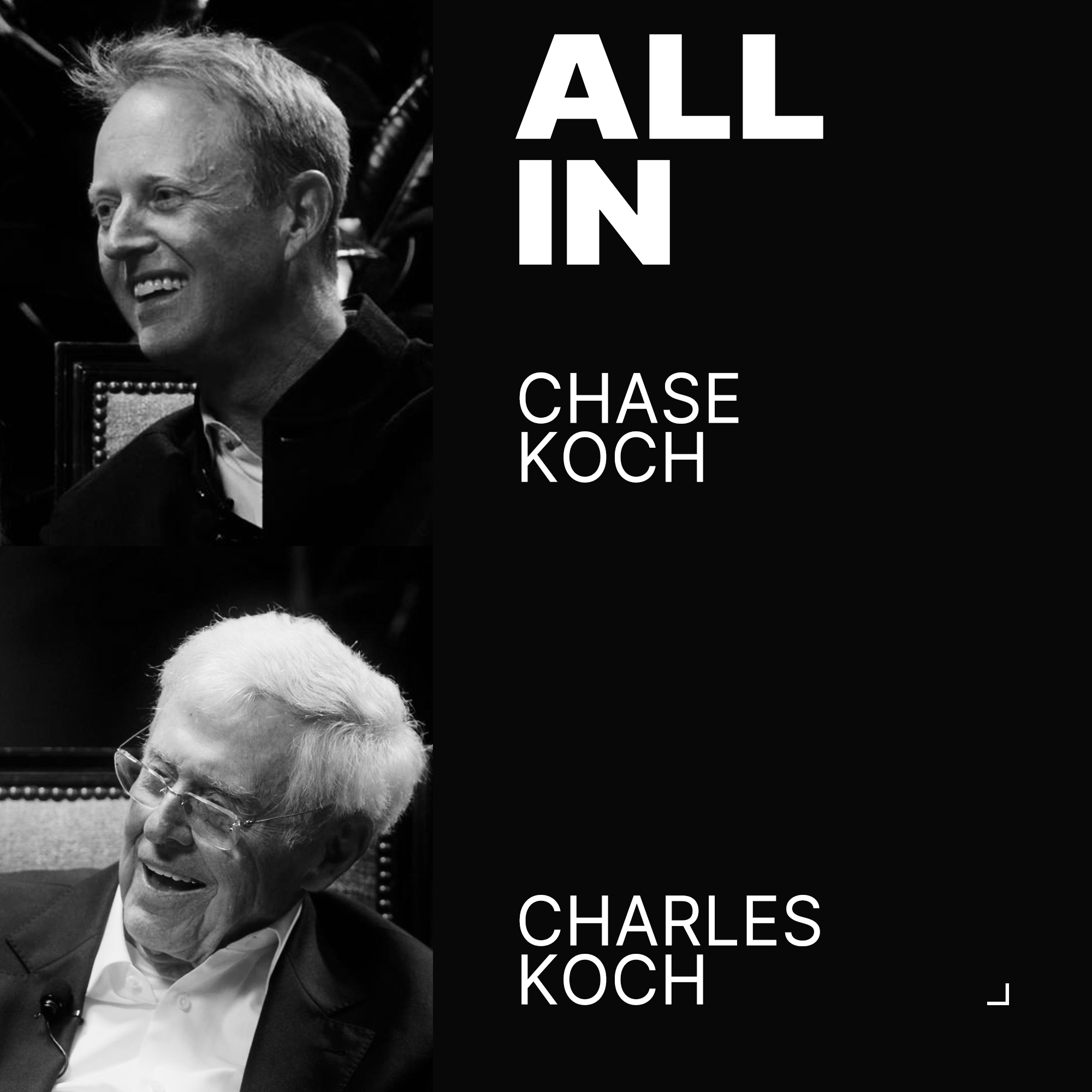
Realizing he was a builder and innovator, not an operator, Chase Koch stepped down as president of Koch Fertilizer. This humbling but crucial decision allowed a better-suited leader to take over, improving the business, while freeing him to launch Koch's successful disruptive technology platform.
Despite success, founder Kevin Wagstaff felt like an "imposter" as the company scaled beyond $10M ARR. He recognized his strengths were in the early, scrappy "bias to action" phase, not managing a larger organization. He proactively brought in a seasoned CEO better suited for the next stage of growth.

After the successful retail pivot, Joan Barnes recognized her strengths were in vision and creation, not in scaling operations. She understood the company needed a different type of leader for the next phase and was willing to step aside.

After becoming CEO of Koch Fertilizer, Chase Koch realized his skills and passion were in early-stage innovation, not optimizing a large, existing business. Recognizing this misalignment with his comparative advantage, he stepped down from the prestigious role to found Koch Disruptive Technologies instead.

The founder sold without regret because he recognized his skills were in building the initial product and business, not in scaling a large organization. He understood that the next phase required a different skill set focused on HR, company values, and infrastructure, which the new CEO brought to the table.
Craig Newmark stepped away from management and hired a CEO not due to a lack of time, but because of a profound self-awareness of his own shortcomings. He explicitly states he "sucked" as a manager because he had no talent or taste for making the hard calls required for the role.
The M&A Science founder stepped back as CEO from his scaling software company, Dealroom, because his strength is in the early "boots on the ground" phase, not optimization and process maturity. This highlights the importance for founders to align their role with their core strengths rather than clinging to a title.

Tom Rinks, identifying as a creative, knew he lacked the operational skills to scale Sun Bum. Aware that creatives often fail at management, he actively recruited his own CEO replacement to prevent the company's growth from stalling under his leadership.