Get your free personalized podcast brief
We scan new podcasts and send you the top 5 insights daily.
AI-driven sourcing is ineffective at the Pre-Seed stage, where the best opportunities are found through human networks before any public data exists. This makes Pre-Seed investing uniquely defensible against AI disruption, as it depends on tracking talent spinning out of companies like SpaceX before they even have a name.

Related Insights
To win the best pre-seed deals, investors should engage high-potential talent during their 'founder curious' phase, long before a formal fundraise. The real competition is guiding them toward conviction on their own timeline, not battling other VCs for a term sheet later.
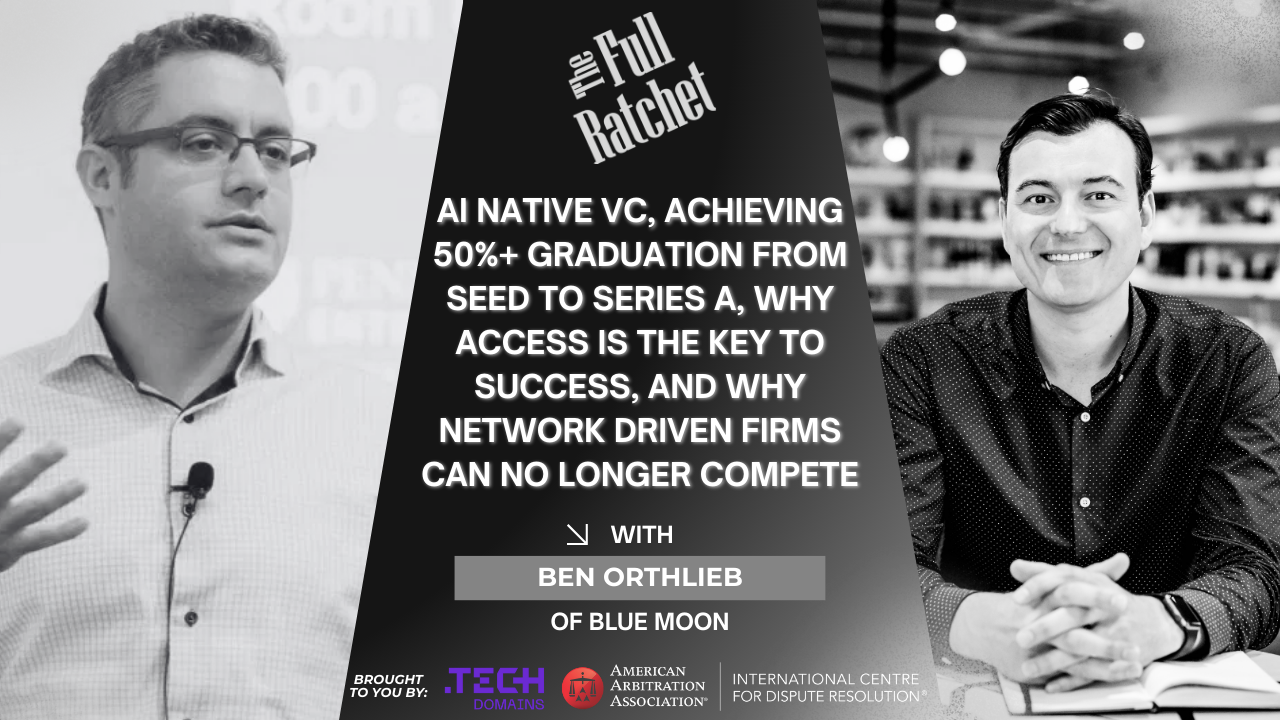
Traditional VC reliance on "differentiated networks" is obsolete as data sources and professional networks are now commodities. To compete, modern VCs must replace this outdated advantage with proprietary intelligence platforms that algorithmically source deals and identify the right signals for where to focus time.
Veteran investor Jason Lemkin argues that the quality of a top founder can be identified without a live conversation, based on asynchronous interactions like cold emails. Having closed multiple billion-dollar exits from such inbounds, he suggests AI could replicate and scale this initial screening process effectively.

Due to the nascent and highly specialized nature of AI, VCs find that traditional expert networks are no longer effective for diligence. Instead, they must rely on curated personal networks of deep specialists who can genuinely assess new technologies and teams.

Tools like YC Roaster, which process hundreds of accelerator applications, can generate a powerful data asset. By analyzing these submissions, a VC can spot market trends and identify promising sectors before they become public knowledge via demo days, creating a significant information advantage.

By using an unsupervised machine learning model to filter thousands of teams based solely on founder profiles, a VC can significantly de-risk its pipeline. Investing in this pre-screened pool alone would yield a 24% graduation rate, far above the 14% market average, even before applying human judgment.
AI drastically accelerates the ability of incumbents and competitors to clone new products, making early traction and features less defensible. For seed investors, this means the traditional "first-mover advantage" is fragile, shifting the investment thesis heavily towards the quality and adaptability of the founding team.

ReSeed's model is a heavy lift upfront but creates a powerful, decentralized deal sourcing machine. By backing numerous scrappy, local experts, they have boots on the ground in many markets, unearthing opportunities that a single, centralized acquisitions team could never find.

The most potent source of new, truly cutting-edge investment opportunities isn't inbound emails or demo days, but rather the networks of the exceptional founders and scientists you've already backed. These individuals are at the frontier and can identify the next wave of talent.
![[REPLAY] Josh Wolfe – Seeing the Lux (Capital Allocators, EP.65) thumbnail](https://static.libsyn.com/p/assets/f/b/7/6/fb76e1c8bfb69e8dd959afa2a1bf1c87/CA_Square_logo_light_background_6.26.24.jpg)
Small, dedicated venture funds compete against large, price-insensitive firms by sourcing founders *before* they become mainstream. They find an edge in niche, high-signal communities like the Thiel Fellowship interviewing committee or curated groups of technical talent. This allows them to identify and invest in elite founders at inception, avoiding bidding wars and market noise.
