Get your free personalized podcast brief
We scan new podcasts and send you the top 5 insights daily.
Our consciousness is metabolically expensive. The body "pays" for this computation because the mind's job is to solve the organism's evolutionary problems. If we could simply turn off pain or hack our reward system, we would break this contract, freeing ourselves from enslavement but ensuring the organism's demise.

Related Insights
Our experience of consciousness is itself a model created by the mind. It's a simulation of what it would be like for an observer to exist, have a perspective, and reflect on its own state. This makes consciousness a computational, not a magical, phenomenon.
Intelligence is not a single trait but the culmination of a causal chain. The sequence begins with evolution enabling sensing, which necessitates memory. This leads to consciousness and imagination, which finally allows for free will — the sum total of which is intelligence.
Mathematical models of evolution demonstrate a near-zero probability that natural selection would shape sensory systems to perceive objective truth. Instead, our senses evolved merely to guide adaptive behavior, prioritizing actions that lead to survival and reproduction over generating an accurate depiction of the world.

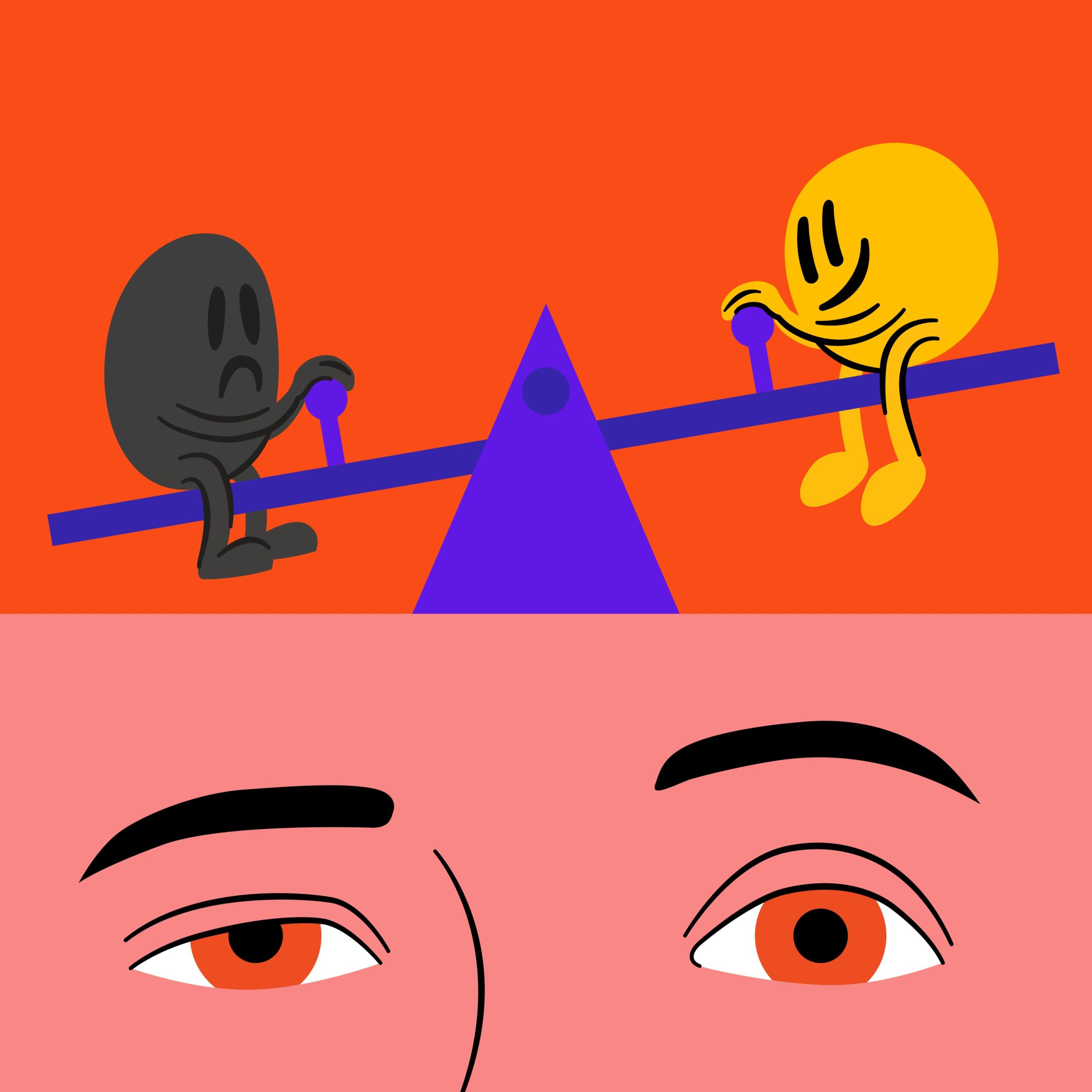
Neuroscience shows pleasure and pain are co-located in the brain and work like a seesaw. When we experience pleasure, the brain immediately compensates by tilting towards pain to restore balance. This neurological 'come down' is why constant pleasure-seeking eventually leads to a state of chronic pain and craving.
Suffering is created entirely within the mind as a representational state. It's a signal from one part of the mind to another to compel it to solve a problem. This system can malfunction, leading to chronic suffering when the signal fails to produce a resolution or when goals conflict.
Evolution by natural selection is not a theory of how consciousness arose from matter. Instead, it's a theory that explains *why our interface is the way it is*. Our perceptions were shaped by fitness payoffs to help us survive *within the simulation*, not to perceive truth outside of it. The theory is valid, but its domain is the interface.

In humans, learning a new skill is a highly conscious process that becomes unconscious once mastered. This suggests a link between learning and consciousness. The error signals and reward functions in machine learning could be computational analogues to the valenced experiences (pain/pleasure) that drive biological learning.

Neuroscientist Mark Soames posits that consciousness isn't about higher-order thought but arises from the feeling of uncertainty when basic, conflicting needs must be resolved (e.g., being both hungry and tired). This primitive, embodied decision-making process is the foundational spark of conscious experience.

Mother Nature wired us for survival and procreation, not contentment. This creates primal urges for money, power, and pleasure that we mistakenly believe will lead to happiness. Achieving well-being requires consciously choosing higher aspirations over these misleading animal instincts.
The popular assumption that the brain is optimized solely for survival and reproduction is an overly simplistic narrative. In the modern world, the brain's functions are far more complex, and clinging to this outdated model can limit our understanding of its capabilities and our own behavior.