Get your free personalized podcast brief
We scan new podcasts and send you the top 5 insights daily.
Highly intelligent individuals often overestimate their investing prowess due to the "curse of knowledge." Expertise in one domain doesn't translate to financial markets, and their intelligence enables motivated reasoning, allowing them to rationalize failures rather than learn from them.

Related Insights
Smart people use their intelligence to create convincing narratives that justify flawed decisions. This prevents them from acknowledging and learning from their mistakes, making them more likely to repeat the same errors.

Highly intelligent individuals are more prone to the "I'm not biased bias"—the belief they are objective and rational. Their long track record of being right makes them overconfident in their thinking, which paradoxically makes them less likely to question their own assumptions and unlearn outdated ideas.
Smarter people aren't less biased; they are better at rationalizing their biases. Research on motivated reasoning shows that individuals with strong analytical skills are more adept at twisting data to support their pre-existing beliefs, especially on emotionally charged topics.

According to Buffett, success in investing is a matter of temperament, not intellect. He famously quipped that investors with a 160 IQ should 'sell 30 points,' as extreme intelligence can lead to overconfidence, unnecessary complexity, and devastating mistakes with leverage or options. Avoiding stupidity is more important than being a genius.

Smart investors who are experts in their niche often display profound ignorance when commenting on adjacent fields, such as the legal mechanics of an M&A deal. This reveals the extreme narrowness of true expertise and the danger of overconfidence for even the most intelligent professionals.

Engineers and other analytical professionals are so skilled at rationalization that they can unknowingly justify emotionally-driven financial decisions with logic. This makes them more susceptible to emotional investing than less analytical individuals who may be more aware of their biases.

People who scored 90%+ in school often have a bias towards complexity. They feel a need to justify their intellect by solving complex problems, which can cause them to overlook simple solutions that consumers actually want. The market rewards simplicity, not intellectual complexity.

People justify high-risk strategies by retroactively fitting themselves into a successful subgroup (e.g., 'Yes, most investors fail, but *smart* ones succeed, and I am smart'). This is 'hindsight gerrymandering'—using a trait like 'smartness,' which can only be proven after the fact, to create a biased sample and rationalize the risk.
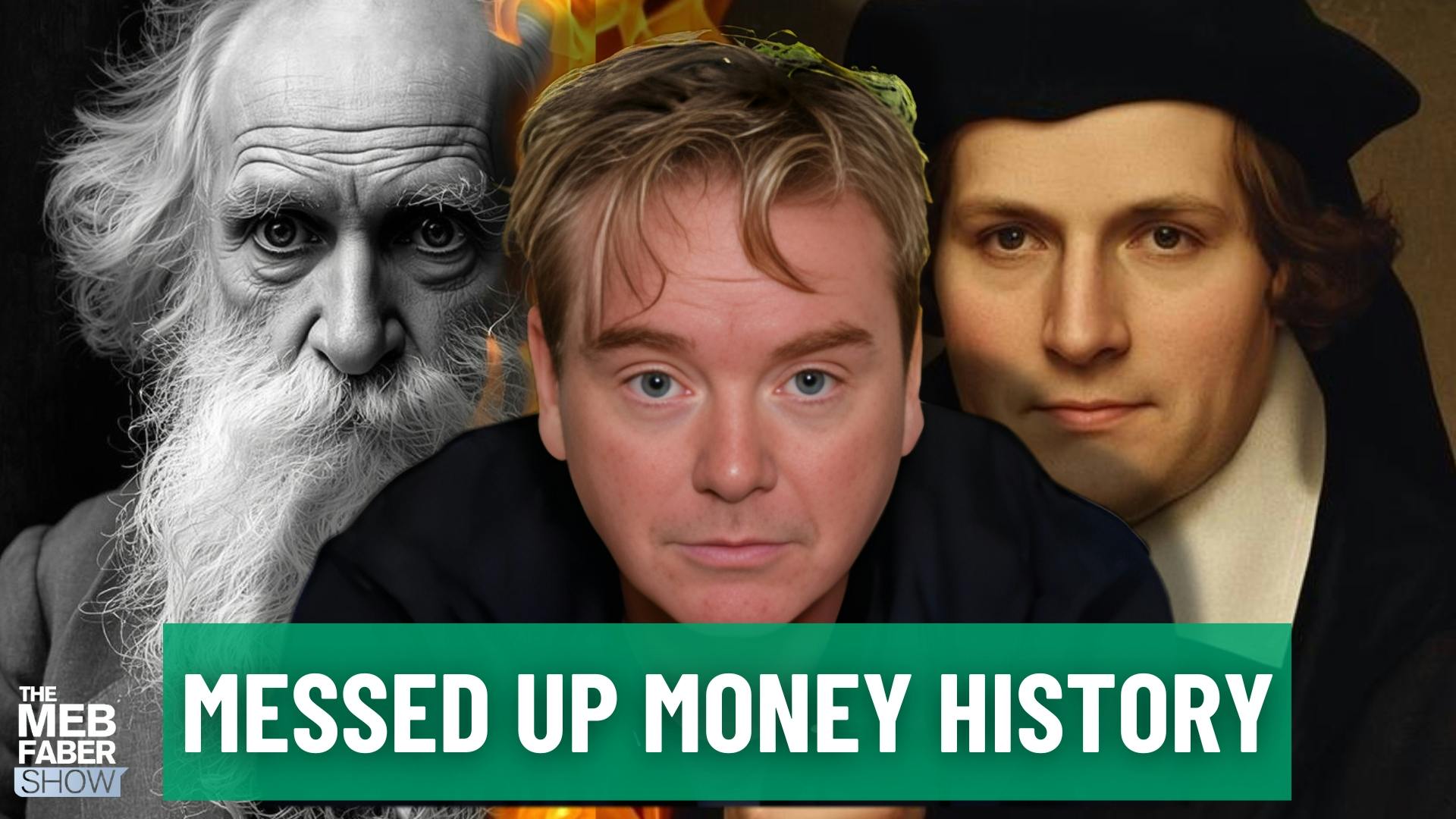
The fathers of physics and biology both lost their fortunes in financial speculation—Newton in the South Sea Bubble and Darwin in railways. This demonstrates that intellectual brilliance in one domain does not translate to financial markets, which are governed by psychology and mercurial forces.
A study highlighted by Michael Lewis found men systematically overestimate their knowledge, while women underestimate theirs. This cognitive bias is a major risk in investing and leadership. The anecdote of a man confidently miscorrecting "Marie Curie" to "Mariah Carey" perfectly illustrates this dangerous self-assurance.