Get your free personalized podcast brief
We scan new podcasts and send you the top 5 insights daily.
Contrary to fears that AI will fill the internet with generic content, it's empowering more people to build interesting and creative projects. Users are discovering more new websites now than in the past five years, suggesting a resurgence of the web's early, experimental spirit.

Related Insights
A new wave of startups, like ex-Twitter CEO's Parallel, is attracting significant investment to build web infrastructure specifically for AI agents. Instead of ranking links for humans, these systems deliver optimized data directly to AI models, signaling a fundamental shift in how the internet will be structured and consumed.

LLMs frequently cite sources that rank poorly on traditional search engines (page 3 and beyond). They are better at identifying canonically correct and authoritative information, regardless of backlinks or domain authority. This gives high-quality, niche content a better chance to be surfaced than ever before.

The internet's value stems from an economy of unique human creations. AI-generated content, or "slop," replaces this with low-quality, soulless output, breaking the internet's economic engine. This trend now appears in VC pitches, with founders presenting AI-generated ideas they don't truly understand.

LLMs can actually benefit sites with deep, authoritative content, even if it's not ranked #1 on Google. AI models prioritize surfacing the best answer, regardless of traditional rank, potentially increasing traffic for subject matter experts.

The next wave of addiction won't come from passive consumption like social media, but from active creation. AI tools give people the powerful dopamine hit of successfully making things, a feeling most have never experienced. This is framed as a positive, potential-unlocking phenomenon.

Contrary to expectations, the flood of AI-generated content doesn't dilute the success of top artists. In a sea of infinite choice, users rely more on algorithms, which tend to amplify the reach of already popular stars, making the biggest names more dominant than ever.
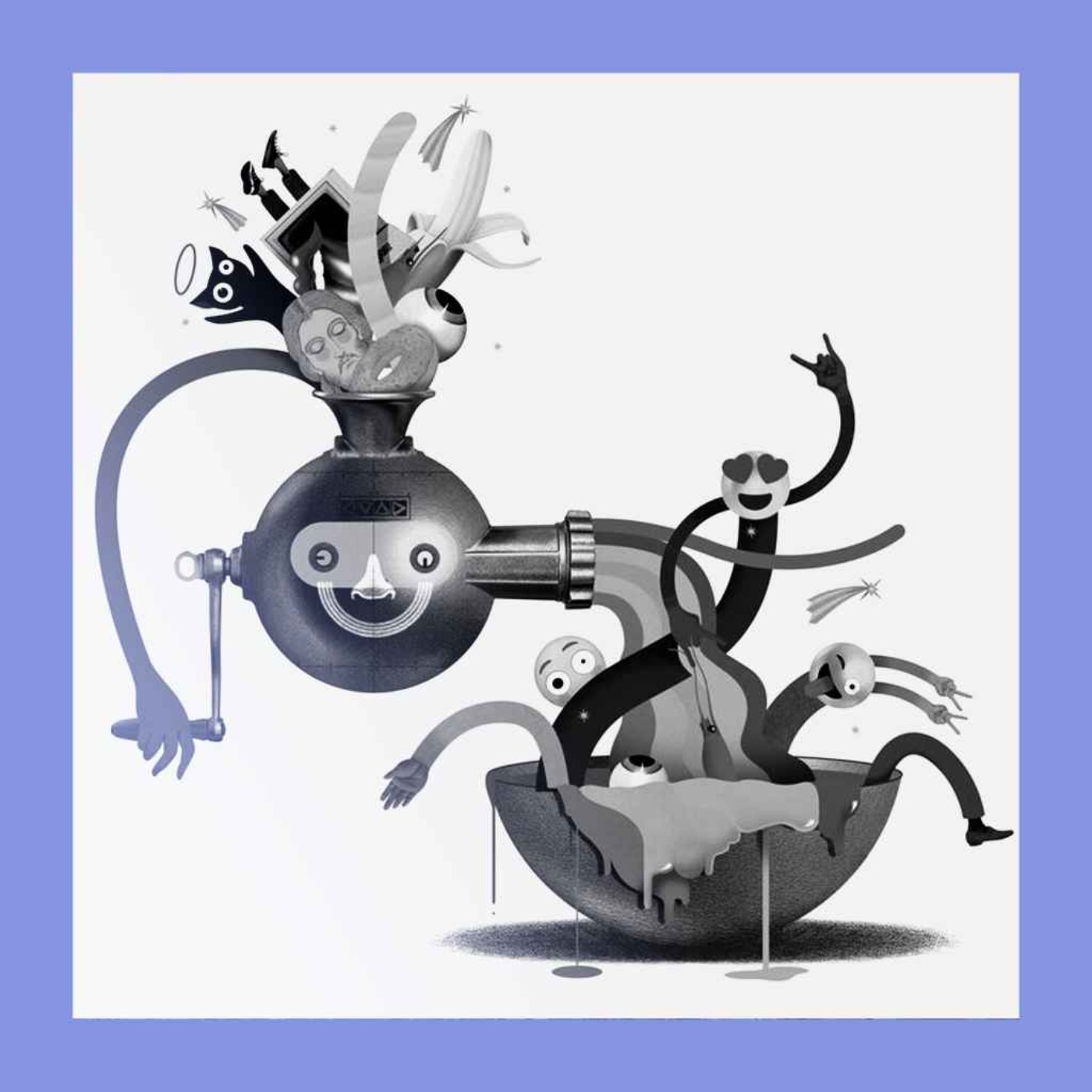
The future of search is not linking to human-made webpages, but AI dynamically creating them. As quality content becomes an abundant commodity, search engines will compress all information into a knowledge graph. They will then construct synthetic, personalized webpage experiences to deliver the exact answer a user needs, making traditional pages redundant.
The common analogy of AI being "like a website" that every company must adopt may be misleading. The real transformative power of AI could be in enabling entirely new, AI-native businesses that leapfrog incumbents, rather than simply being a feature tacked onto existing products.

The next generation of social networks will be fundamentally different, built around the creation of functional software and AI models, not just media. The status game will shift from who has the best content to who can build the most useful or interesting tools for the community.

While the internet has consolidated around major platforms, AI presents a counter-force. By drastically lowering the cost and complexity of building mobile apps, new tools could enable a 'Cambrian explosion' of personalized applications, challenging the one-size-fits-all model.