Get your free personalized podcast brief
We scan new podcasts and send you the top 5 insights daily.
Powerful on-device AI won't be a single large model. The effective paradigm is a smaller "orchestrator" model that acts as a router. It handles simple tasks, calls specialized local models (e.g., for PII filtering), and intelligently decides when to escalate complex queries to more powerful cloud-based models.

Related Insights
The AI ecosystem will evolve into an "orchestration age" where large 'boss' models delegate tasks to a network of smaller, faster, specialized models. This means different chip architectures (e.g., NVIDIA for large models, Cerebras for speed) will function as complementary parts of a larger system, not just direct competitors.

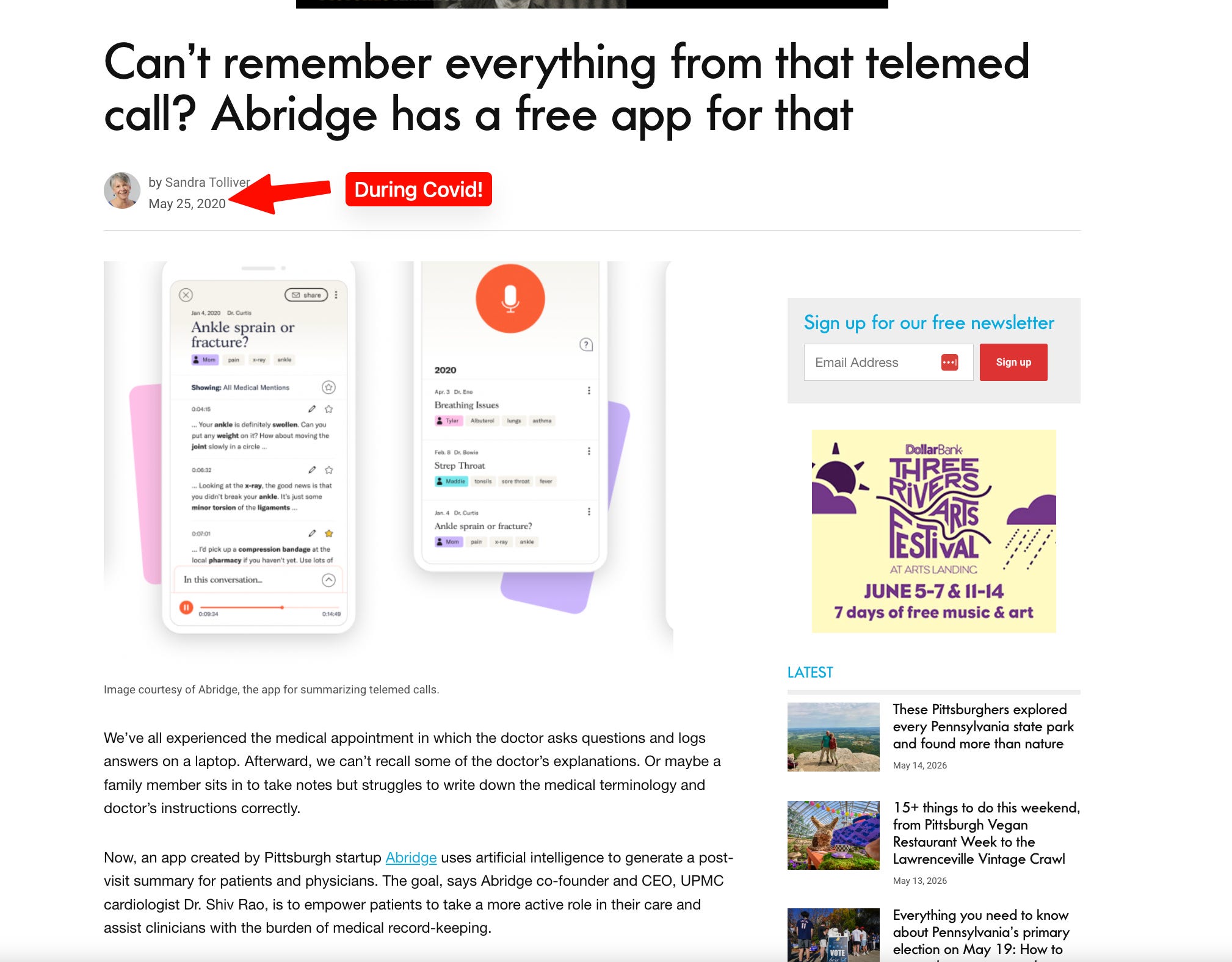
To provide high-quality AI insights in real-time without prohibitive costs, Abridge employs a "fast and slow" thinking approach. It uses a constellation of models, where a cheaper, faster model first triages a situation and then hands off complex tasks to a more powerful, expensive model only when necessary.
Advanced AI architectures will use small, fast, and cheap local models to act as intelligent routers. These models will first analyze a complex request, formulate a plan, and then delegate different sub-tasks to a fleet of more powerful or specialized models, optimizing for cost and performance.
Successful AI models will be small, specialized ones that run efficiently on consumer CPUs at the edge (laptops, phones). This leverages existing hardware (e.g., Apple's M-series chips) and avoids costly cloud GPUs, creating a strategic advantage for companies like Apple.

The "agentic revolution" will be powered by small, specialized models. Businesses and public sector agencies don't need a cloud-based AI that can do 1,000 tasks; they need an on-premise model fine-tuned for 10-20 specific use cases, driven by cost, privacy, and control requirements.

Just as developers use various databases for different needs, AI applications will rely on a "constellation" of specialized models. Some tasks will require expensive, high-reasoning models, while others will prioritize low-latency or low-cost models. The market will become heterogeneous, not monolithic.
An intelligent AI orchestration layer can achieve a cost-to-accuracy balance superior to any single model. By routing queries to a portfolio of different models (large, small, specialized), it creates a new Pareto frontier, delivering higher success rates at a lower average cost than relying on one "best" model.

A cost-effective AI architecture involves using a small, local model on the user's device to pre-process requests. This local AI can condense large inputs into an efficient, smaller prompt before sending it to the expensive, powerful cloud model, optimizing resource usage.

To manage costs, the optimal architecture isn't running everything on the most powerful model. Instead, a smart orchestrator agent should break down complex problems and dispatch simpler sub-tasks to smaller, cheaper models, optimizing for both cost and performance.
Because most intensive AI computation happens in data centers, not on-device, a "thin is in" hardware trend is emerging. Devices like Microsoft's Project Solara act as simple, low-power interfaces to trigger powerful cloud-based agents, challenging the paradigm that every personal device needs maximum local processing power.