Get your free personalized podcast brief
We scan new podcasts and send you the top 5 insights daily.
To drive internal change like adopting coding agents, Snowflake's CEO combines top-down goals with bottoms-up enthusiasm. He finds and elevates passionate early adopters—like a founder who fell in love with coding agents—whose influence proves more effective at driving change than executive mandates alone.

Related Insights
For executives to truly drive AI adoption, simply using the tools isn't enough. They must model three key behaviors: publicly setting a clear vision for AI's role, actively participating in company-wide learning initiatives like hackathons, and empowering employees with the autonomy to experiment.

To navigate the unpredictable AI landscape, Snowflake's CEO dismantled its specialized, multi-layered structure that had slowed down iteration. This shift prioritized accountability and shorter engineer-to-customer feedback loops, recognizing that speed and adaptability now trump carefully laid out strategies.
An effective AI strategy pairs a central task force for enablement—handling approvals, compliance, and awareness—with empowerment of frontline staff. The best, most elegant applications of AI will be identified by those doing the day-to-day work.

AI is a 'hands-on revolution,' not a technological shift like the cloud that can be delegated to an IT department. To lead effectively, executives (including non-technical ones) must personally use AI tools. This direct experience is essential for understanding AI's potential and guiding teams through transformation.

Webflow drove weekly Cursor adoption from 0% to 30% in its design team after one 'builder day' where every participant was required to demo a project. This combination of hands-on practice, peer support from champions, and clear expectations creates rapid, tangible adoption of new AI tools.
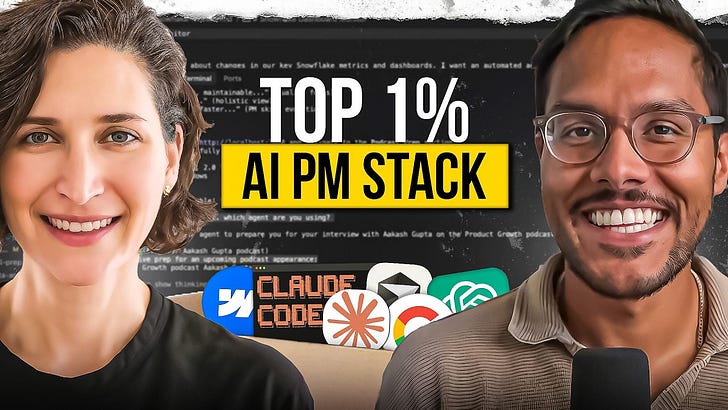
Amplitude's CEO notes that unlike previous tech waves, AI adoption was pushed by executives, not engineers. Engineers were initially skeptical, viewing the hype as "grifting," which created internal friction and required a deliberate internal education campaign to overcome.
The key to driving AI adoption at Block was leadership by example. CEO Jack Dorsey and CTO Danji Prasana use their internal AI tool, Goose, daily. They argue this hands-on approach provides more insight into organizational workflow changes than any top-down mandate or analysis of industry reports.

To transform a product organization, first provide universal access to AI tools. Second, support teams with training and 'builder days' led by internal champions. Finally, embed AI proficiency into career ladders to create lasting incentives and institutionalize the change.
A successful AI transformation isn't just about providing tools. It requires a dual approach: senior leadership must clearly communicate that AI adoption is a strategic priority, while simultaneously empowering individual employees with the tools and autonomy to innovate and transform their own workflows.

To gain organizational buy-in for AI, start by asking teams to document their most draining, repetitive daily tasks. Building agents to eliminate these specific pain points creates immediate value, generates enthusiasm, and builds internal champions for broader strategic initiatives, making it an approachable path to adoption.