Get your free personalized podcast brief
We scan new podcasts and send you the top 5 insights daily.
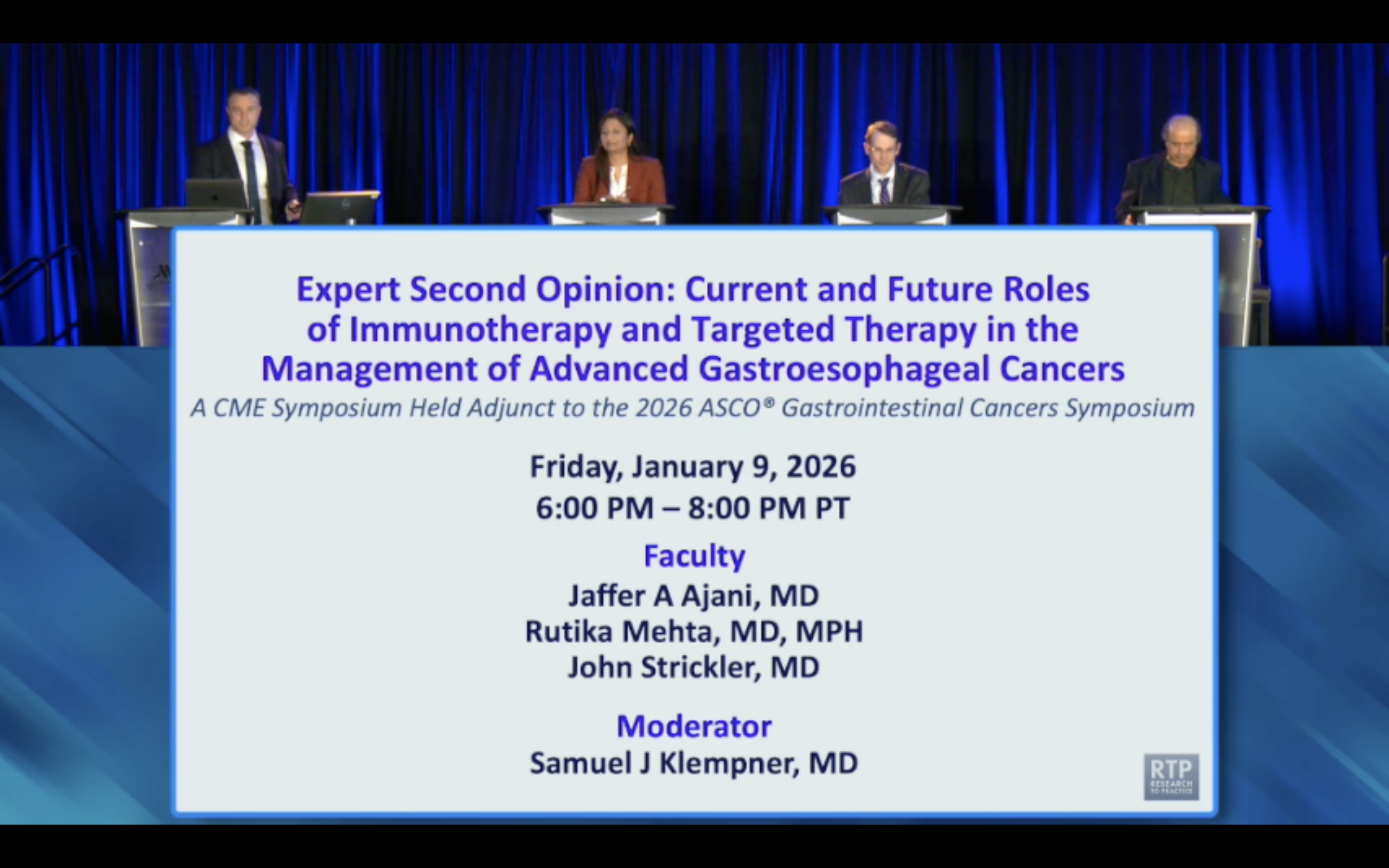
In advanced gastroesophageal cancer, a common clinical practice for patients achieving a complete response on immunotherapy is to stop treatment after two years. For those with residual disease confirmed by biopsy, clinicians advocate for extending therapy beyond this point, contingent on payer approval.

Related Insights
A significant challenge in assessing complete response after neoadjuvant immunotherapy for rectal cancer is the presence of mucin pools. These imaging abnormalities can persist for up to two years, mimicking residual tumor and complicating decisions about non-operative management.
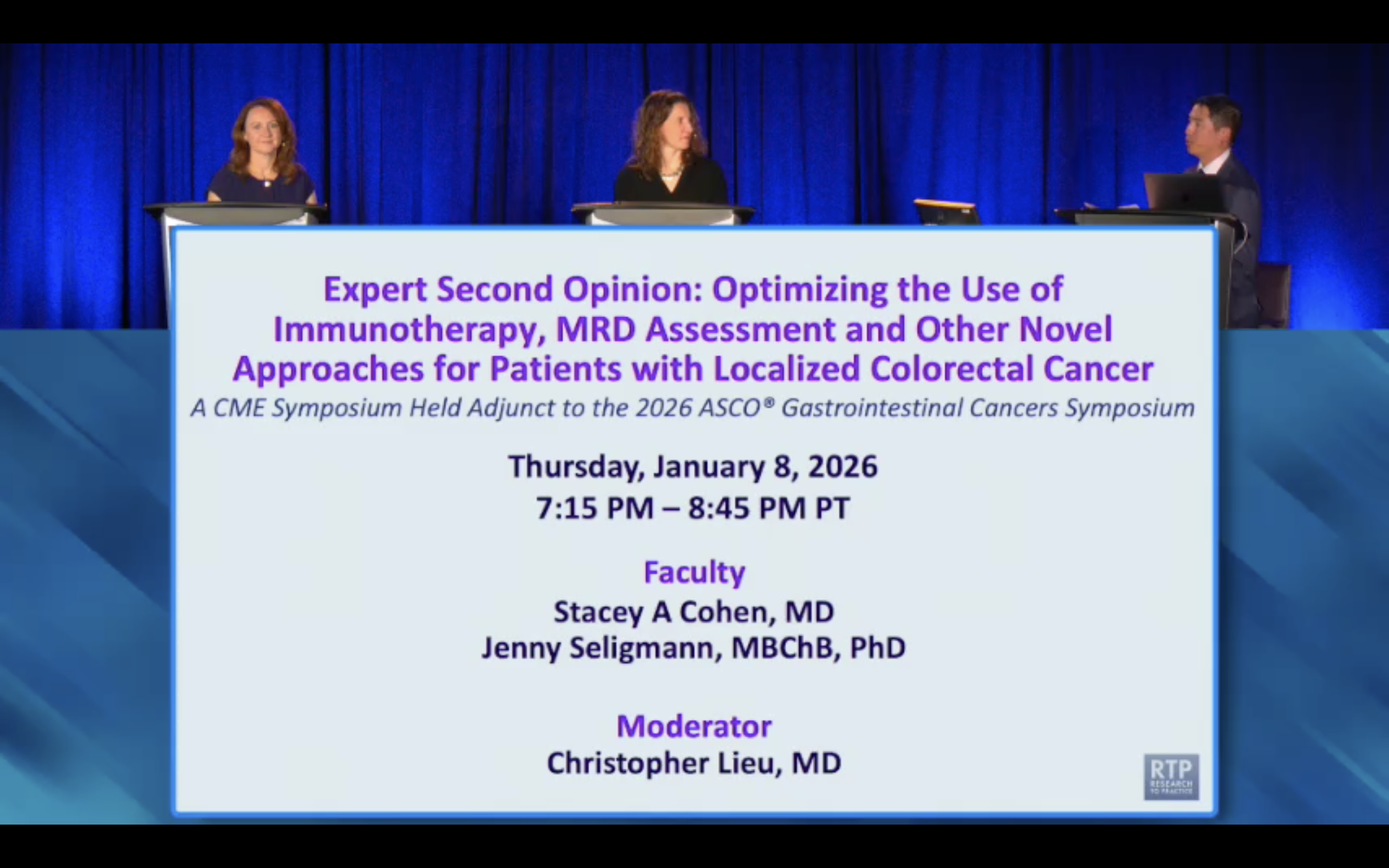
Experts favor a Nivolumab plus Ipilimumab (NIVO+EP) combination for newly diagnosed, MSI-high, stage IV gastroesophageal cancer patients who can tolerate it. This approach avoids chemotherapy and yields high, sustained response rates, including potential for complete pathologic responses in metastatic settings.
Dr. Carbone argues that traditional metrics like median survival or response rate are less relevant for immunotherapies. The true measure of success is the percentage of patients alive at five or six years—the "tail of the curve"—as this indicates a durable, potentially curative, response.

The next frontier in CSCC isn't just about new drugs, but about optimizing existing ones. A key research area is determining the minimum number of immunotherapy doses required for an optimal response—potentially just one or two—to limit toxicity, reduce treatment burden, and personalize care for high-risk patients.
After immunotherapy, many colorectal cancer patients have residual nodules on scans that appear to be partial responses. However, ctDNA testing can confirm these are often just scar tissue, not active disease. This provides the confidence to stop therapy at the two-year mark and avoid unnecessary surgeries for what are effectively complete responses.
While continuous therapy remains the official standard of care for mHSPC, there's a growing consensus for individualized de-intensification. For patients with a sustained, undetectable PSA (e.g., for two years), clinicians are increasingly comfortable discussing stopping all treatments to improve quality of life and reduce toxicity.

For patients who previously received immunotherapy (IO), a recurrence more than 12 months after completing treatment makes re-challenging with an IO agent a reasonable option. The likelihood of benefit is lower if the recurrence is within 6-12 months and minimal if under 6 months.
Patients showing a near-complete response at the end of a six-month immunotherapy course may still convert to a full complete response two months later without additional treatment. Clinicians should consider 'holding their nerve' and re-evaluating with repeat imaging before altering the treatment plan.

While the POD1UM-303 trial protocol for retifanlimab in anal cancer was one year, clinicians may continue therapy for patients with a partial response. If active, controlled disease remains, the risk of progression upon stopping may outweigh the low toxicity risk from monotherapy, prompting a discussion to continue treatment.
Clinicians advise against continuing targeted agents like zolbituximab or trastuzumab after disease progression in gastroesophageal cancer. The biological heterogeneity of this cancer type means that if a targeted therapy isn't working, it's unlikely to provide benefit with a different chemotherapy backbone.