Get your free personalized podcast brief
We scan new podcasts and send you the top 5 insights daily.
A Chinese government policy banning after-school human tutors, intended to reduce academic pressure, had an unintended consequence: it created a market vacuum filled by AI tutors. This regulatory action unintentionally accelerated a large-scale societal experiment in AI-driven education, far outpacing adoption in the West.

Related Insights
Schools ban AI like ChatGPT fearing it's a tool for cheating, but this is profoundly shortsighted. The quality of an AI's output is entirely dependent on the critical thinking behind the user's input. This makes AI the first truly scalable tool for teaching children how to think critically, a skill far more valuable than memorization.

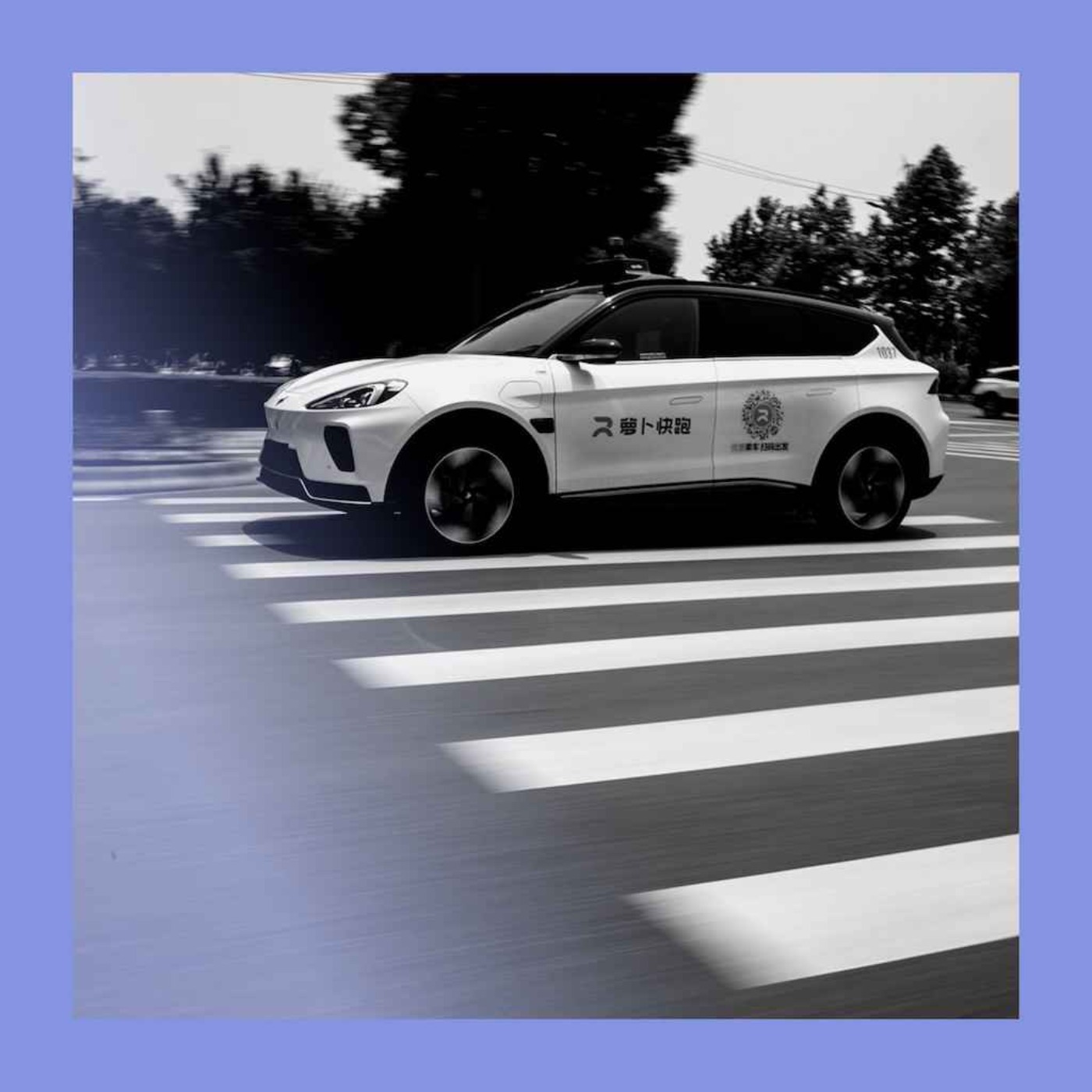
Contrary to perceptions of rigid control, China accelerates tech progress by empowering local regulators to be agile. These regulators create urban "test beds" for technologies like autonomous taxis, which entices talent and investment, turbocharging development cycles far ahead of Western counterparts.
By limiting access to top-tier proprietary models, U.S. policy may have ironically forced China to develop more efficient, open-source alternatives. This strategy is more effective for global adoption, as other countries can freely adapt these models without API limits or vendor lock-in.

China's aggressive adoption of AI and robotics has led to high youth unemployment alongside cheap, high-quality services. This scenario, sustained by family savings and cultural homogeneity, may offer a blueprint for how Western societies could function in a post-AI world with fewer traditional jobs.

AI makes cheating easier, undermining grades as a motivator. More importantly, it enables continuous, nuanced assessment that renders one-off standardized tests obsolete. This forces a necessary shift from a grade-driven to a learning-driven education system.

For Chinese policymakers, AI is more than a productivity tool; it represents a crucial opportunity to escape the middle-income trap. They are betting that leadership in AI can fuel the innovation needed to transition from a labor-intensive economy to a developed one, avoiding the stagnation that has plagued other emerging markets.

An AI education system deployed to millions of students will continuously analyze patterns in their learning. Insights from a student in one country will instantly update the teaching algorithm for another, creating a massively scalable, personalized, and ever-improving educational model.

Generative AI's appeal highlights a systemic issue in education. When grades—impacting financial aid and job prospects—are tied solely to finished products, students rationally use tools that shortcut the learning process to achieve the desired outcome under immense pressure from other life stressors.

The Gaokao produces millions of highly educated graduates, but China's slowing economy and the rise of AI cannot absorb them. This mismatch between educational output and job market capacity creates a potential powder keg of youth unemployment and social unrest.
While the US focuses on creating the most advanced AI models, China's real strength may be its proven ability to orchestrate society-wide technology adoption. Deep integration and widespread public enthusiasm for AI could ultimately provide a more durable competitive advantage.
