Get your free personalized podcast brief
We scan new podcasts and send you the top 5 insights daily.
Executives at a large insurance company expected a 10% variance in premiums set by different underwriters for the same case. A 'noise audit' revealed the actual variance was a staggering 50%, five times higher than anticipated. This highlights how organizations are often blind to the costly inconsistency in their own expert judgments.

Related Insights
Despite massive scouting departments, NFL teams' ability to judge talent is barely better than a coin flip. The probability that a player selected at any given position is better than the very next player chosen is only 53%. This demonstrates massive overconfidence in expert judgment and explains why top draft picks are often not the most valuable.

Contrary to the belief that big B2B decisions are purely rational, they are more susceptible to biases. With infrequent, high-stakes purchases like enterprise software, decision-makers face greater uncertainty and are more likely to rely on mental shortcuts and biases like social proof.

While confidence is essential for leadership, overconfidence leads CEOs to misjudge risk and ignore contrary evidence, often resulting in catastrophic failure. A lack of confidence might lead to missed opportunities, but overconfidence can destroy the entire enterprise by betting the farm on a flawed assumption.

Charlie Munger, who considered himself in the top 5% at understanding incentives, admitted he underestimated their power his entire life. This highlights the pervasive and often hidden influence of reward systems on human behavior, which can override all other considerations.
![Charlie Munger and The Psychology of Human Misjudgement [Outliers] thumbnail](https://megaphone.imgix.net/podcasts/ffb628d4-c418-11f0-acd7-b3217b3943c4/image/37067138e685dc4ea5d98531397f6711.png?ixlib=rails-4.3.1&max-w=3000&max-h=3000&fit=crop&auto=format,compress)
Intuition excels in areas like chess or boxing where we get immediate, repeated feedback. It fails in complex domains like choosing a charity or making social policy, where feedback is slow, noisy, or nonexistent. We mistakenly trust our intuition in these low-feedback environments where it's unreliable.

Daniel Kahneman shares an anecdote about university admissions staff who stopped grading essays independently because hiding scores revealed "so much disagreement." This shows a deep-seated organizational tendency to avoid confronting "noise" (inconsistency), prioritizing the comfort of consensus over the discomfort of inaccuracy.
The concept of the 'Winner's Curse'—where the winner in an auction often overpays—originated in industry, not academia. Engineers at Atlantic Richfield (ARCO) discovered that the oil leases they successfully bid on consistently underperformed expectations, realizing the winning bid is by nature the most optimistic and therefore often inaccurate.
Michael Mauboussin's BIN framework reveals that inconsistent judgments ('noise') are often a larger source of forecasting errors than personal biases or insufficient information. Reducing this variability through methods like combining independent judgments is a key to better decision-making.
To combat a risk-averse culture bred by years of decline, Arvind Krishna encourages teams to present plans with only 50% confidence. This gives them permission to be ambitious. He then builds management buffers to accommodate the inherent uncertainty, unlocking higher productivity.
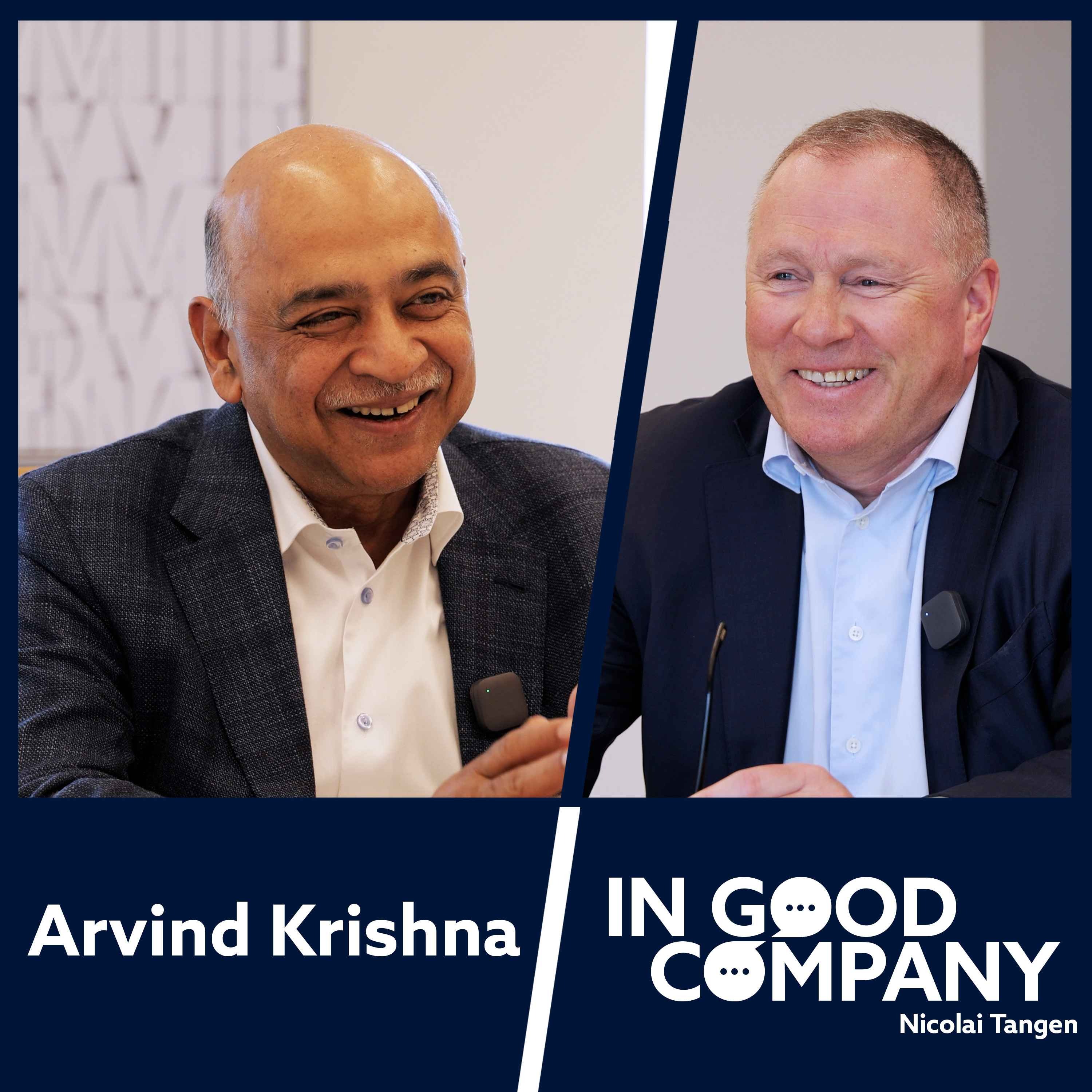
Even in a data-heavy industry, seeking 100% certainty leads to analysis paralysis. The CEO advocates making decisions with 80% of the required information, as the final 20% often provides diminishing returns while slowing momentum. The key is to act and then course-correct.
