Get your free personalized podcast brief
We scan new podcasts and send you the top 5 insights daily.
To avoid generic AI-generated "slop," creators can fine-tune base models on their own work. Priyanka Vergadia trained a model on over 300 of her hand-drawn sketches, enabling it to generate new images that retain her distinct artistic character and style.
Related Insights
To get realistic, high-quality results from image generation AIs, provide extremely detailed prompts that include aesthetic, camera type, lighting, color palette, and a crucial call for "slight imperfections." This specific instruction helps the AI avoid generating overly polished and sterile stock-like photos, making the output more authentic.

To avoid generic AI-generated illustrations, commission an artist for a single concept piece. Then, feed that unique artwork into an AI model like ChatGPT as a style reference. This combines human creativity with AI's iteration speed, producing a mascot that is both distinct and scalable into infinite variations.
If you struggle to articulate your editing or design style, feed an AI examples of your work. It can identify patterns and generate a system prompt, or 'skill,' that codifies your unique taste for your entire team to use.

To create a high-quality AI agent of oneself, an expert can't just rely on their public work. They must manually document their nuanced style and judgment into a system of prompts and triggers. This shifts the burden of creating a good AI product from the platform to the creator, asking them to codify their intuition.
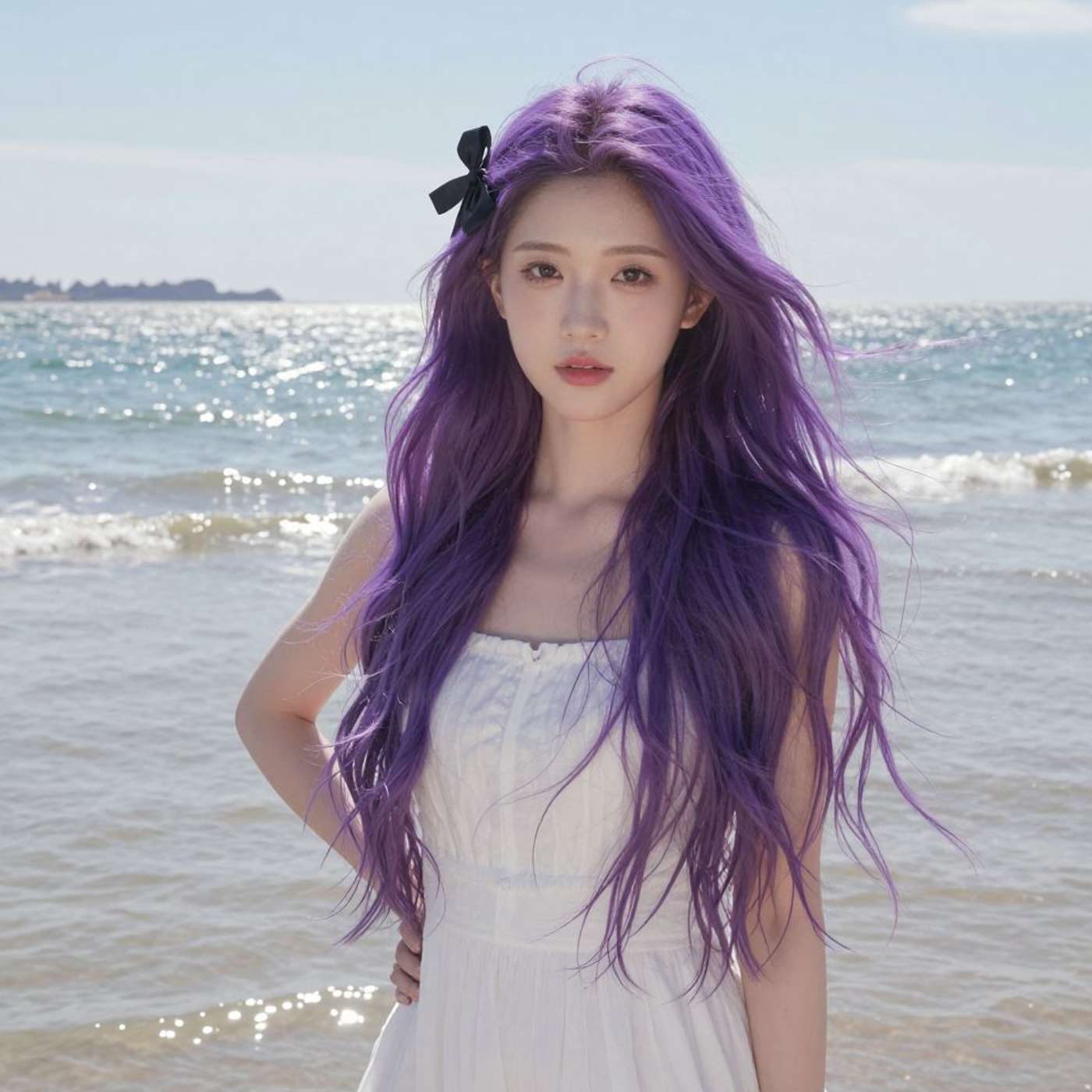
The model moves beyond single-style applications by allowing users to combine multiple LoRa (low-rank adaptation) weights simultaneously. This feature enables the creation of unique, hybrid visual styles by layering different artistic concepts, textures, or characteristics onto one base image.
Customizing AI image models provides concrete business advantages. E-commerce companies can ensure consistent product visualization, design agencies can automate client-specific styles without manual editing, and art studios can generate concept variations that adhere to their established visual language, increasing efficiency and brand consistency.
Feed an AI tool like Flora a collection of realistic selfies showing various expressions. The model can then generate new, high-quality images of you in any style or pose needed for content like YouTube thumbnails or articles, eliminating the need for photo shoots.

Specialized AI models no longer require massive datasets or computational resources. Using LoRA adaptations on models like FLUX.2, developers and creatives can fine-tune a model for a specific artistic style or domain with a small set of 50 to 100 images, making custom AI accessible even with limited hardware.
A significant real-world challenge is that users have different mental models for the same visual concept (e.g., does "hand" include the arm?). Fine-tuning is therefore not just for learning new objects, but for aligning the model's understanding with a specific user's or domain's unique definition.

For truly original creative output, like fashion design, select AI models that prioritize following visual instructions precisely over generating a generically beautiful image. Models optimized for realism often default to existing concepts from their training data, which stifles true novelty and produces derivative work.