Get your free personalized podcast brief
We scan new podcasts and send you the top 5 insights daily.
Instead of testing the unproven Pony car in one market, Chung Ju Young exported it to multiple countries with diverse, harsh climates. The resulting failures—peeling roofs in Nigeria, faded paint in Saudi Arabia—provided rapid, invaluable feedback. He embraced temporary international embarrassment to accelerate learning and build a more robust product.
![[Outliers] The Hyundai Founder Who Put a Country on His Back thumbnail](https://megaphone.imgix.net/podcasts/9c0d00ea-df1d-11ef-9477-2b8336fcd8e9/image/113a058265322df92ae562c548d1dc8f.jpg?ixlib=rails-4.3.1&max-w=3000&max-h=3000&fit=crop&auto=format,compress)
Related Insights
While competitors analyze exhaustively before building, SpaceX invests upfront in prototypes to discover problems that analysis can't predict. This treats reality as the primary validation tool, using failures as data points to eliminate uncertainty through doing, not just planning.

McCain Foods de-risked international expansion with a three-step playbook. First, export product from an existing operation to test the market at low cost. Second, hire local salespeople to build volume. Only after proving the market would they commit capital to build or buy a local factory.
After observing bedbugs relentlessly find a way to reach their target by climbing walls and dropping from the ceiling, Chung Ju Young adopted their "never quit" mentality. This mindset of overcoming any obstacle, no matter how unconventional the solution, became his lifelong operational principle.
Chung Ju Young treated contracts with the US Army and German engineers not just as jobs, but as classrooms. He deliberately rotated his workers through joint projects to systematically absorb advanced techniques and standards. This turned every client engagement into a strategic learning opportunity, rapidly closing his company's capability gap.
While Chung Ju Young was nicknamed "The Bulldozer" for his rapid, seemingly impulsive execution, he called himself "the thinking bulldozer." He spent enormous time and effort on detailed upfront planning. This intensive preparation is what enabled his famous speed, proving that true agility comes from deep analysis, not just a bias for action.
After the OPEC crisis vaporized demand for his new supertankers, Chung refused to halt production. Instead, he completed the unwanted ships and created Hyundai Merchant Marine to be their buyer. He then lobbied the government to mandate Korean vessels for oil imports, turning a potential catastrophe into a vertically integrated, world-leading shipping business.
In a politically chaotic Korea where new regimes purged allies of the old, Chung Ju Young made Hyundai "regime-proof." Instead of relying on patronage, he focused relentlessly on delivering projects cheaper and faster than anyone else. This made Hyundai's value proposition so compelling that no government could afford to stop working with them.
Product development's most valuable activity is iteration. The goal isn't to avoid failure, but to achieve it quickly and cheaply to maximize learning. A good failure uses the simplest possible prototype (e.g., duct tape and a 2x4) to answer a key question and inform the next step.

A high production rate is a core R&D tool for SpaceX, not just a manufacturing goal. By creating a "hardware rich" environment with abundant, cheaper prototypes, it enables an aggressive build-test-learn cycle. Failure becomes a low-cost data-gathering exercise, not a catastrophic setback.
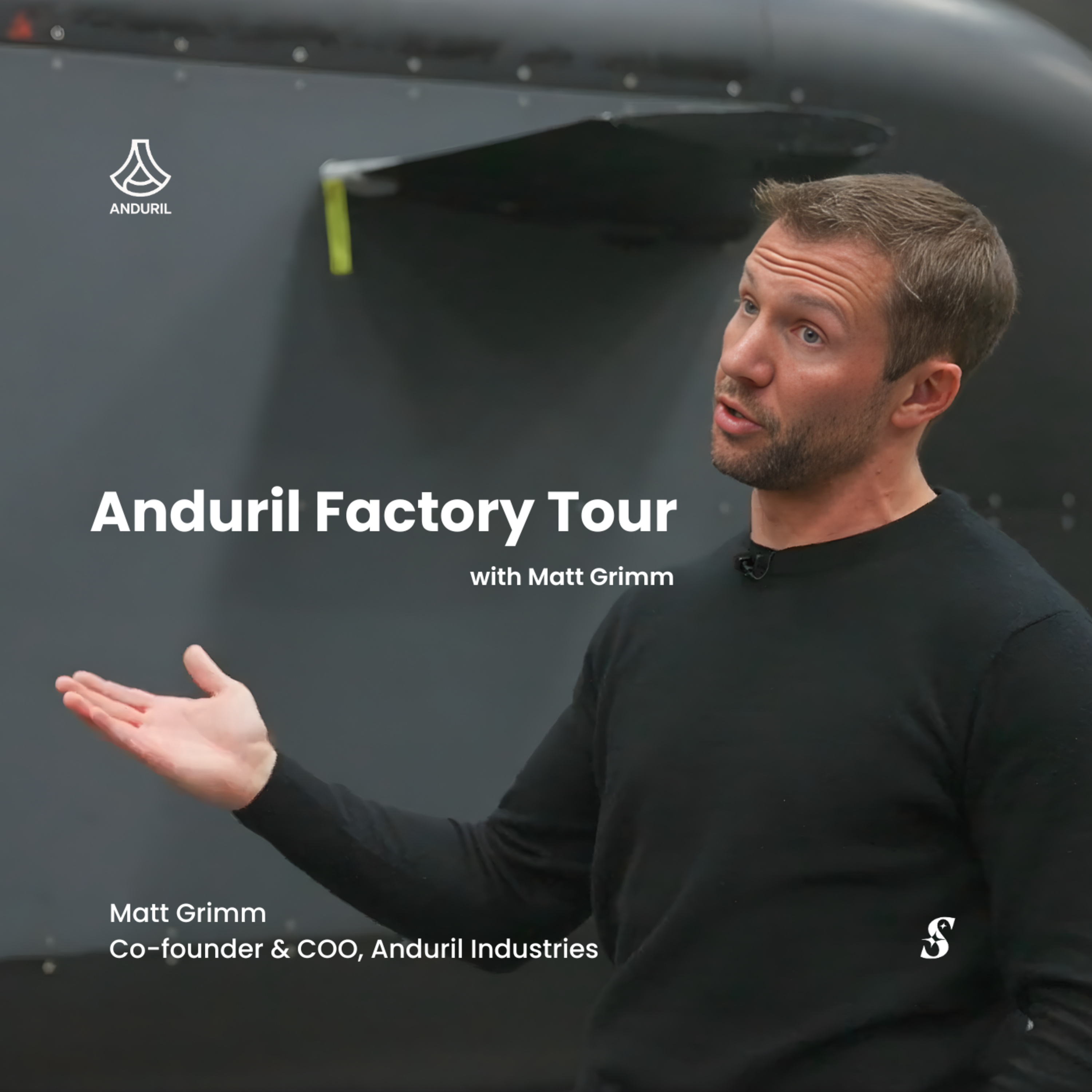
Anduril's R&D building houses machine shops, labs, and a 'dev test area' designed specifically to break products. By putting engineers across the parking lot from facilities that can rapidly prototype and test for failures (e.g., saltwater corrosion, vibration), they create an extremely tight feedback loop, speeding up iteration.